
Santner Via Ferrata. How to Reach Rifugio Santner and Rifugio Re Alberto
A spectacular journey through the heart of the Rosengarten, from Rifugio Fronza beneath the west face of the Catinaccio to the legendary Vajolet Towers.
Many visitors dream of reaching Rifugio Santner and Rifugio Re Alberto, two of the most spectacular mountain refuges in the Rosengarten (Catinaccio).
While they can also be reached via the normal hiking trail, this is a demanding alpine route for experienced hikers, with exposed terrain and sections protected by fixed steel cables. For most visitors, the historic Santner Via Ferrata is the most rewarding and exciting way to access these legendary places.
The full experience can be completed in a single day, but to truly experience the atmosphere of the Rosengarten, we highly recommend spending the night at Rifugio Fronza alle Coronelle, located directly beneath the magnificent west face of the mountain.
From here begins one of the most beautiful journeys in the Dolomites!
Getting to Rifugio Fronza
If you are staying in Bolzano, access is very straightforward.
Take the bus to Nova Levante (Welschnofen) and continue with the König Laurin cable car, which brings you directly to Rifugio Fronza alle Coronelle in less than an hour from the city.
Few mountain huts in the Dolomites offer such a dramatic location!
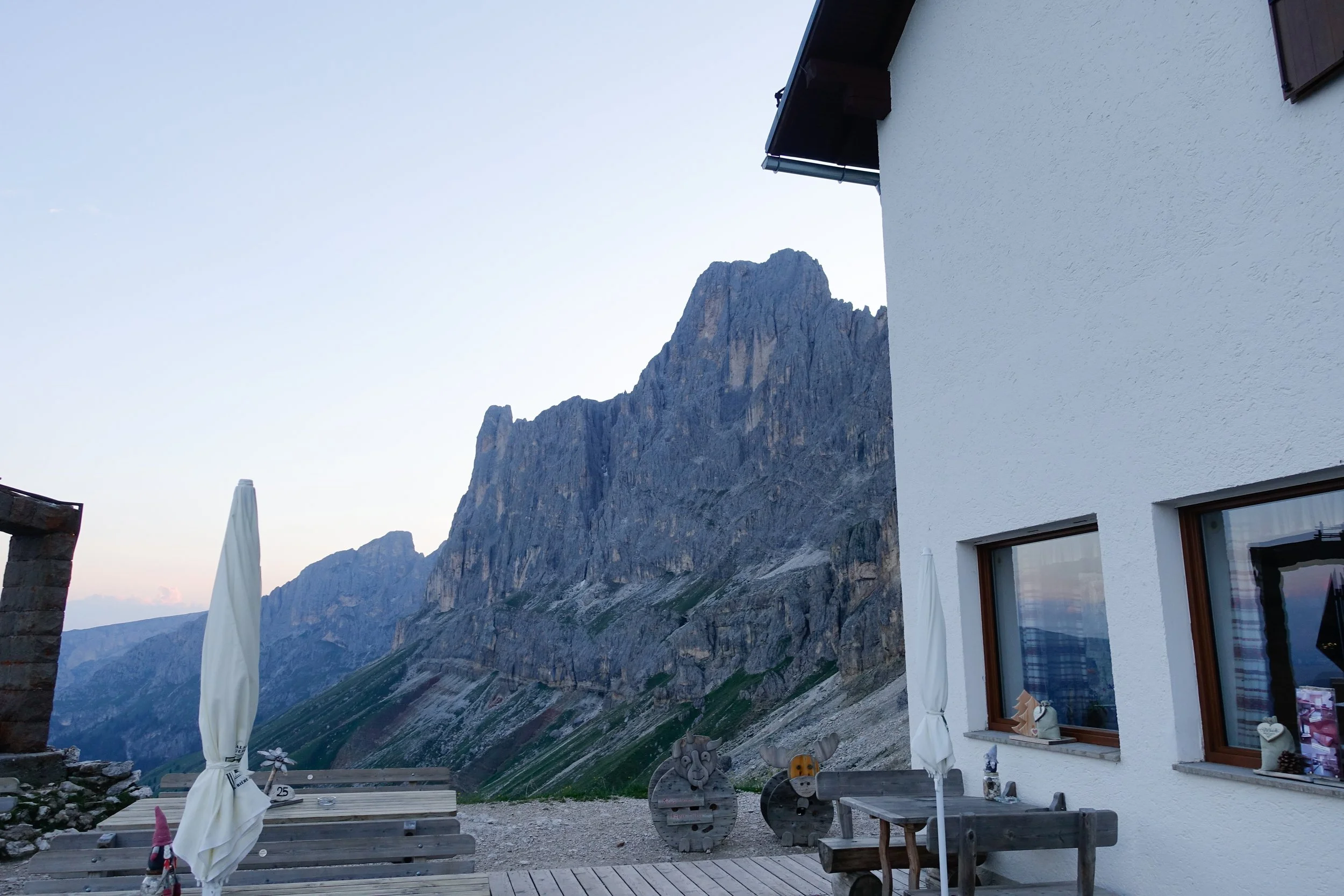
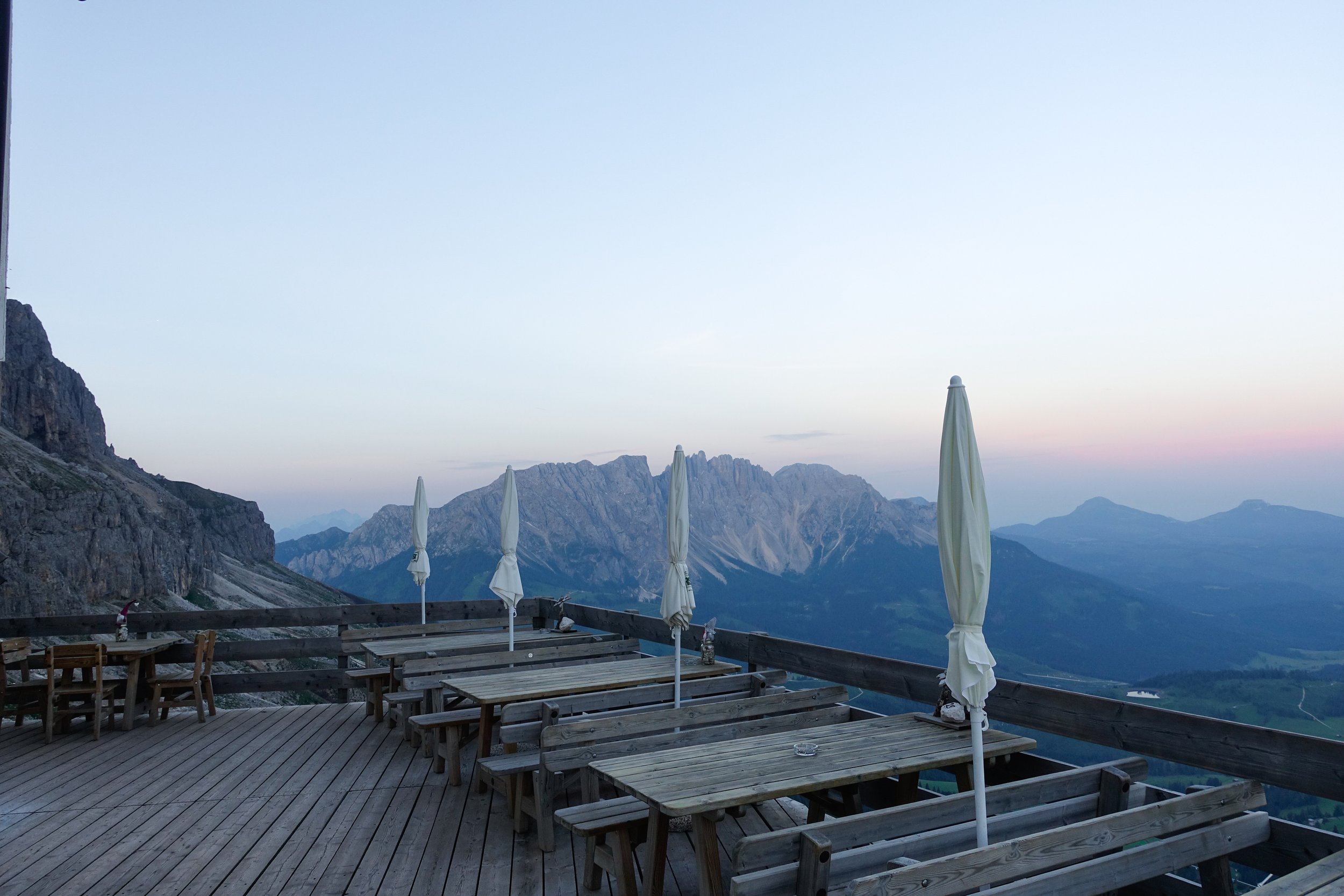
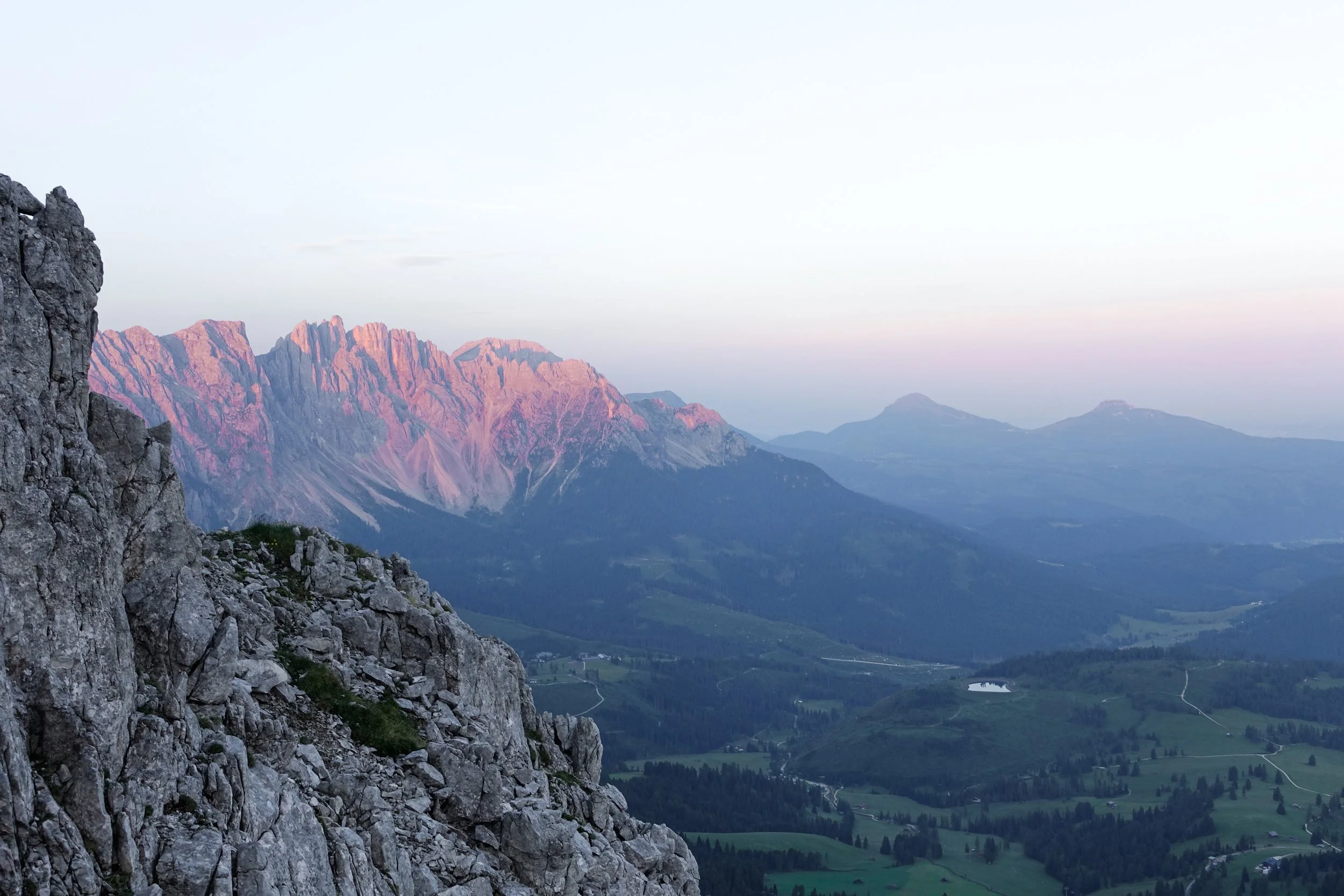
Rifugio Fronza sits directly beneath the towering west face of the Rosengarten, with panoramic views over the Latemar and the green medows of Val d’Ega.
At sunset, the dolomite walls light up in shades of pink and red, a phenomenon known as the Enrosadira, linked to the legend of King Laurin and the enchanted Rosengarten.
Discover the legend! https://www.dolomitesafari.it/dolomites-journal/legend-king-laurin-rosengarten
Spending a night here is highly recommended. The refuge is run by the Trottner family, offering warm hospitality and a great mountain atmosphere. On the terrace, you can enjoy a well-earned drink while watching the sunset over the Dolomites, followed by traditional dishes such a trio of dumplings, the tris di canederli!!!
The Santner Via Ferrata
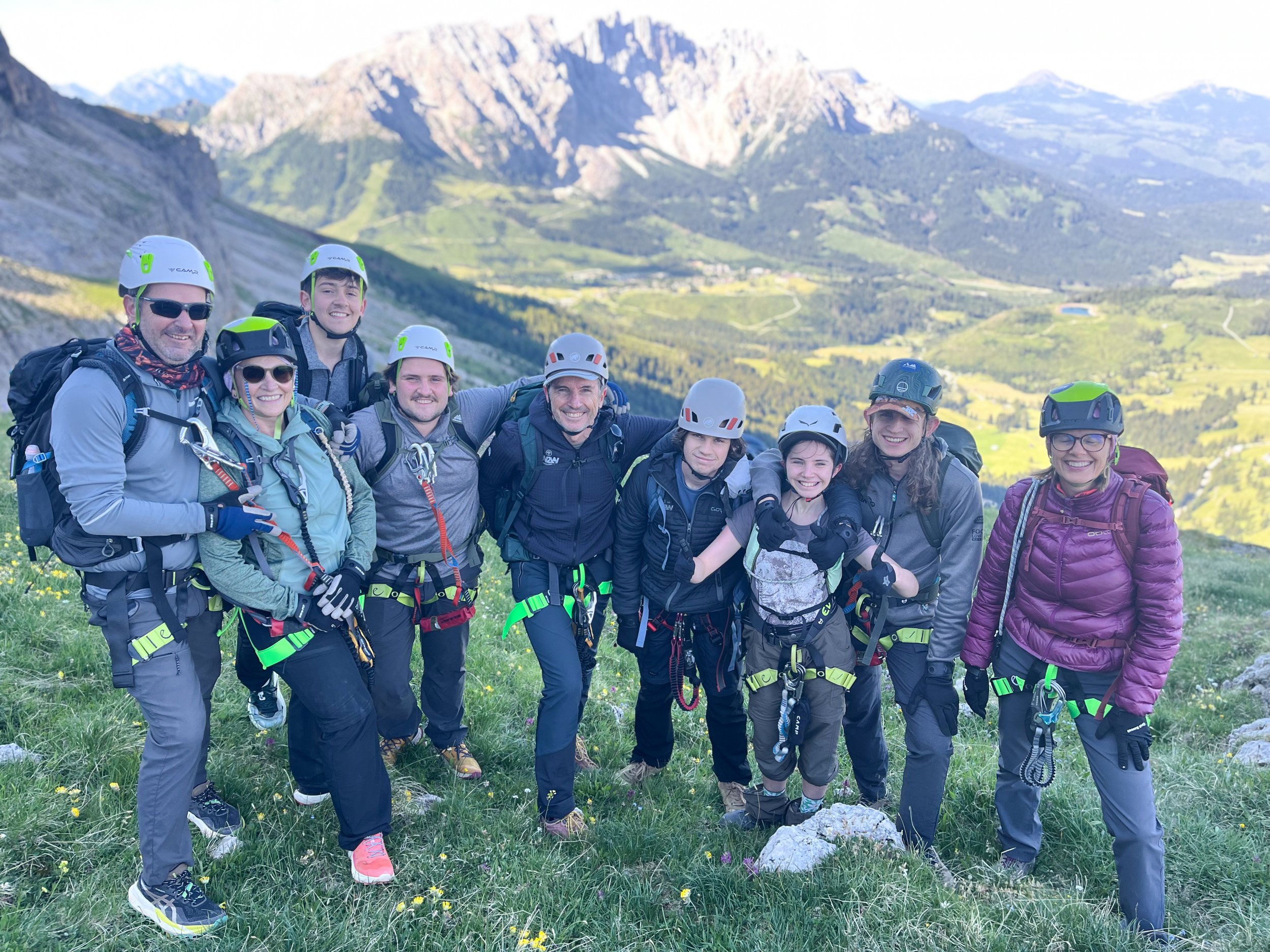
Before leaving Rifugio Fronza, we recommend putting on your gloves, helmet, harness and via ferrata set.
Although the official Santner Via Ferrata begins a little further along the trail, the first section after leaving the refuge is already equipped with steel cables, so it is best to be fully prepared from the start.
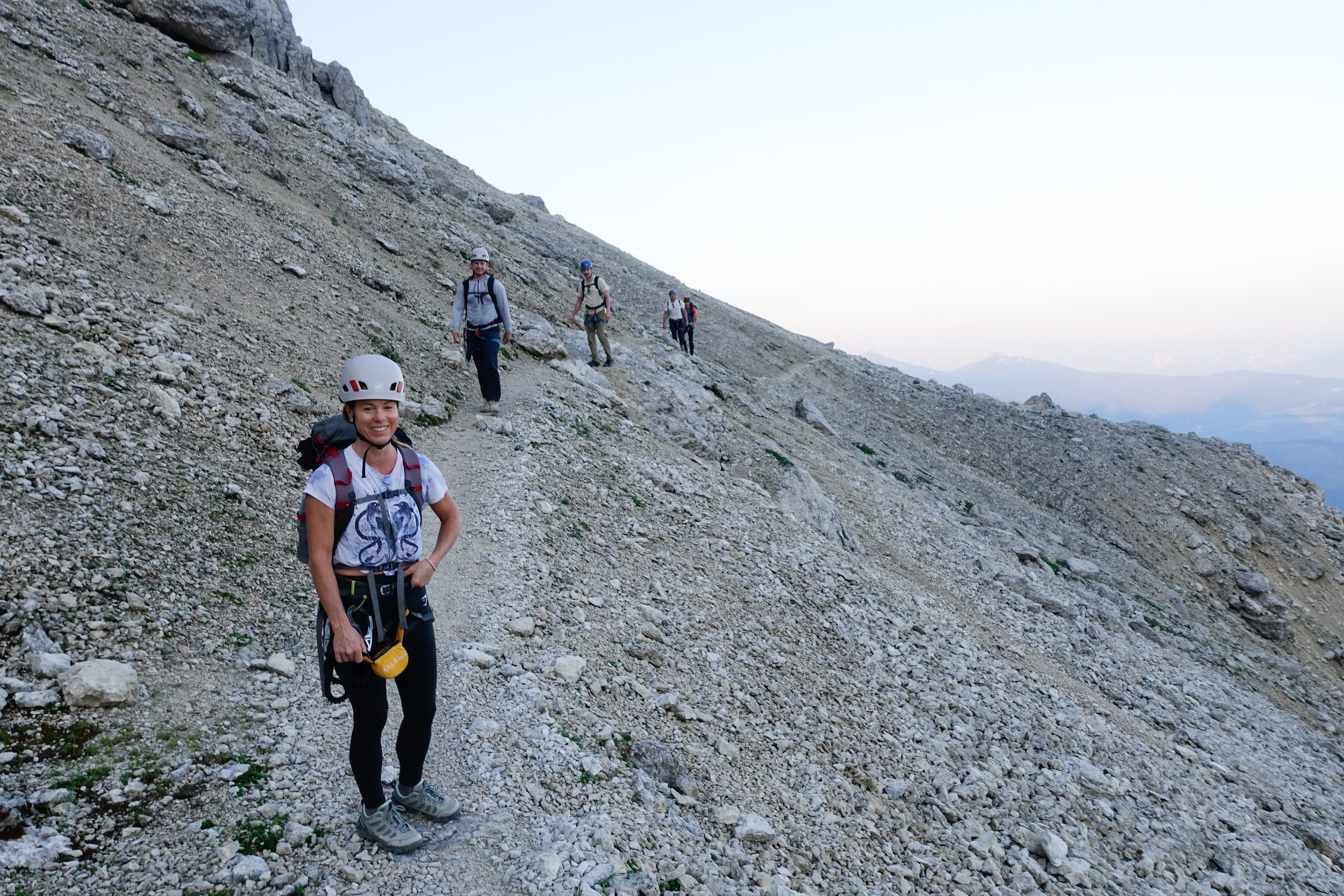
After approximately 15 minutes, this section ends and a pleasant traverse of another 20 minutes leads to the official start of the Santner Via Ferrata.
Unlike many modern via ferratas, this route is not continuously protected by steel cables.
This is exactly what makes it so special!!!
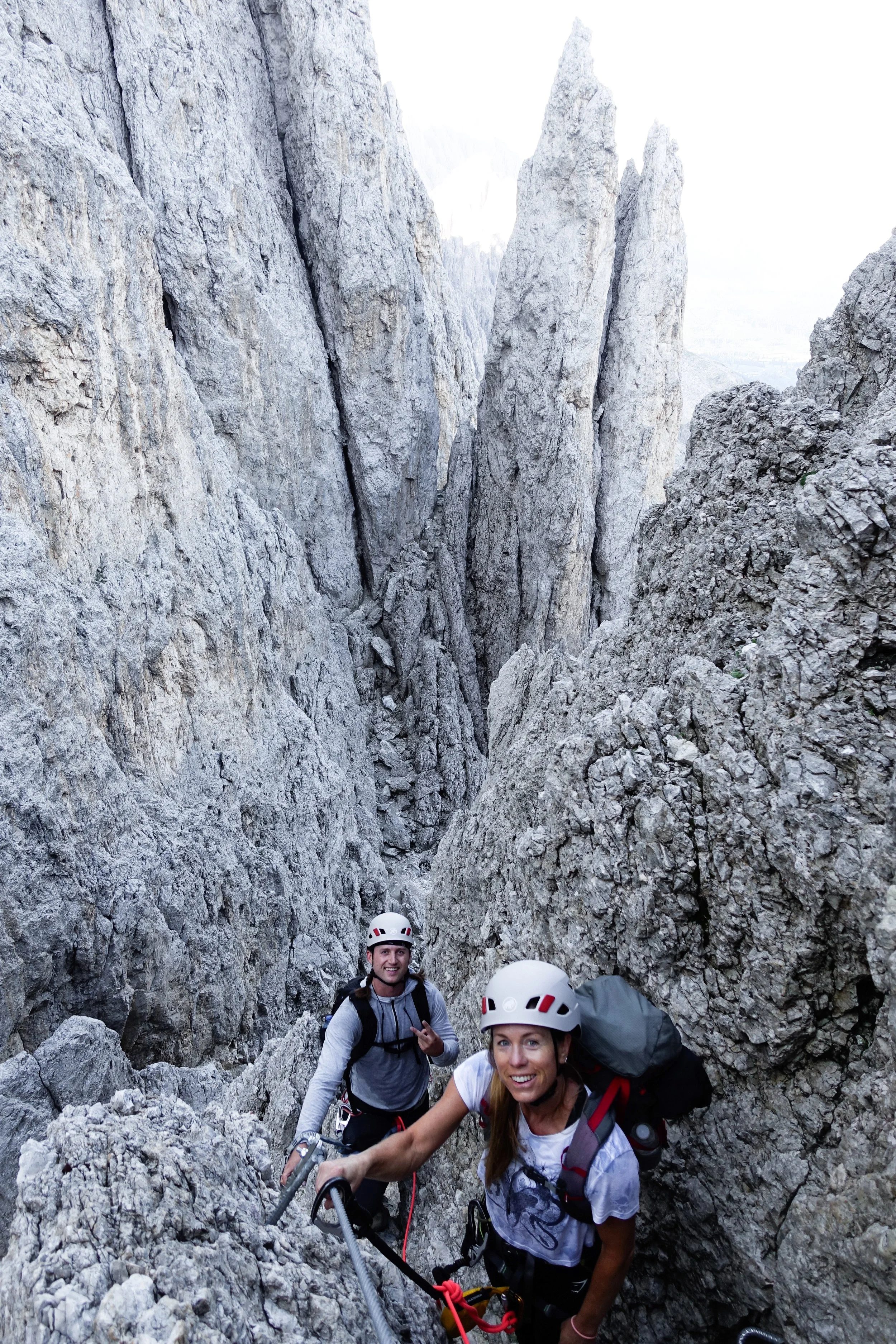
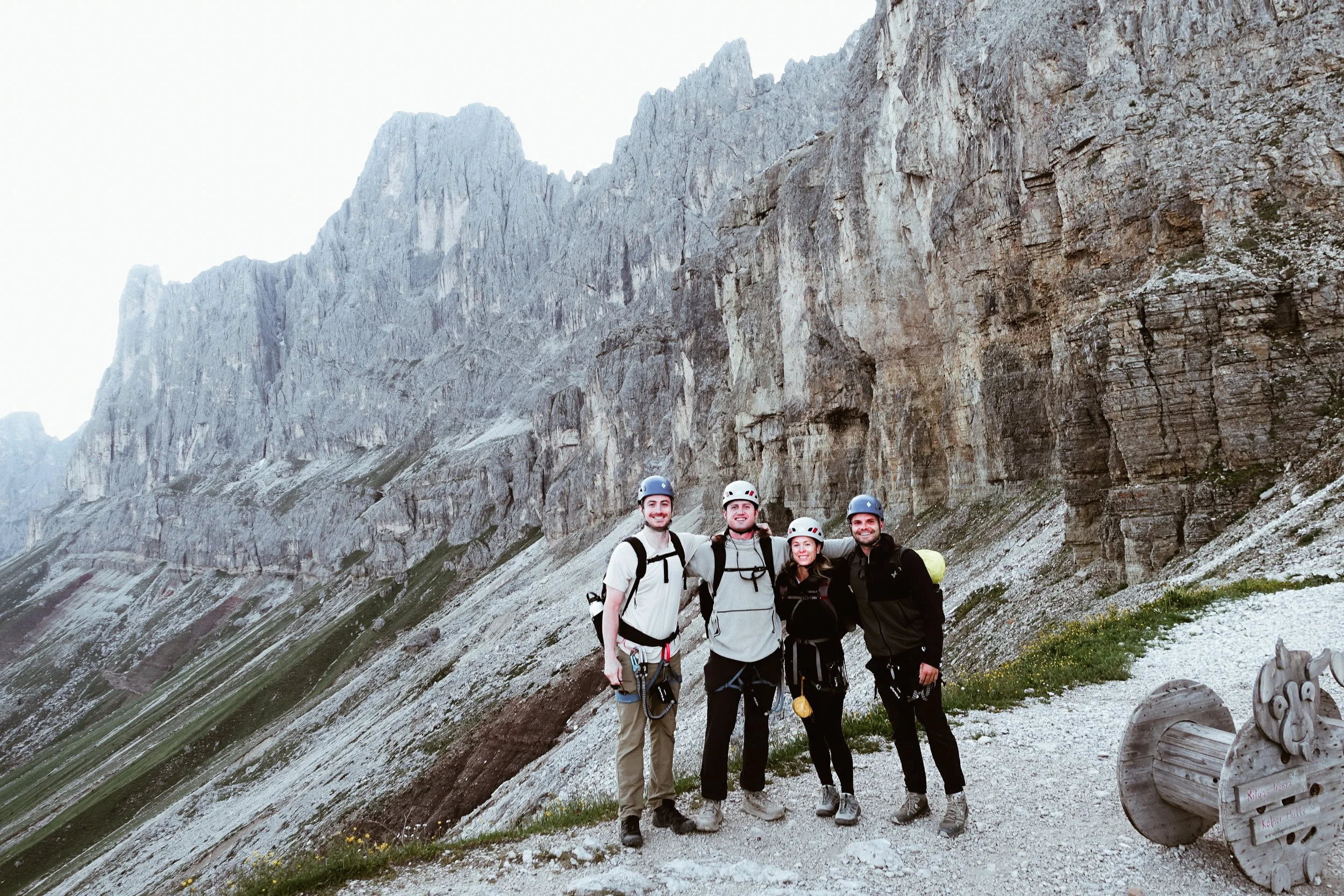
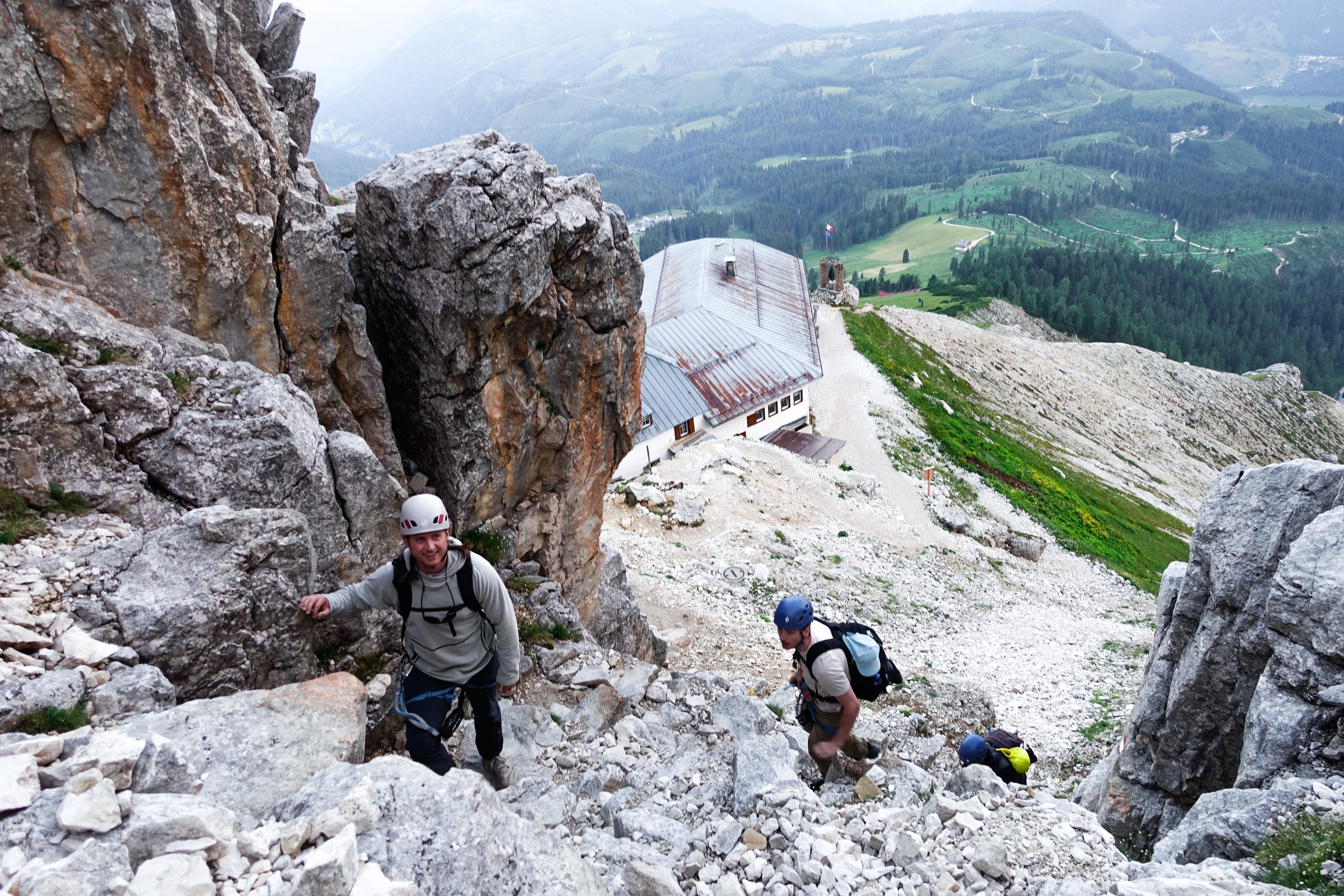
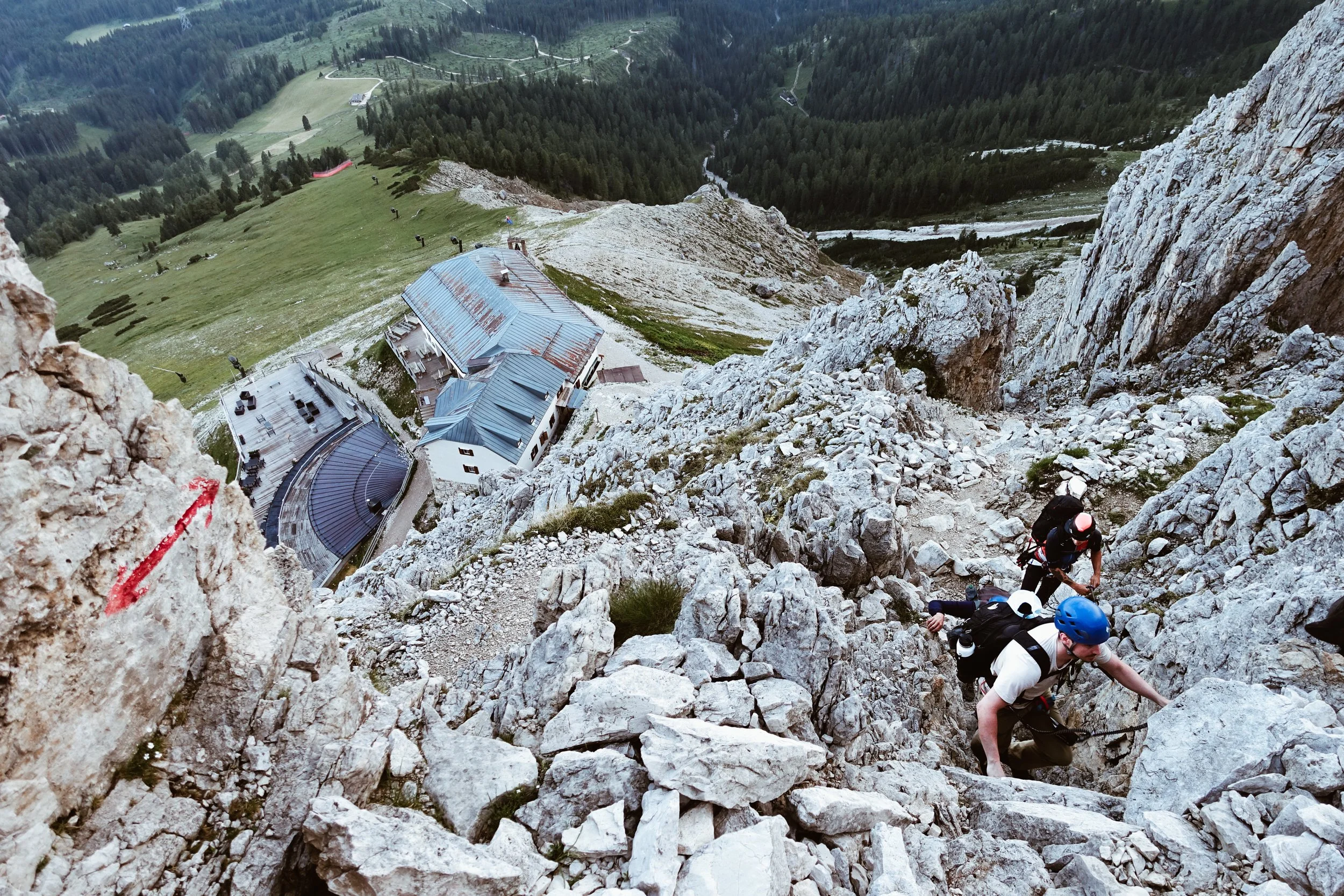
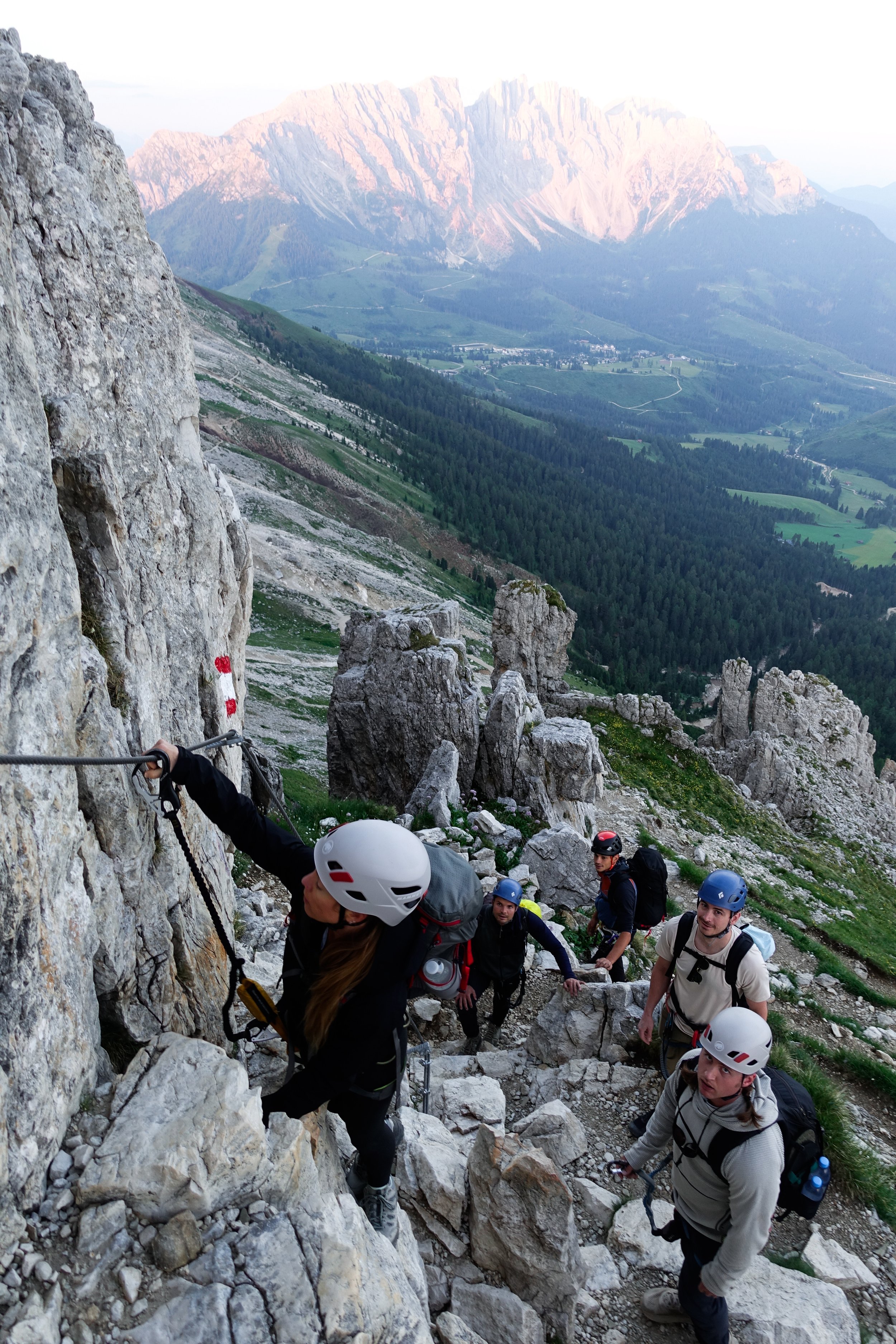
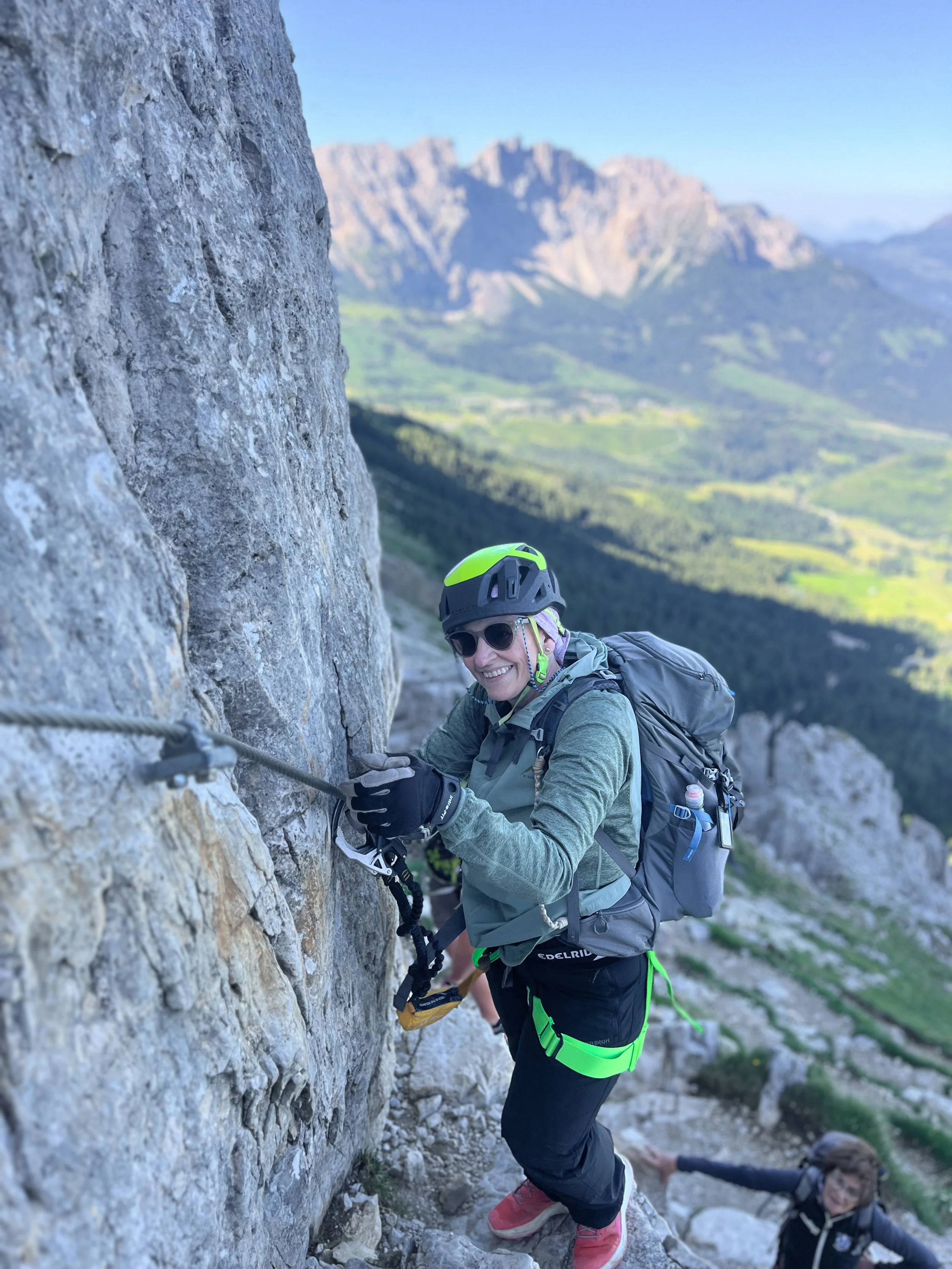
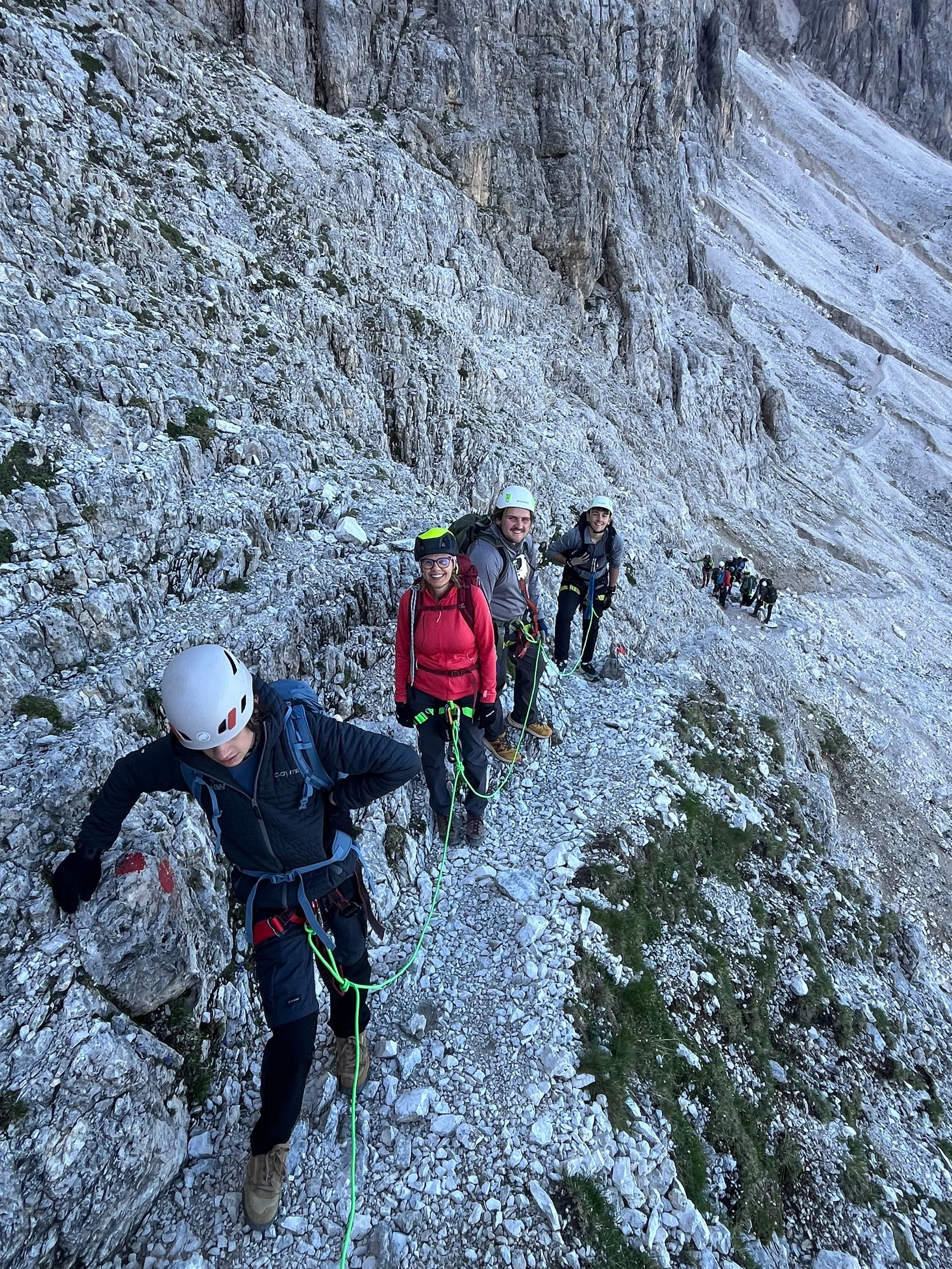
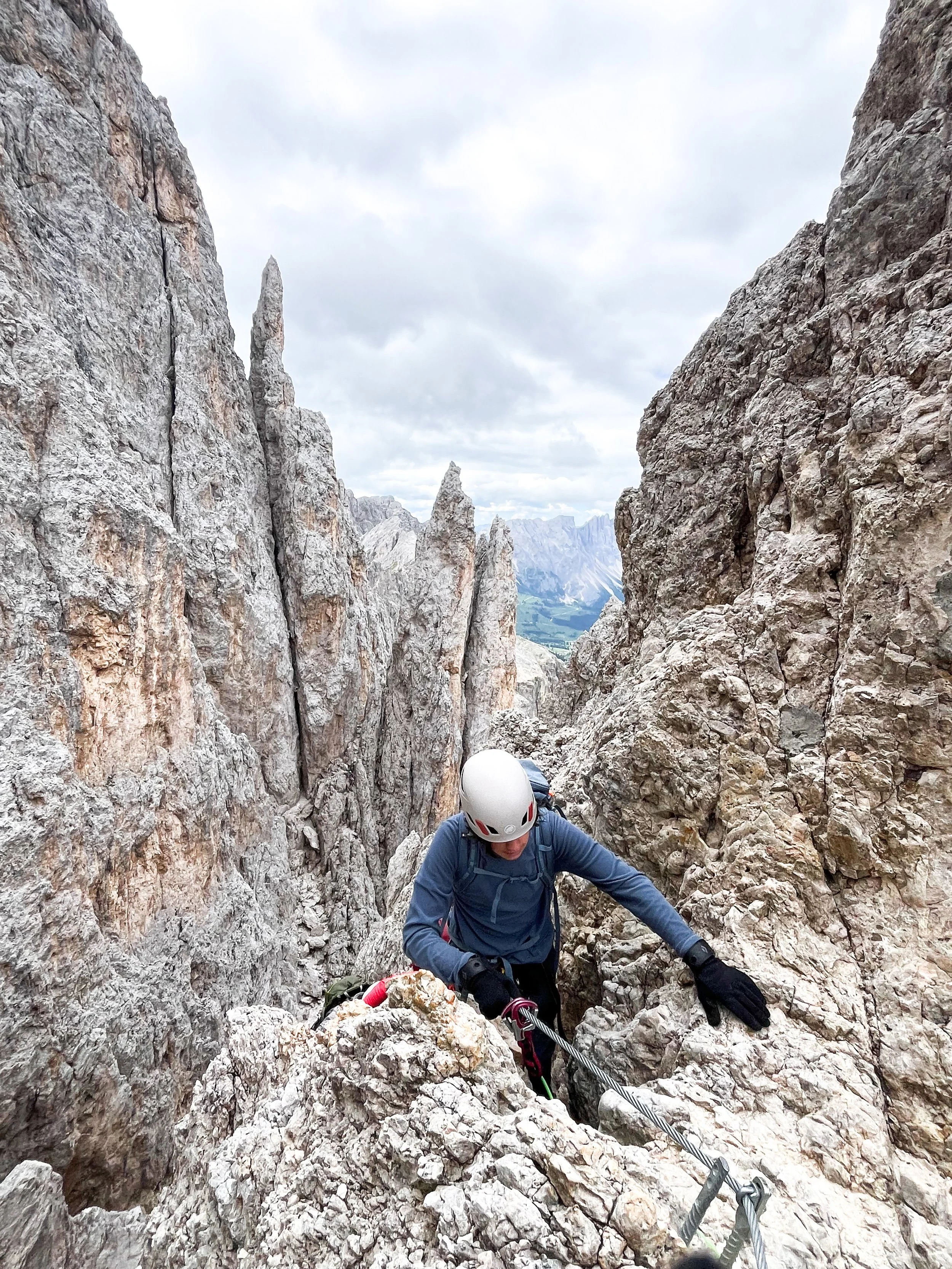
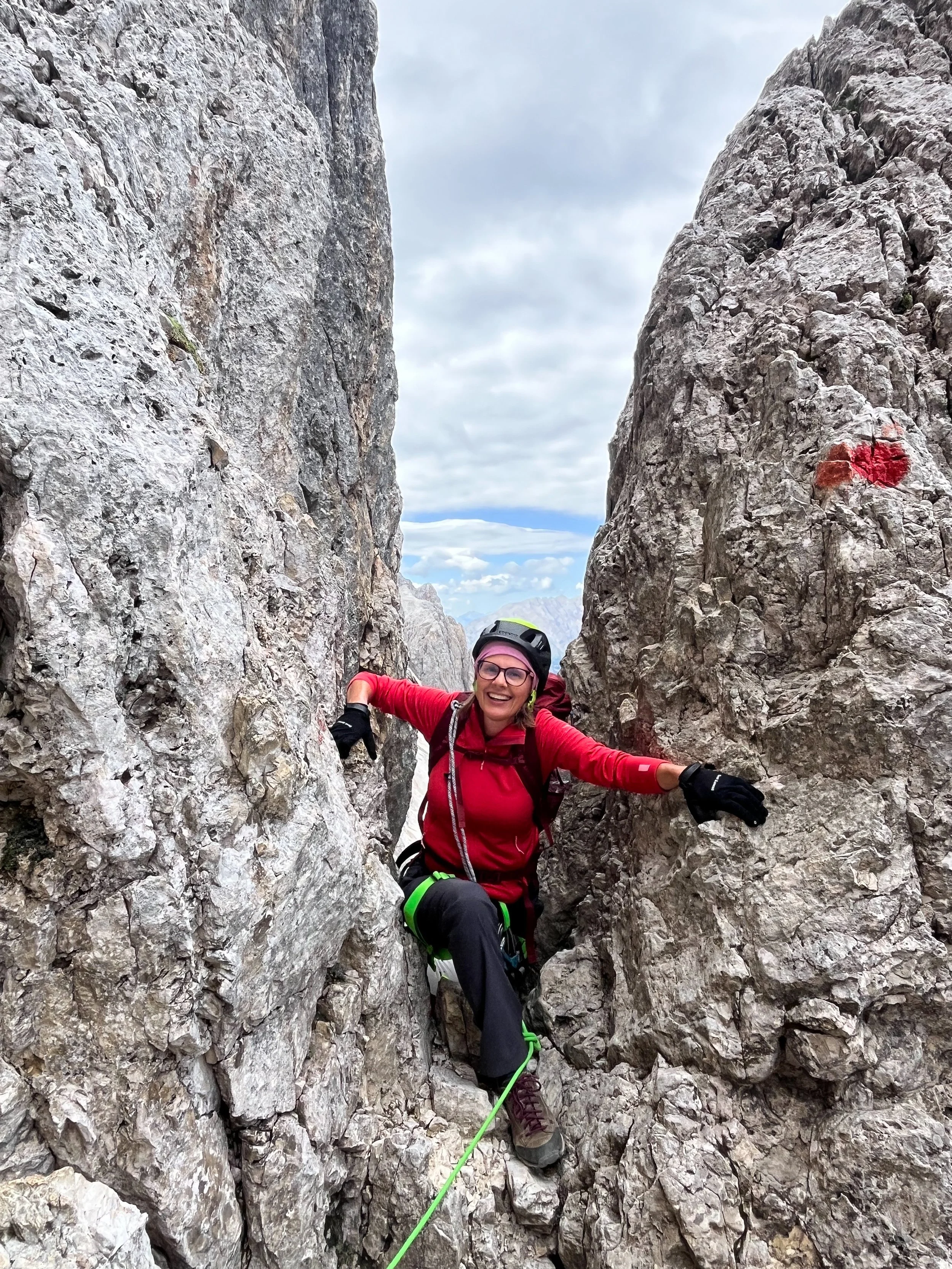
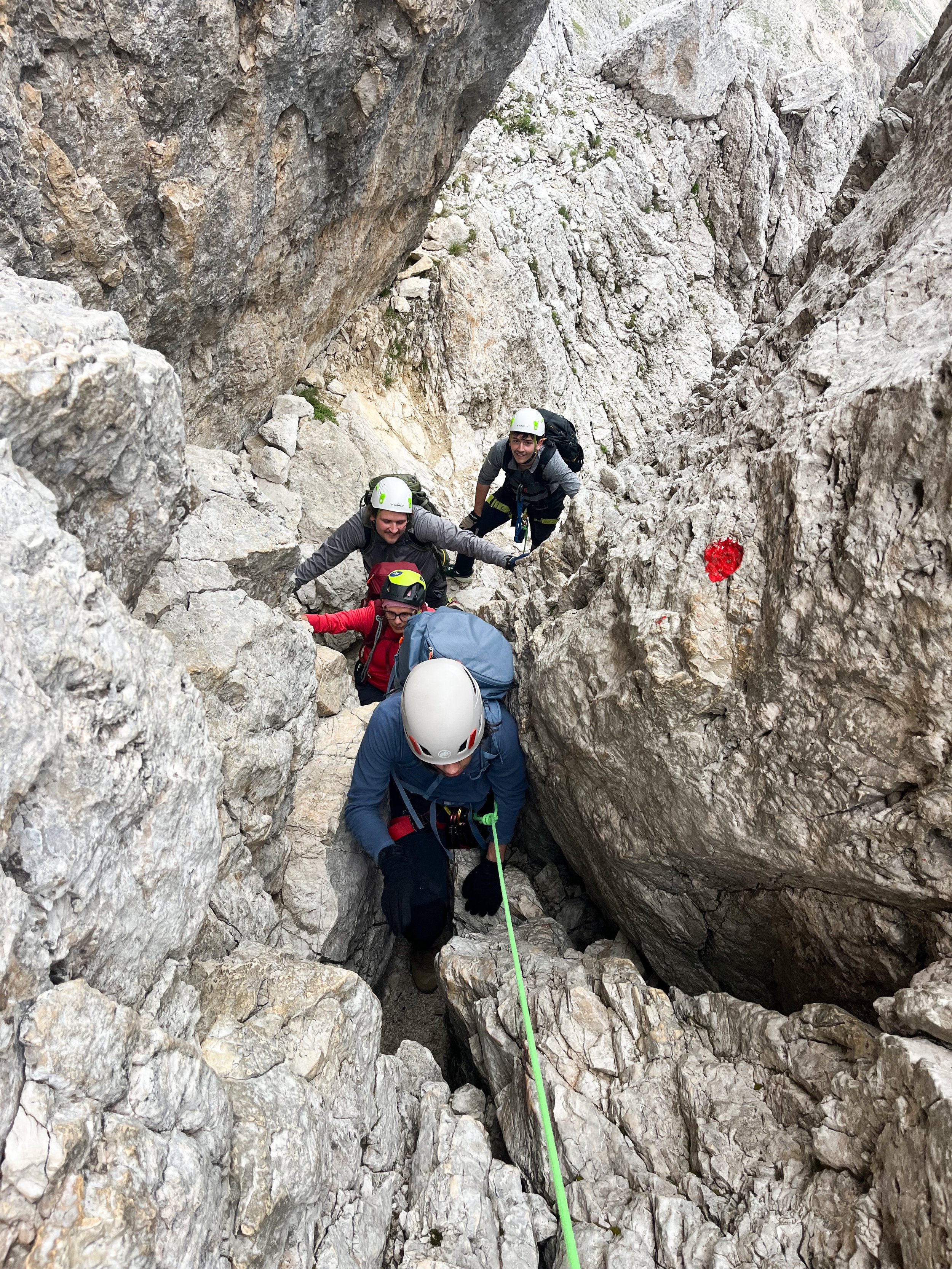
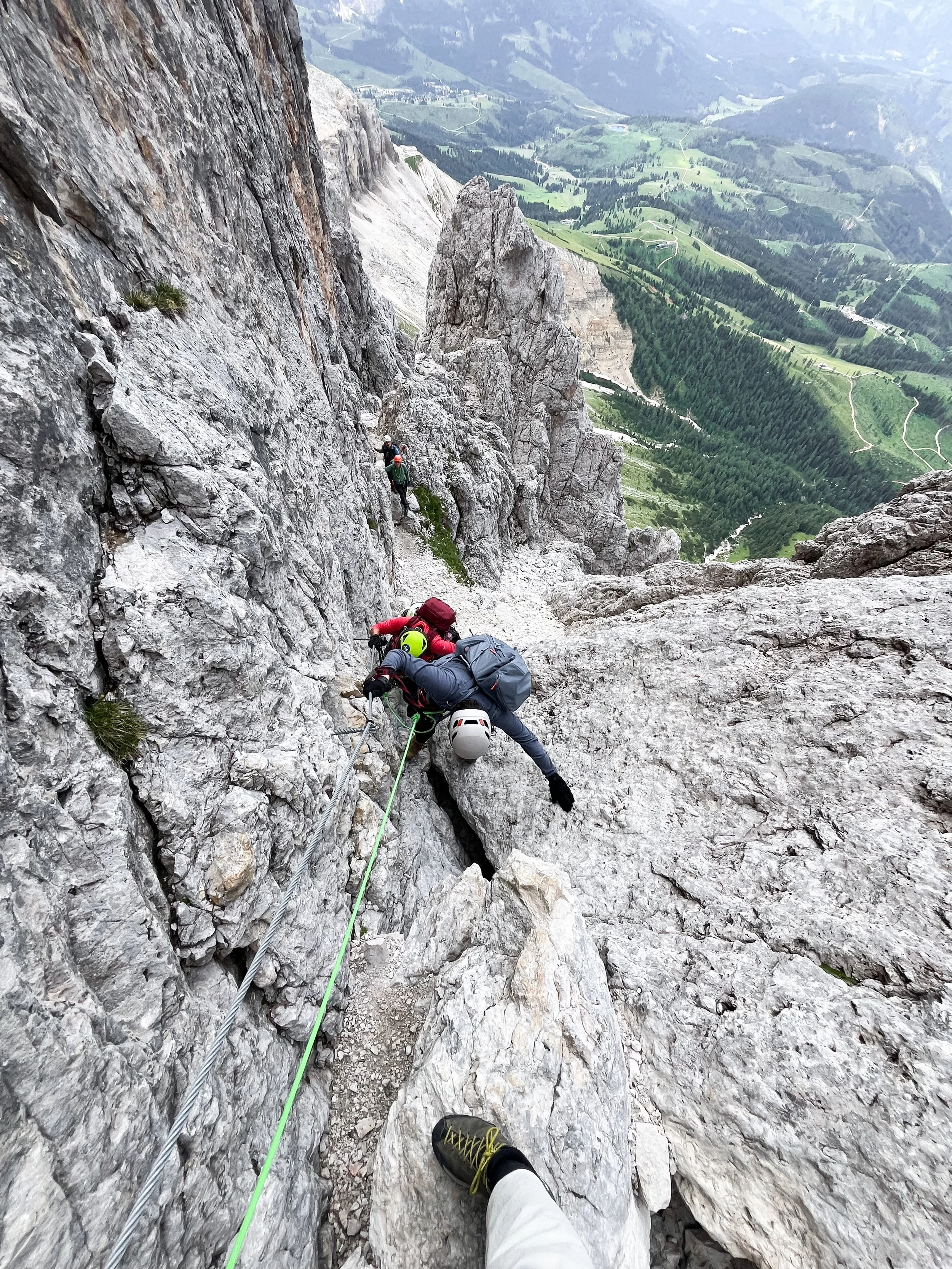
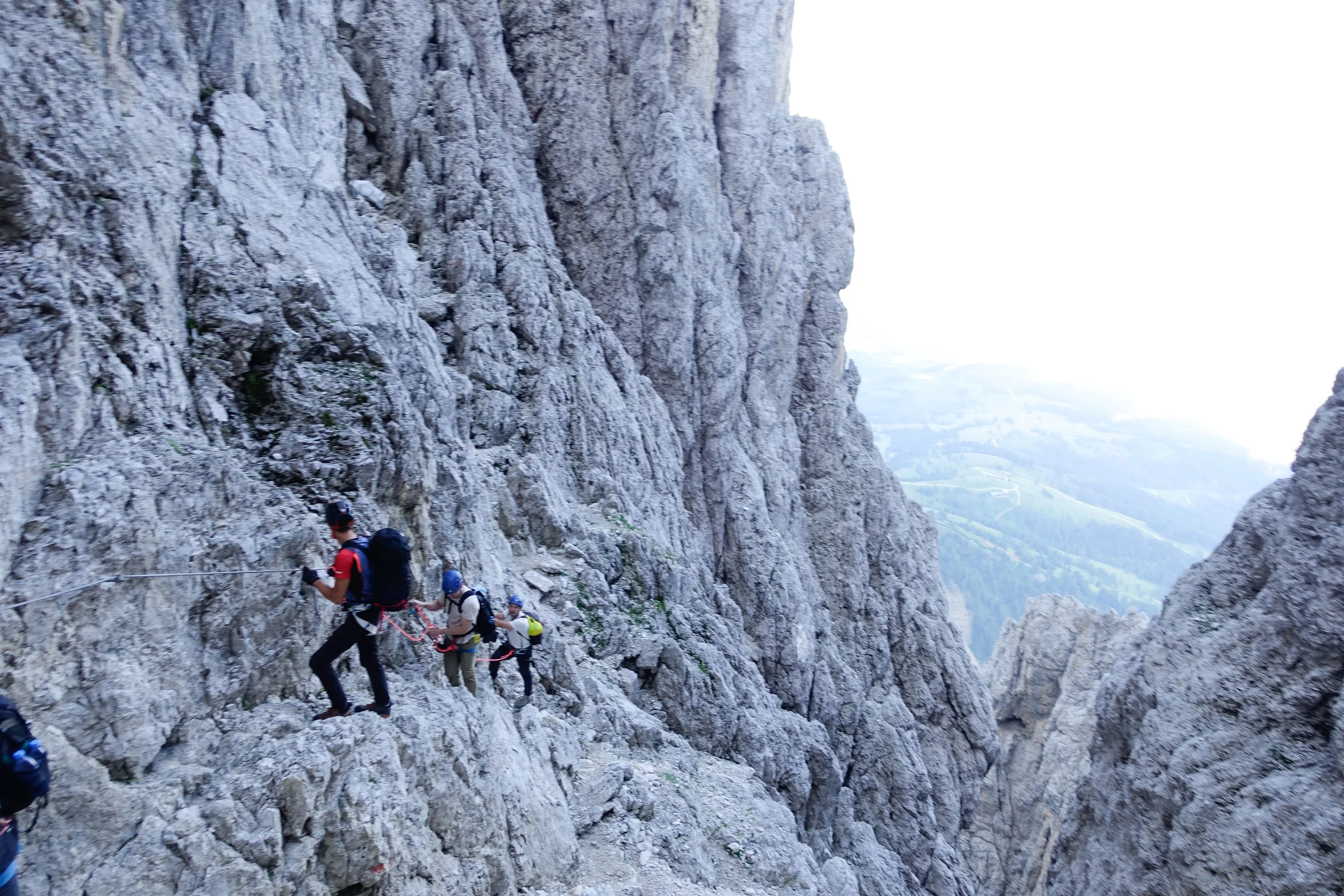
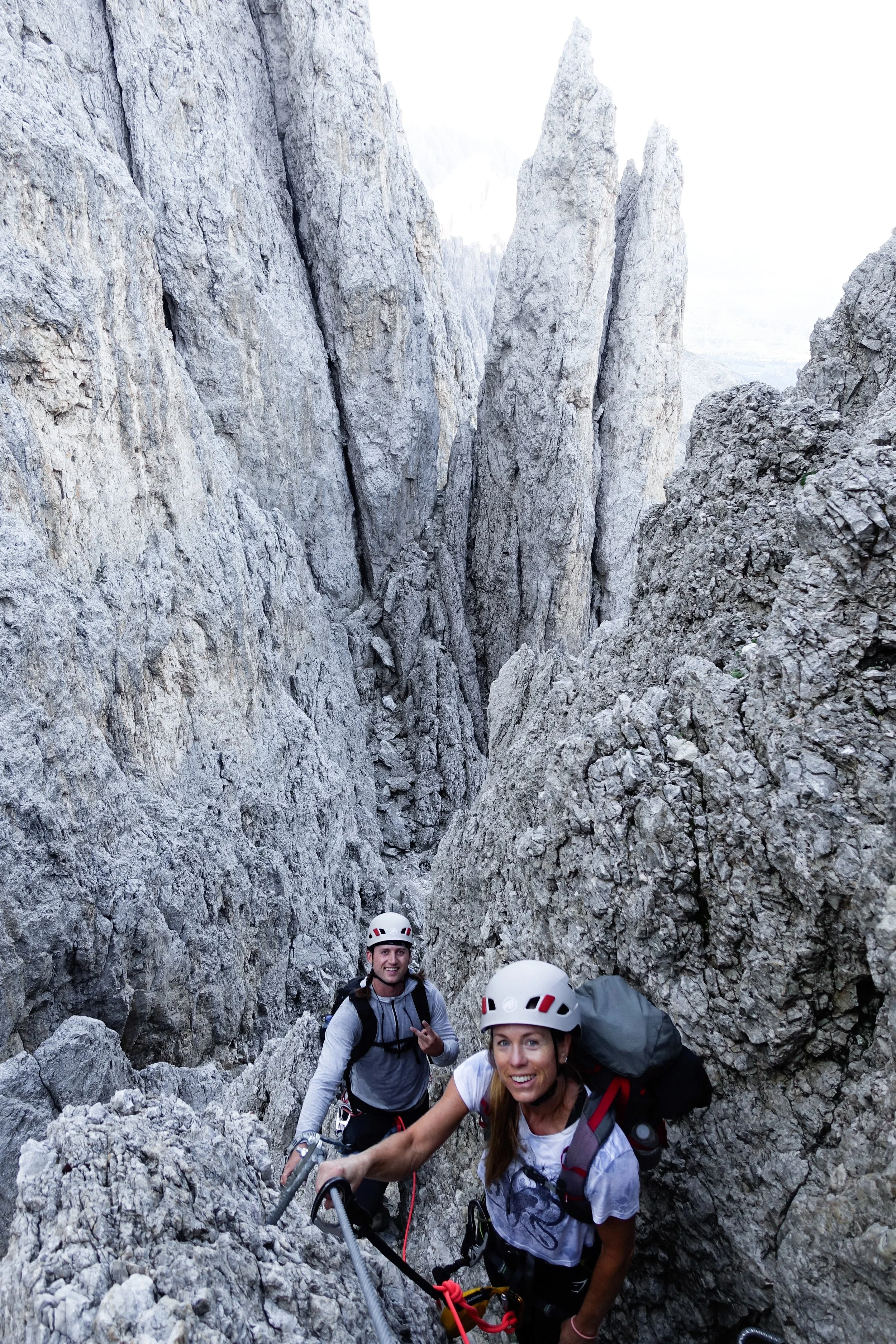
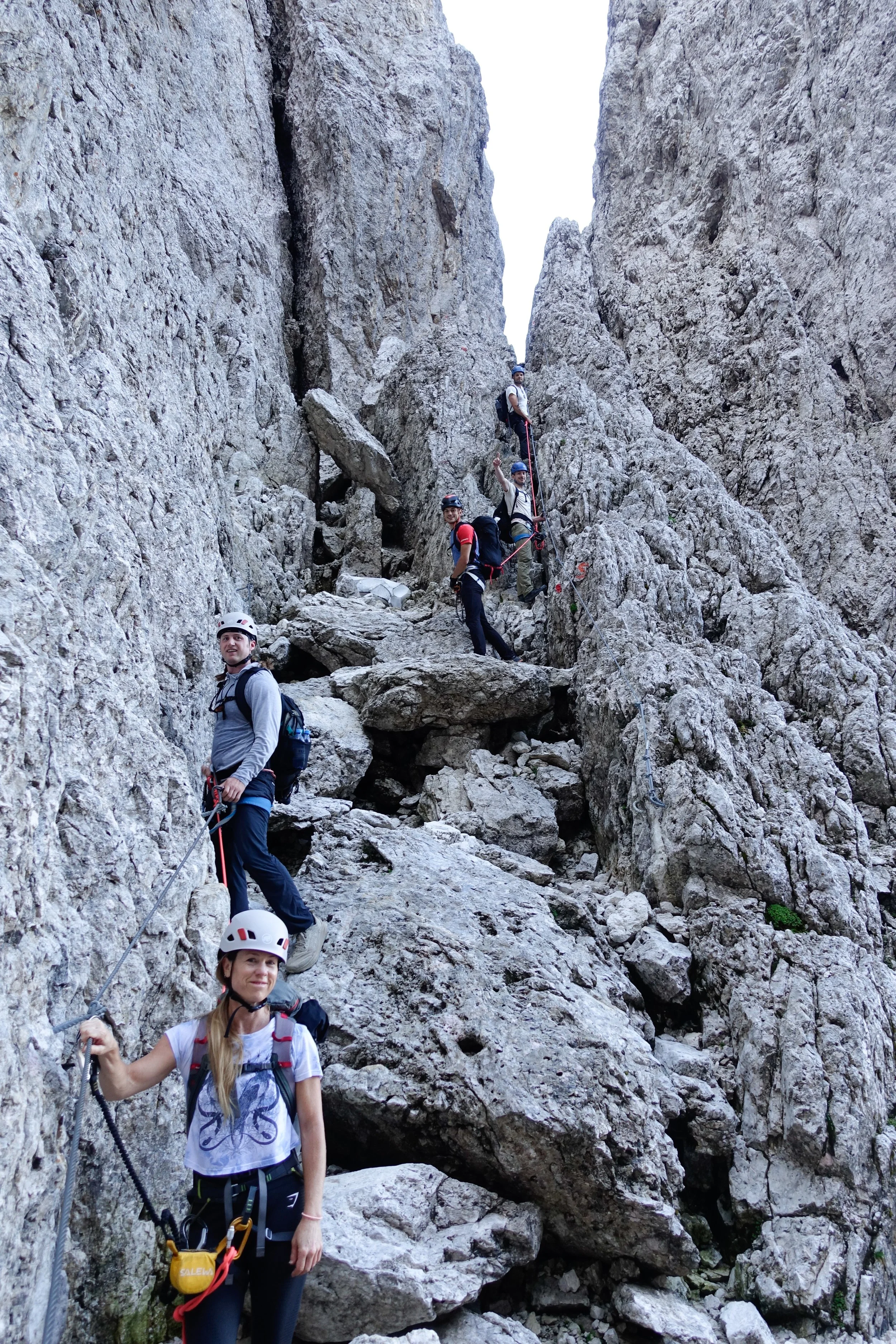
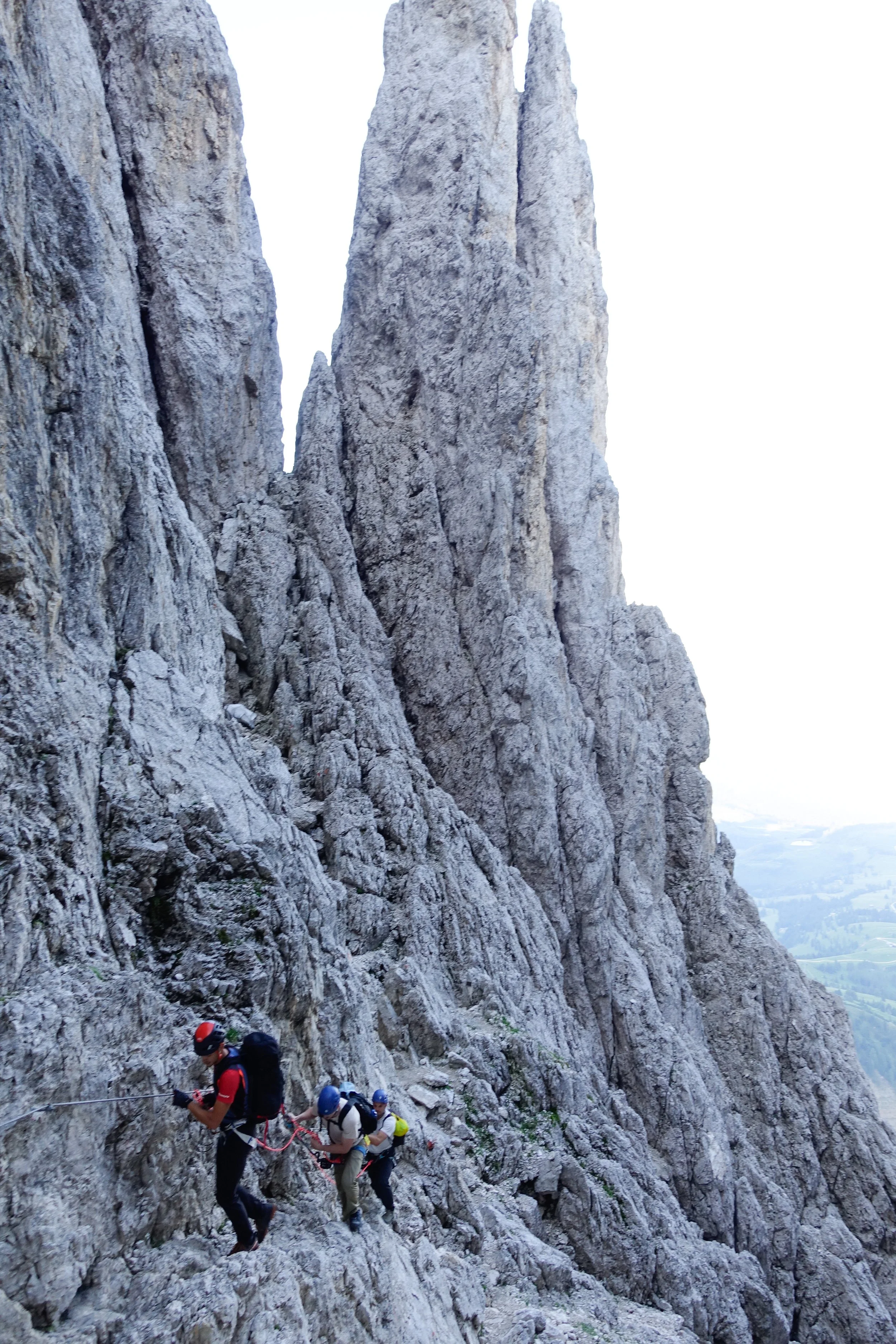
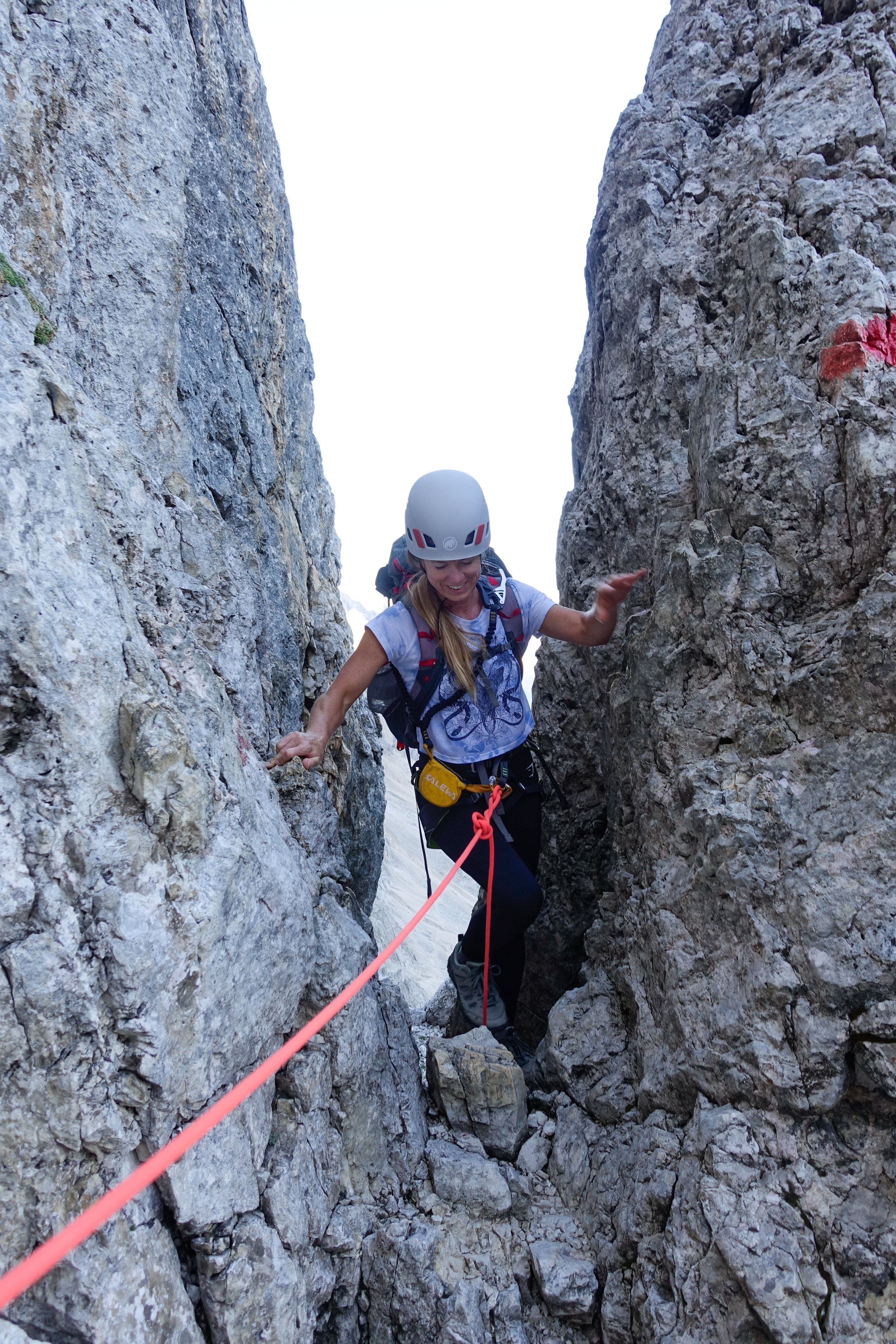
Much of the ascent involves scrambling terrain, narrow gullies, exposed ledges and natural passages beneath the massive walls of the Rosengarten. The difficulty is never extreme, but the exposure requires confidence, balance and mountain experience. It is a true alpine route!
Early Season Conditions
If you are planning to climb the Santner Via Ferrata in June or early summer, checking conditions is essential.
Snow often remains in shaded gullies and can make certain sections difficult or dangerous without proper equipment such as crampons and ice axe.
We always recommend checking with Rifugio Fronza, Rifugio Santner, or local IFMGA mountain guides before the ascent.
Even later in the season, conditions can change quickly, so a quick check is always a good idea!
The Most Beautiful Part of the Route
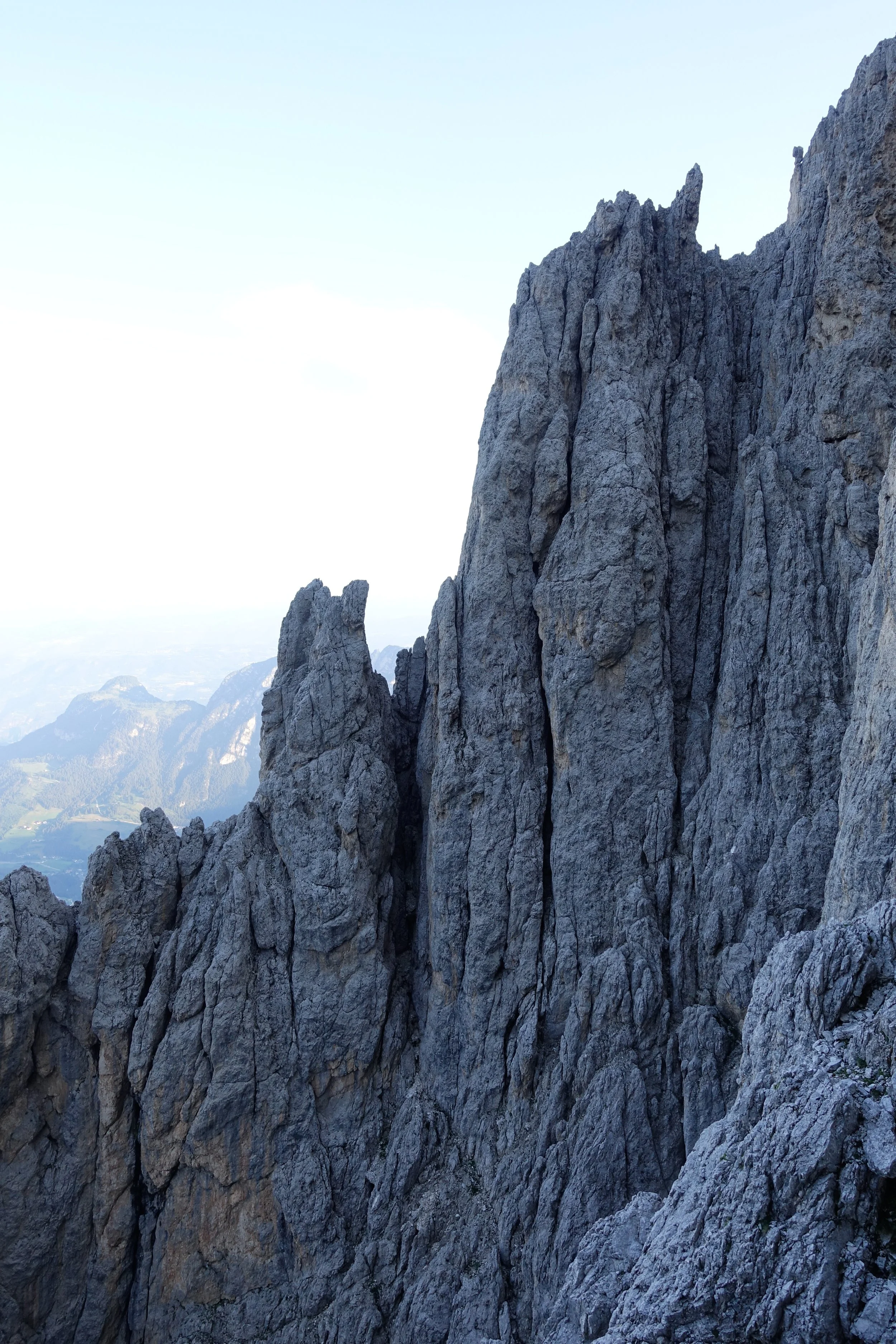
As you gain altitude, the scenery becomes increasingly spectacular.
The route winds through the mountain itself, crossing gullies, ledges and natural passages beneath the towering cliffs of the Rosengarten.
Eventually you reach the key section just after crossing a gully (often with snow till mid summer): a short 5 metre vertical wall, protected by steel cable. Level B/C short section.
Above this, only a short final section remains before reaching Passo Santner, where the view suddenly opens onto one of the most iconic landscapes in the Dolomites: Rifugio Santner, Rifugio Re Alberto and the Vajolet Towers.
It is a moment you do not forget!
Planning Your Day
To enjoy the route at its best, we recommend taking the first cable car in the morning and starting as soon as possible from Rifugio Fronza.
Always check weather conditions and route status before departure!
If you are new to via ferratas or unsure about the terrain, hiring a local IFMGA Mountain Guide is the safest and most enjoyable way to experience this route!
👉 https://www.dolomitesafari.it/contact
We are happy to guide guests on the Santner Via Ferrata, whether as a day ascent or as part of a longer hut-to-hut journey.
Can Beginners Climb the Santner Via Ferrata?
Yes, fit beginners can climb the Santner Via Ferrata with a Mountain Guide .
However, it should not be underestimated. Unlike modern sport ferratas, large sections are protected by steel cables and require confident movement and scrumbling on exposed terrain.
For this reason, it is always important to assess conditions, fitness and experience carefully before starting.
How to Return
There are three main options for the descent.
1. Via Passo delle Coronelle
A beautiful circular route passing through the Vajolet Valley and Passo delle Coronelle, before returning to Rifugio Fronza. Recommended (but start early!)
2. Via Rifugio Gardeccia, Sentiero delle Leggende, Rifugio Ciampedie and Cablecar
A longer but scenic descent leading to Vigo di Fassa with the Catinaccio Cable car and back to Nova Levante or Bolzano by bus (number 180). Long but a good option if you arrive at Rifugio Vajolet and you don’t feel like climb up to Passo Coronelle!
3. Via the Santner Via Ferrata (not recommended)
The same route can be used in descent, but this option is only suitable for very experienced climbers or (better) with a Guide.
How Long Does the Santner Via Ferrata Take?
The ascent from Rifugio Fronza to Rifugio Santner usually takes between 1,5 and 3 hours, but of course it depends on your fitness, previous via ferrata experience and the pace of your group.
If you continue to Rifugio Re Alberto, enjoy lunch on one of the most spectacular terraces in the Dolomites, in front of the Vajolet Towers. If you do not stay for the night at one of the Rifugios, and return via one of the descent options described below, you should plan for a full day in the mountains.
One of the great advantages of this itinerary is its flexibility. Strong and experienced hikers can complete it comfortably in a day, while those looking for a slower and more immersive experience can spend the night at Rifugio Santner or Rifugio Re Alberto, enjoying the unforgettable atmosphere of the Rosengarten after most day visitors have left.
Who Was Georg Santner?
The route is named after Georg Santner (1849–1912), a pioneer of Dolomite alpinism from Bolzano.
In 1887, together with Alois Delug, he explored and completed the first ascent through the steep gullies that now form the Santner route. At that time, there were no fixed cables, and the ascent required true exploratory mountaineering skills.
Walking this route today means following in the footsteps of one of the early pioneers of the Dolomites!
Discover the Entire Rosengarten
While the Santner Via Ferrata is an unforgettable day experience, it becomes even more special as part of a longer journey through the Rosengarten.
Our Rosengarten Via Ferrata Safari is a guided hut-to-hut adventure that can be customised from 2 to 5 days, combining the Santner route with other iconic via ferrata climbs in the Catinaccio/Rosengarten Dolomites.
👉 https://www.dolomitesafari.it/rosengarten-via-ferrata-hut-to-hut-dolomites
Final Note
This is one of those routes that stays with you long after you leave the mountains.
From the first light to the arrival at Passo Santner and the view over the Vajolet Towers, the Santner Via Ferrata is much more than a climb… It is a journey into the heart of the Dolomites!
