
Best Beginner & Intermediate Via Ferratas Near Bolzano
A local guide to the best via ferrata within one hour of Bolzano, from scenic Dolomite classics to spectacular waterfall routes.
The Bolzano area is one of the best bases in the Dolomites for via ferrata. Within about an hour’s drive you can reach a wide variety of routes, from scenic beginner-friendly climbs to more adventurous alpine ferratas surrounded by some of the most iconic landscapes in the Dolomites.
Thanks to its location between the Dolomite peaks and the valleys of South Tyrol, Bolzano offers access to routes at different elevations. During summer, classic ferratas around the Rosengarten and Val Gardena provide spectacular mountain experiences, while in spring and autumn lower elevation routes near waterfalls and gorges often offer excellent climbing conditions.
Mountain conditions can change quickly in the Dolomites. In winter, snow and ice may make many ferratas unsafe, and even in summer sudden storms, strong winds or fresh snowfall can affect higher routes. In these situations, lower elevation via ferratas around Bolzano can often provide great alternatives while still offering exciting climbing and beautiful scenery.
Here are some of the best beginner and intermediate via ferratas that can be reached from Bolzano for an unforgettable day in the mountains.
1) Roda di Vael Via Ferrata (with the Masarè extension)
📍 Location: Rosengarten / Catinaccio – Carezza area
📏 Driving time from Bolzano: about 35 minutes
⏱ Typical duration: full day (depending on the itinerary)
📊 Level: Beginner to intermediate with good aerobic fitness
🌞 Best season: Summer
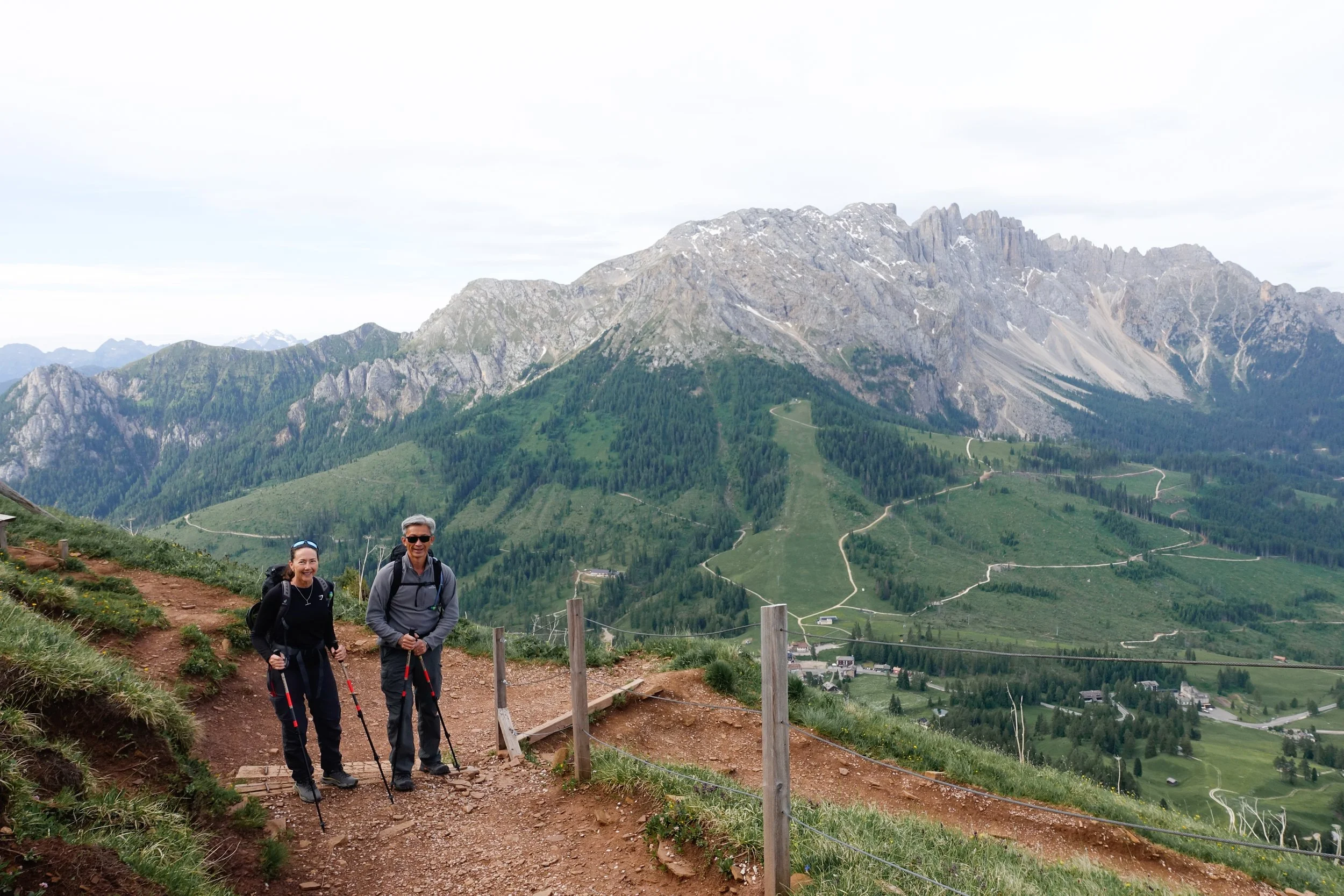
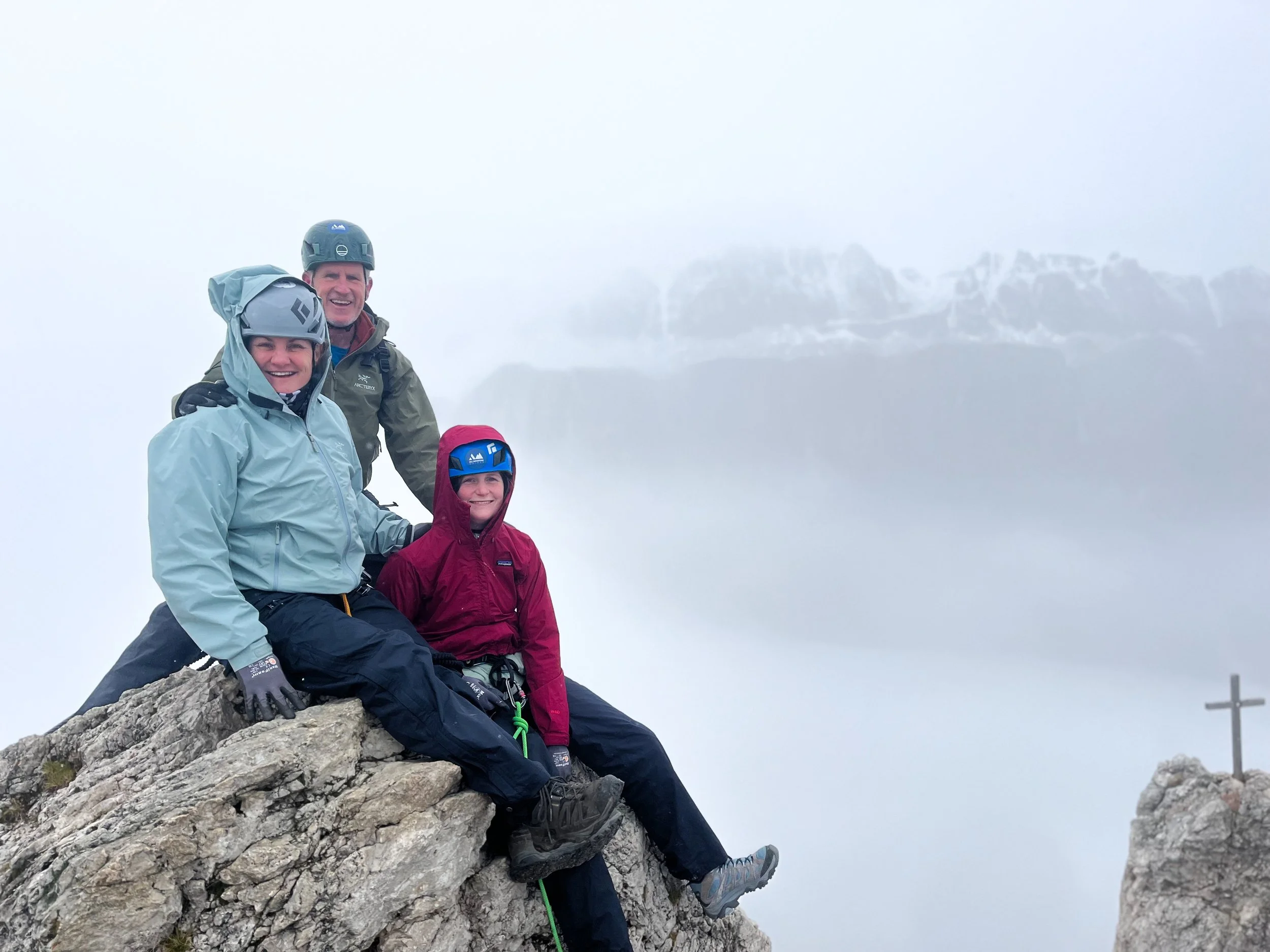
The adventure starts at the Paolina chairlift parking area near Carezza. A short ride with the Paolina chairlift quickly brings you up to Rifugio Paolina, where the panorama immediately opens with spectacular views over the Latemar and the dramatic skyline of the western walls of the Rosengarten.
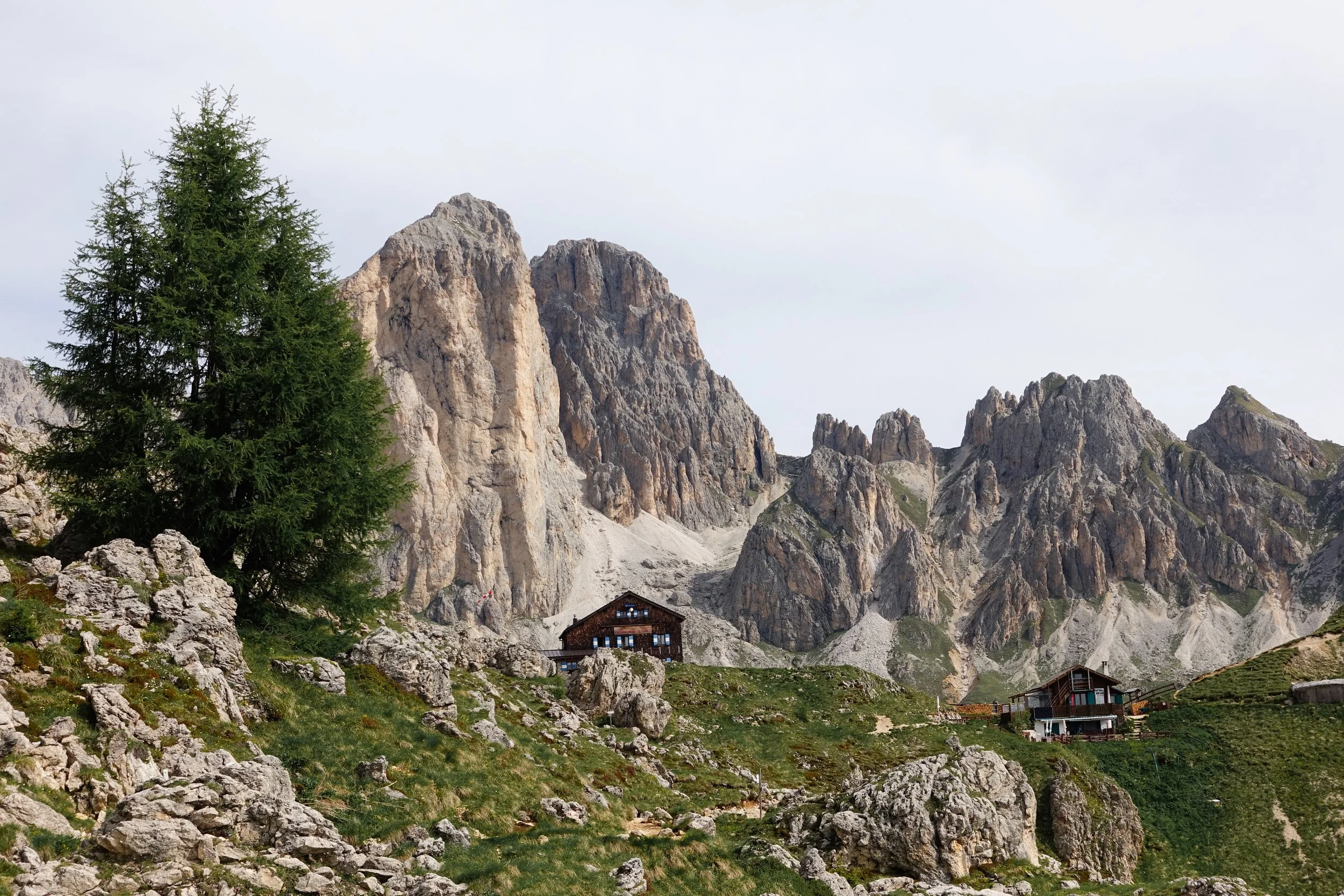
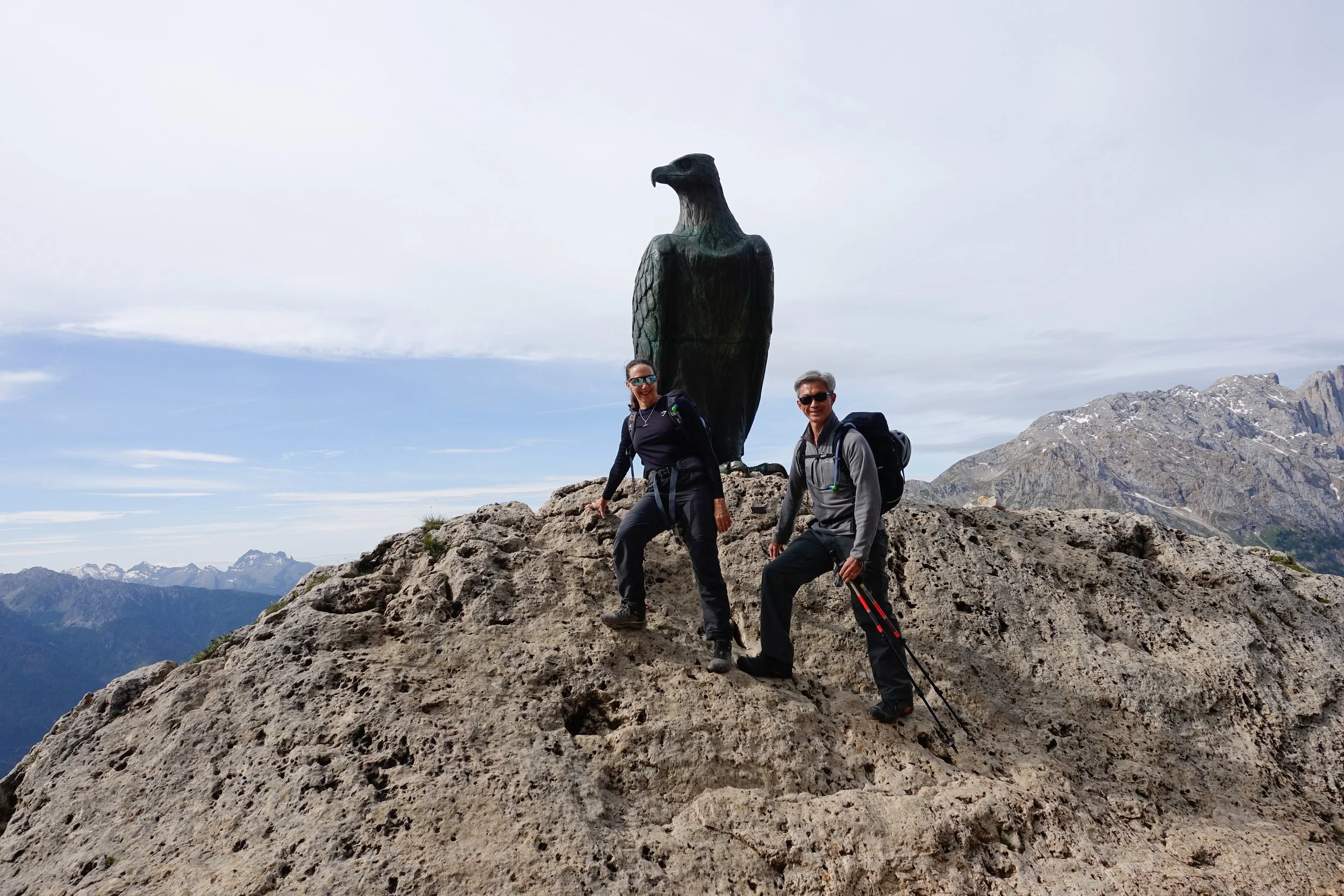
From Rifugio Paolina, a scenic trail with gentle ups and downs leads in about 45 minutes at a relaxed pace to Rifugio Roda di Vael. This is a beautiful walk that invites you to slow down and enjoy the surrounding mountains. Along the way you pass the metal eagle statue dedicated to Theodor Christomannos, the visionary figure often credited with helping develop tourism in the Dolomites. Here you also cross the border from South Tyrol into Trentino.
From Rifugio Roda di Vael the trail becomes steeper and after about 30 minutes of uphill hiking you reach the base of the ferrata. Keep an eye out along the path — marmots are often easy to spot in this area.
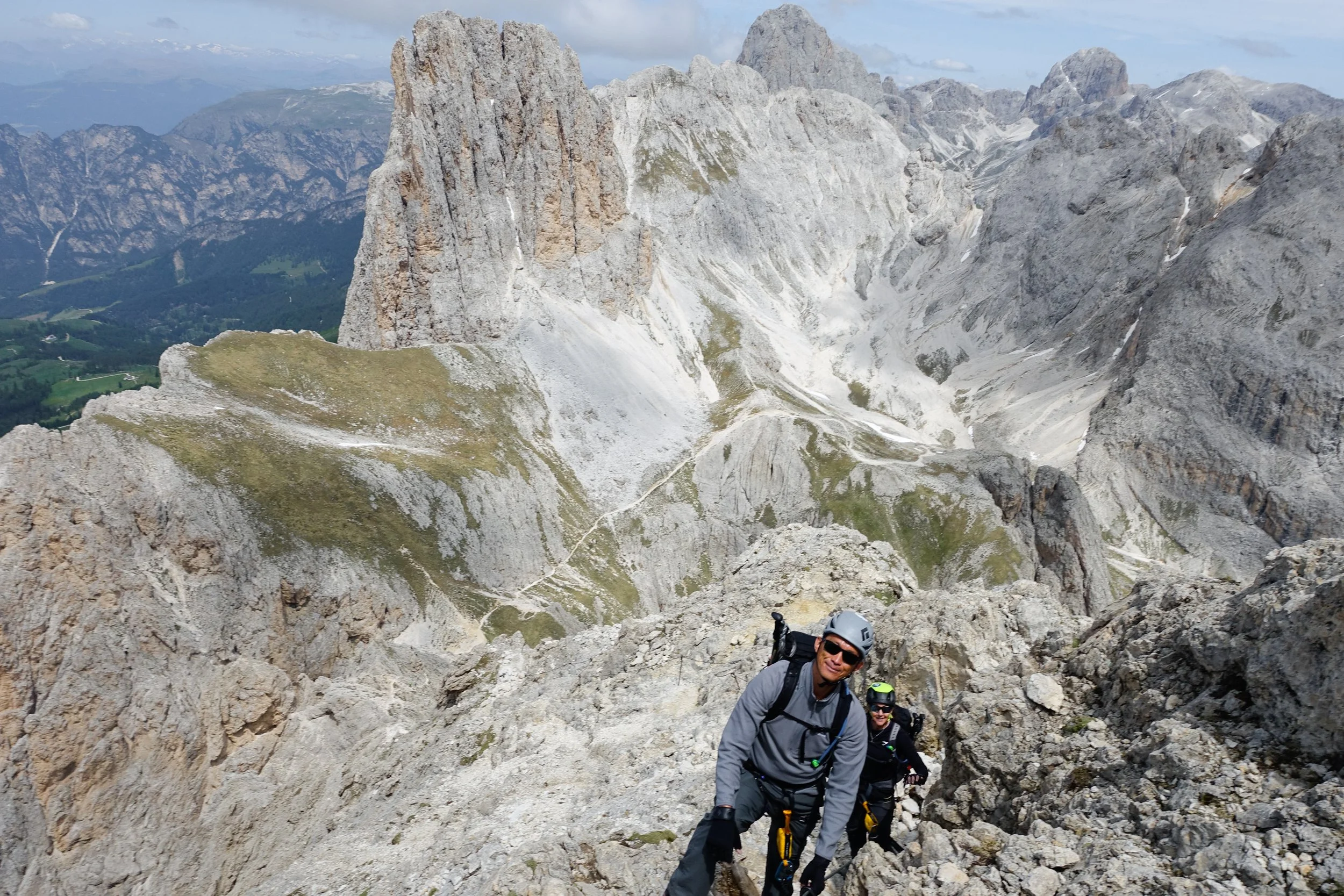
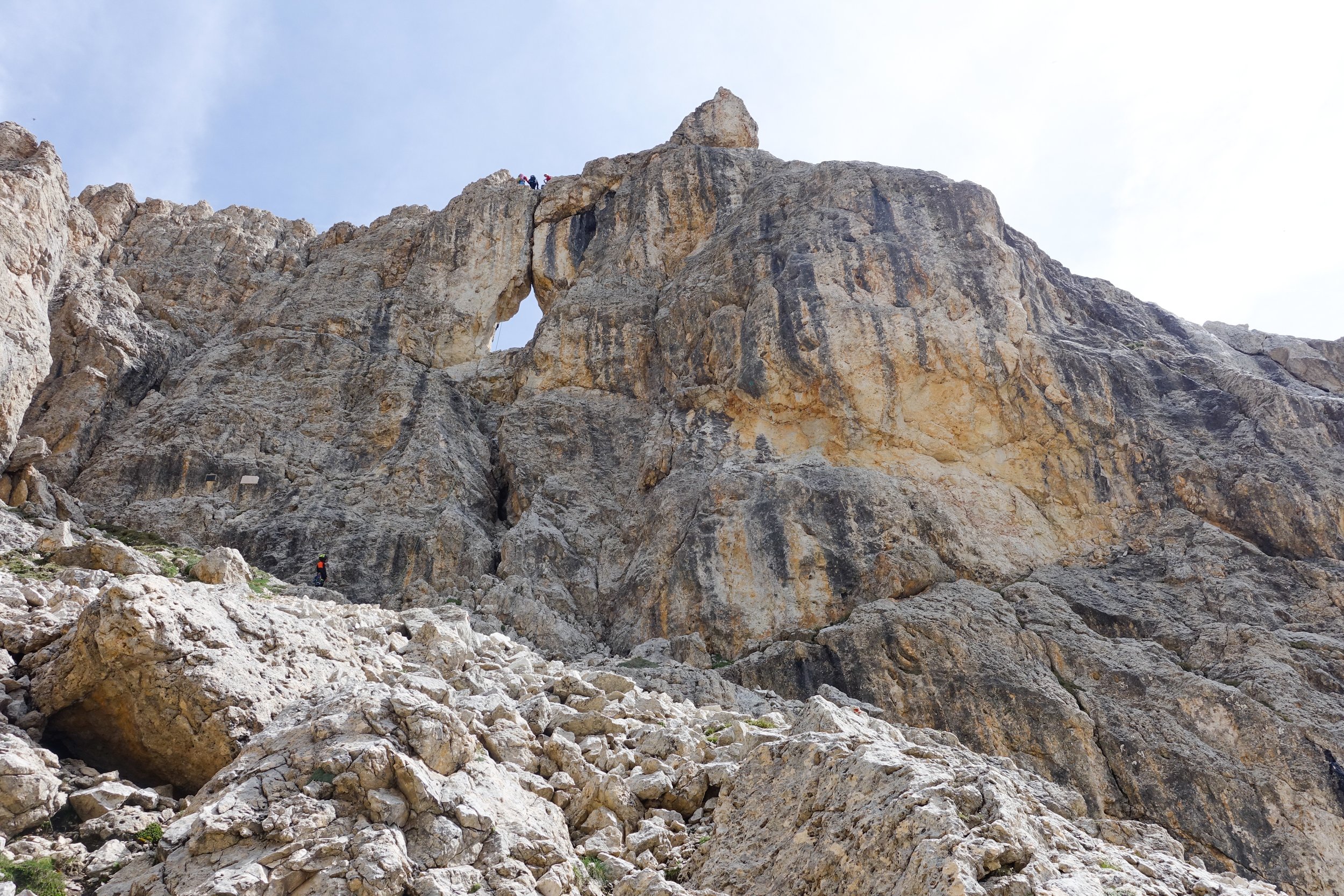
The climb begins with a short, dark and slightly slippery chimney, an atmospheric start that quickly brings you onto the rocky ridge. After this first section the route continues briefly on foot between the peaks of Roda del Diavolo and Torre Finestra, where you may even see climbers rappelling through the famous “window” in the rock.
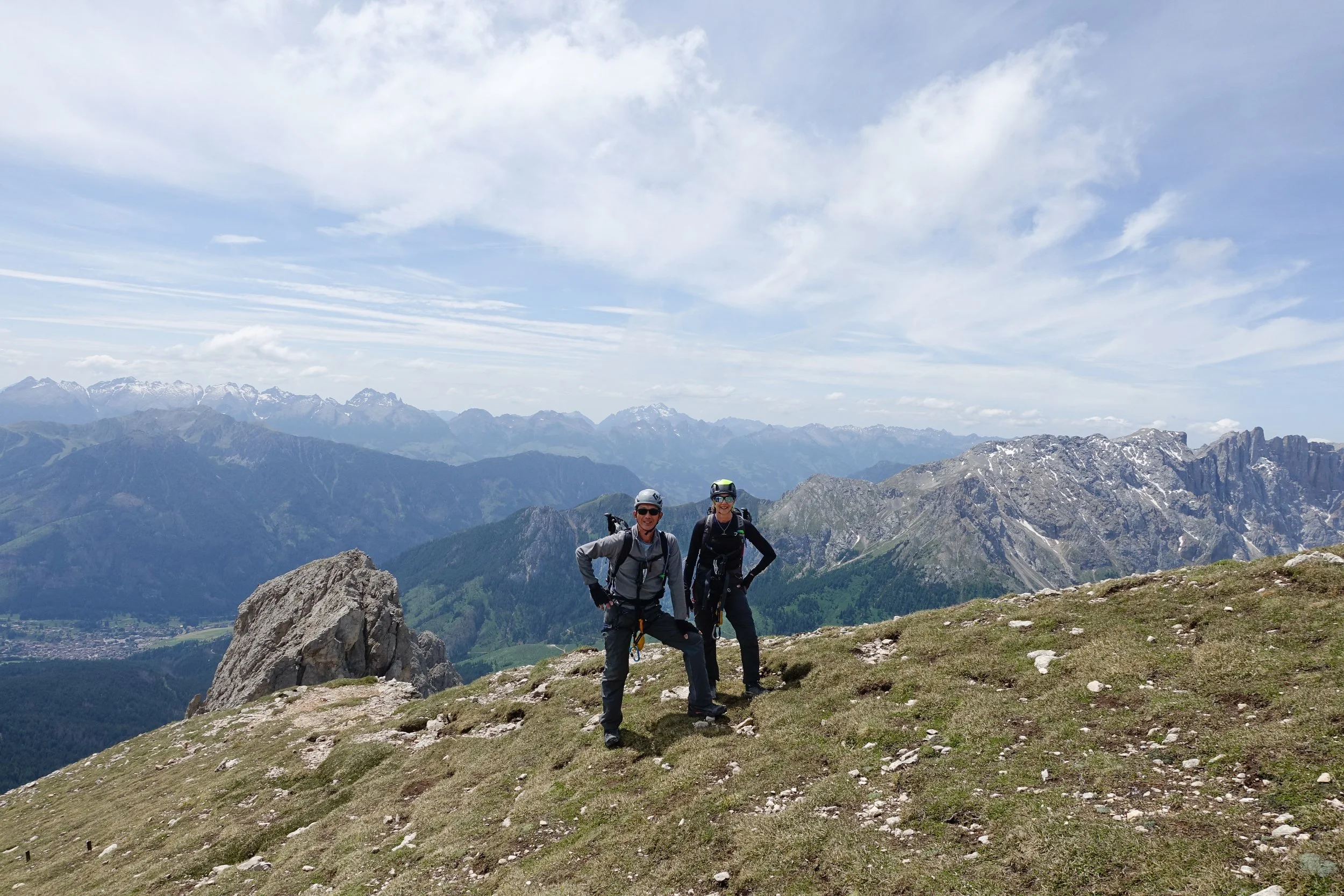
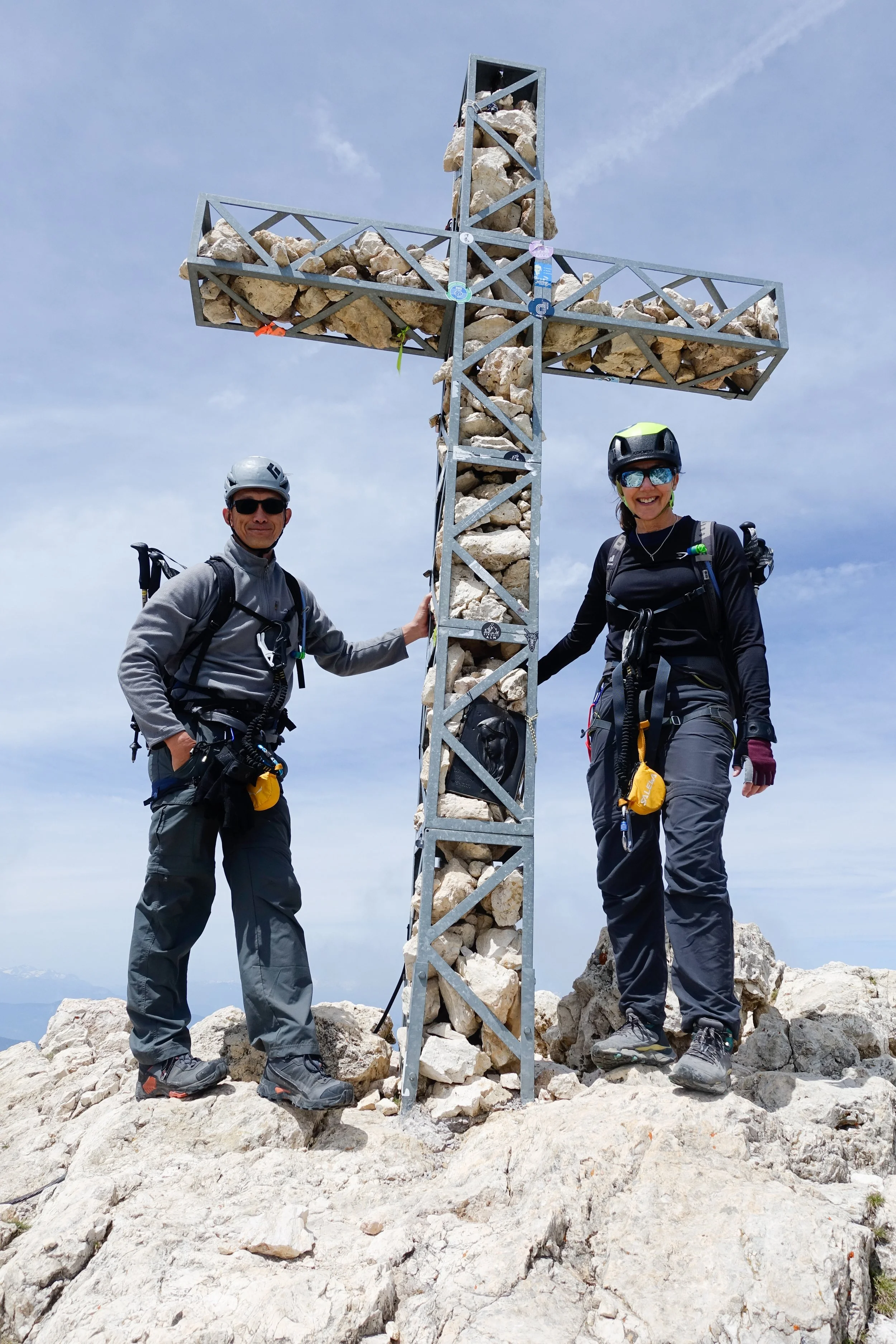
The ferrata then resumes with its most exposed section: an airy traverse that is spectacular but technically manageable. From there the route enters a rocky channel and continues upward along the cable until the terrain opens into alpine meadows. A panoramic zig-zag trail finally leads to the summit cross of Roda di Vael (Rotwand).
The views from the summit are extraordinary. On the South Tyrolean side, the Rotwand forms a dramatic overhanging wall of red and yellow rock that glows beautifully at sunset. This impressive face has played an important role in the history of Dolomite alpinism, with legendary ascents by climbers such as Hasse-Brandler, Casarotto, Heinz, Eisenstecken and Maestri… On the Trentino side the mountain opens toward steep rocky slopes and climbing walls that still maintain a wild alpine character.
The descent follows an easier via ferrata section down to Passo Vajolon, before continuing along a narrow and sometimes steep trail that reconnects with the main path and closes the loop back toward the Paolina chairlift.
The route can also be climbed in the opposite direction. This option involves a steeper hiking ascent early in the morning but allows you to reach the Rifugio Roda di Vael and nearby Baita Pederiva around lunchtime — a perfect place to enjoy traditional Trentino mountain food. The best direction often depends on weather, temperatures and the group’s fitness, and your guide can help choose the ideal option.
For those looking for a longer day, the nearby Masarè via ferrata can be added to the itinerary. Slightly more continuous but still suitable for climbers gaining experience, it follows the spectacular ridges of the Masarè. It can also be climbed independently for those who prefer less elevation gain and less hiking, making it a great option on days with uncertain weather since it stays close to Rifugio Roda di Vael.
Altogether this makes for a rewarding mountain day of about 6–8 hours, combining hiking and via ferrata in one of the most scenic corners of the Dolomites.
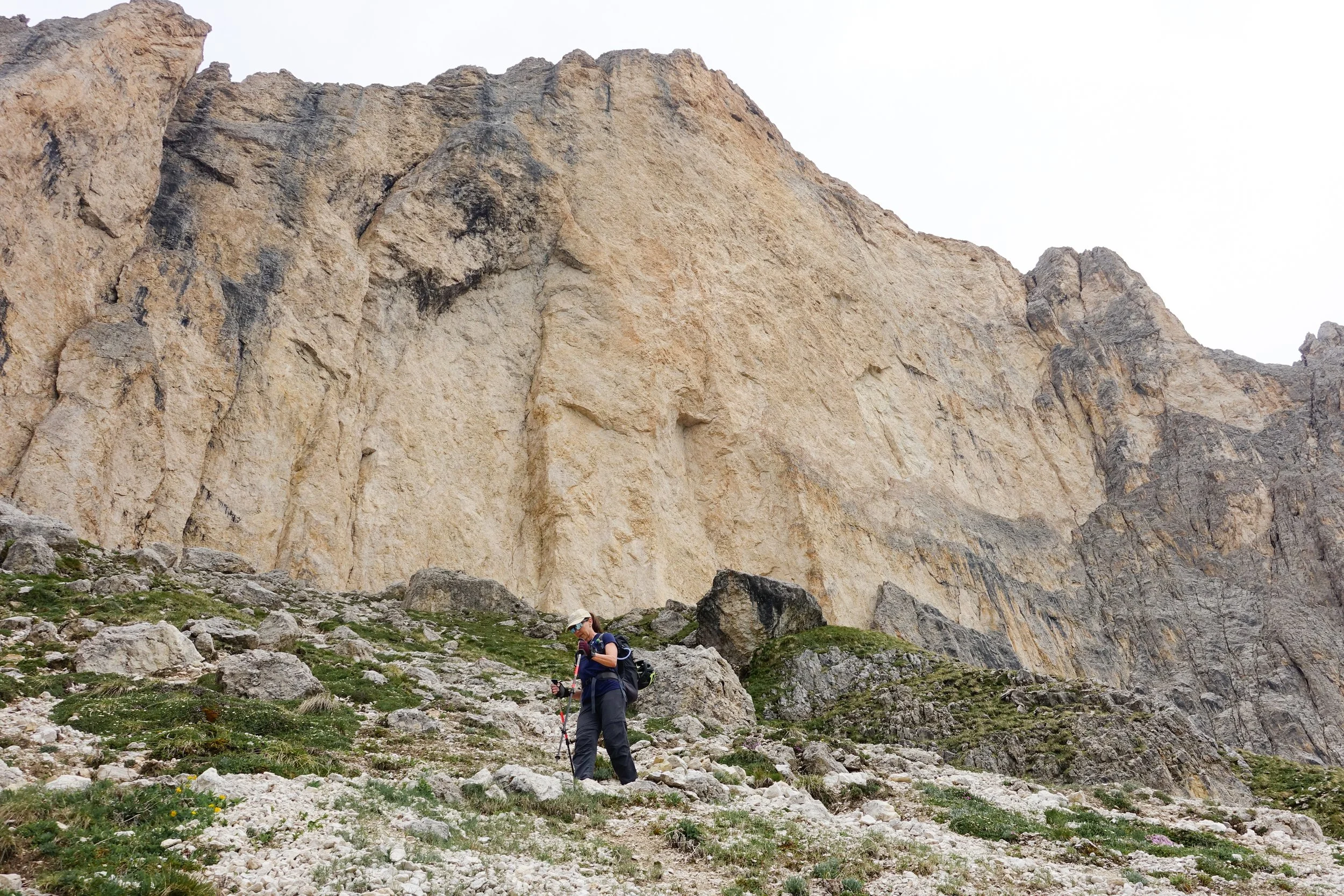
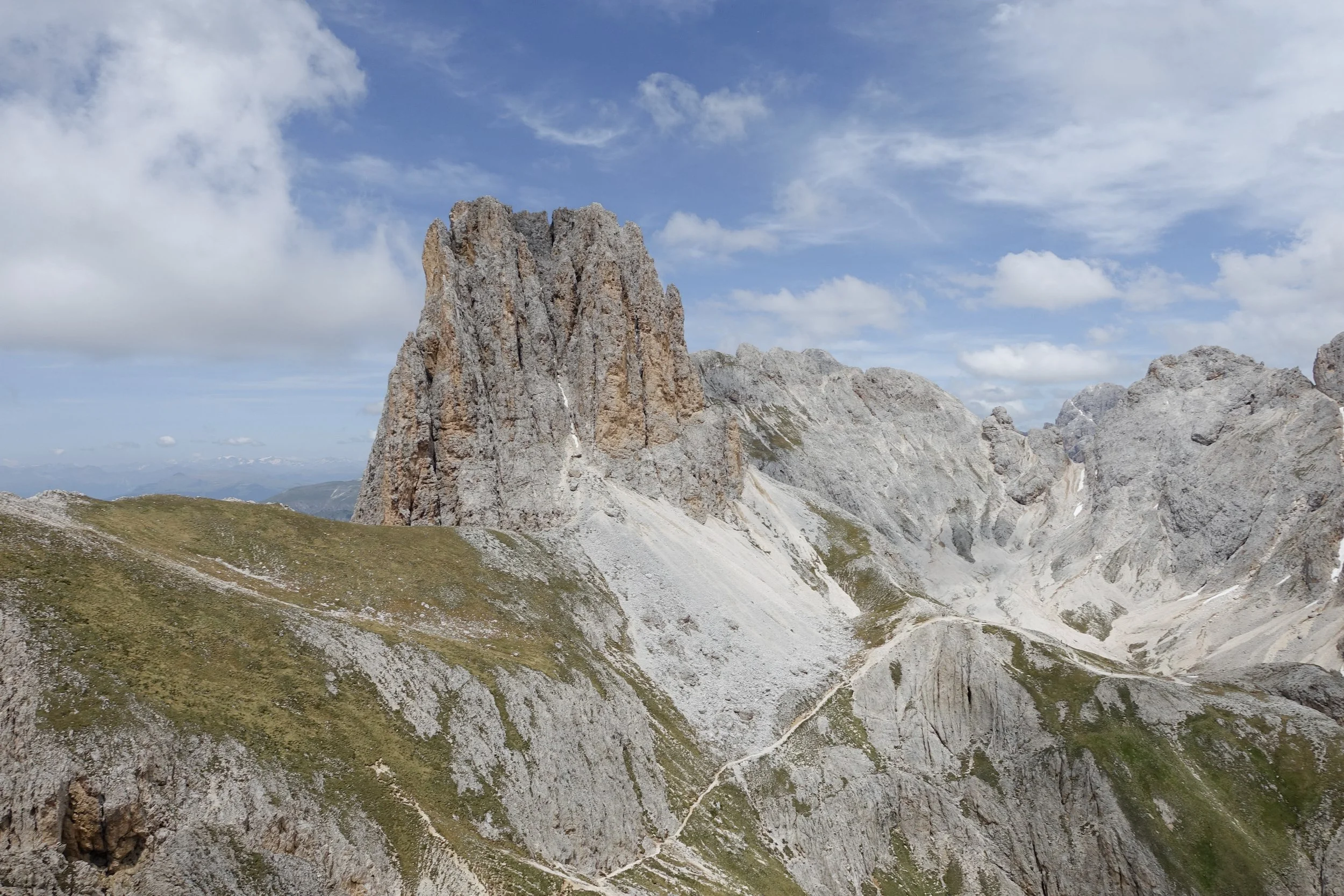
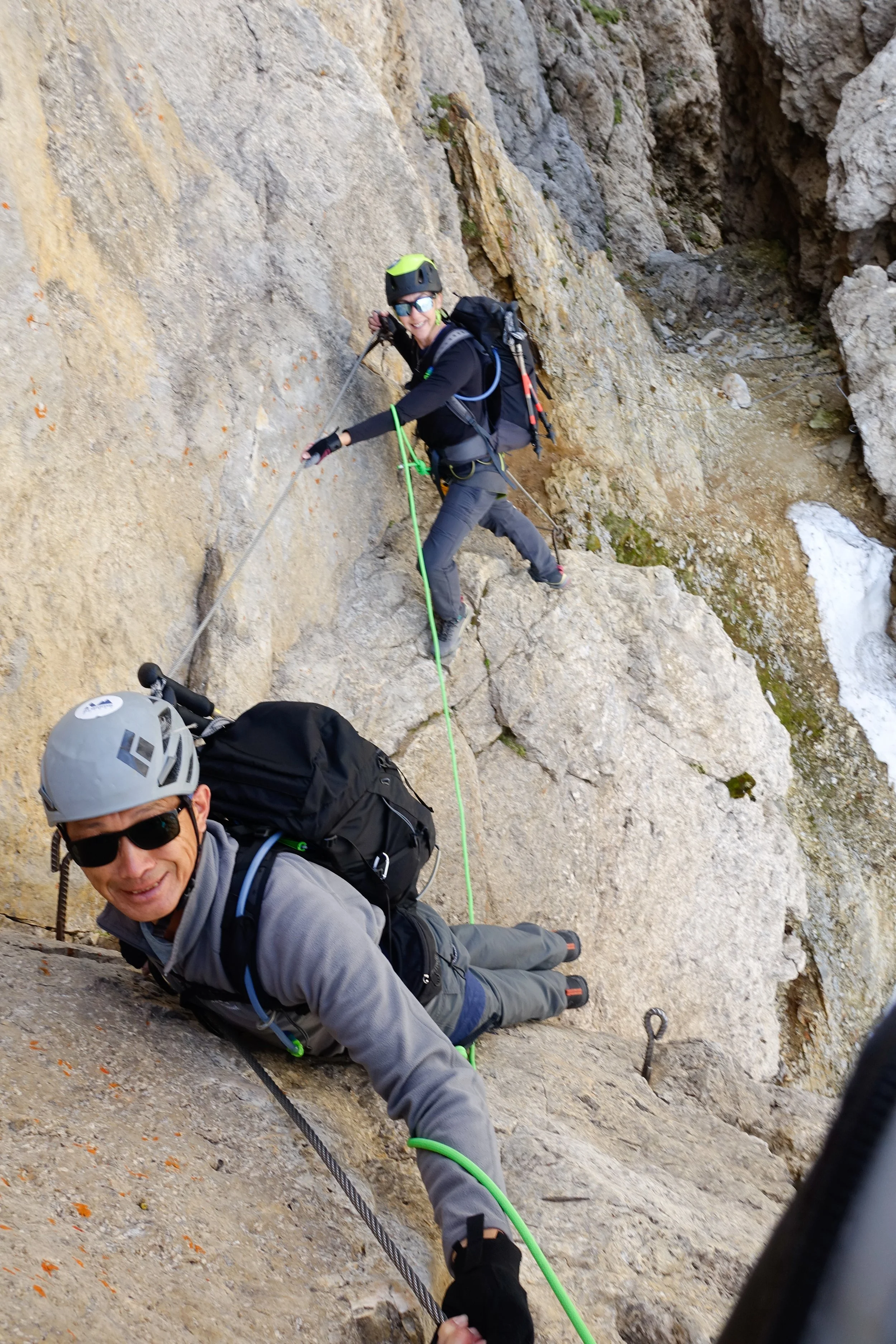
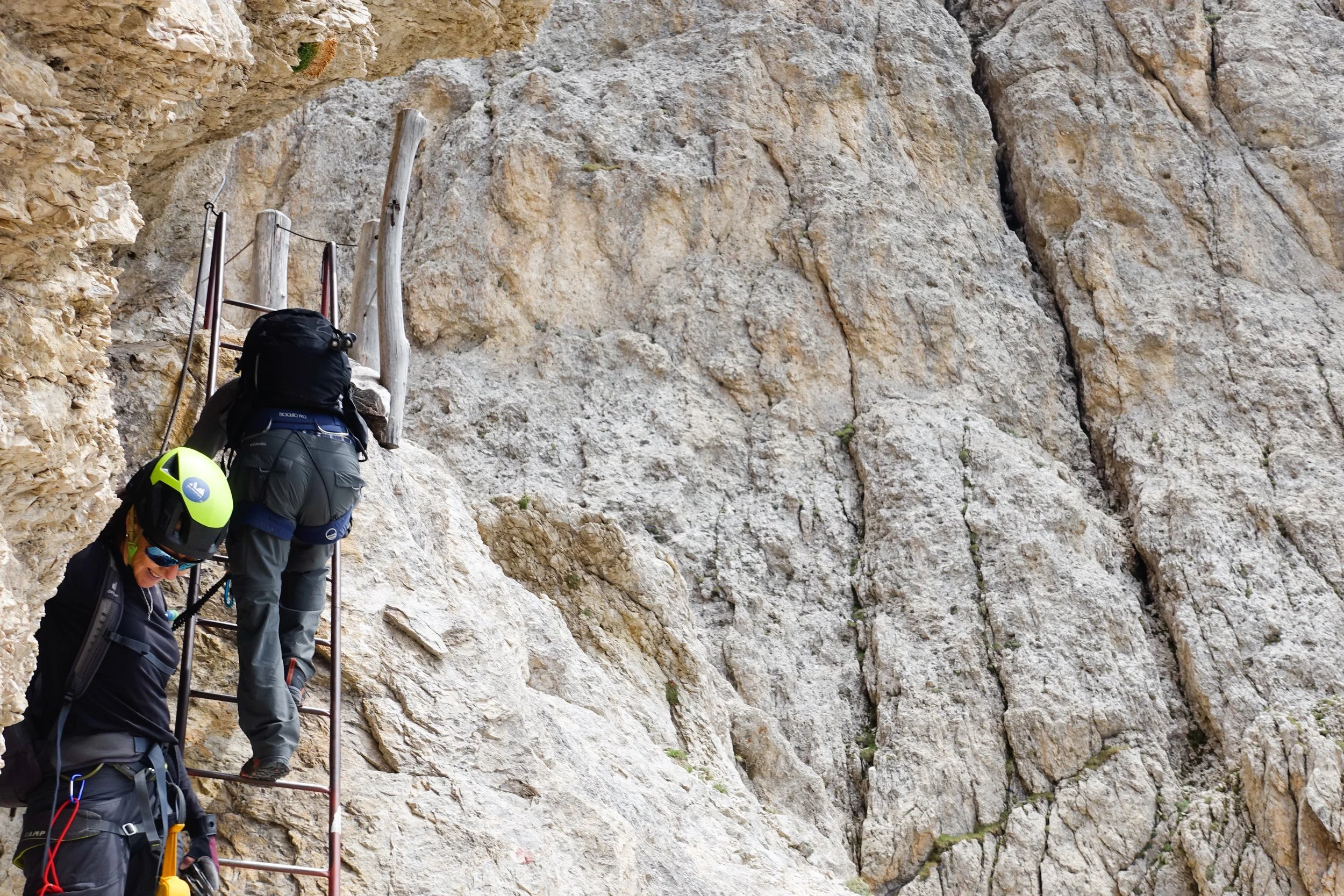
2) Santner Pass Via Ferrata in the Rosengarten
📍 Location: Rosengarten / Catinaccio – Vajolet area
📏 Driving time from Bolzano: about 25 minutes to Nova Levante (Welschnofen)
⏱ Typical duration: full day
📊 Level: Beginner to intermediate
🌞 Best season: Summer
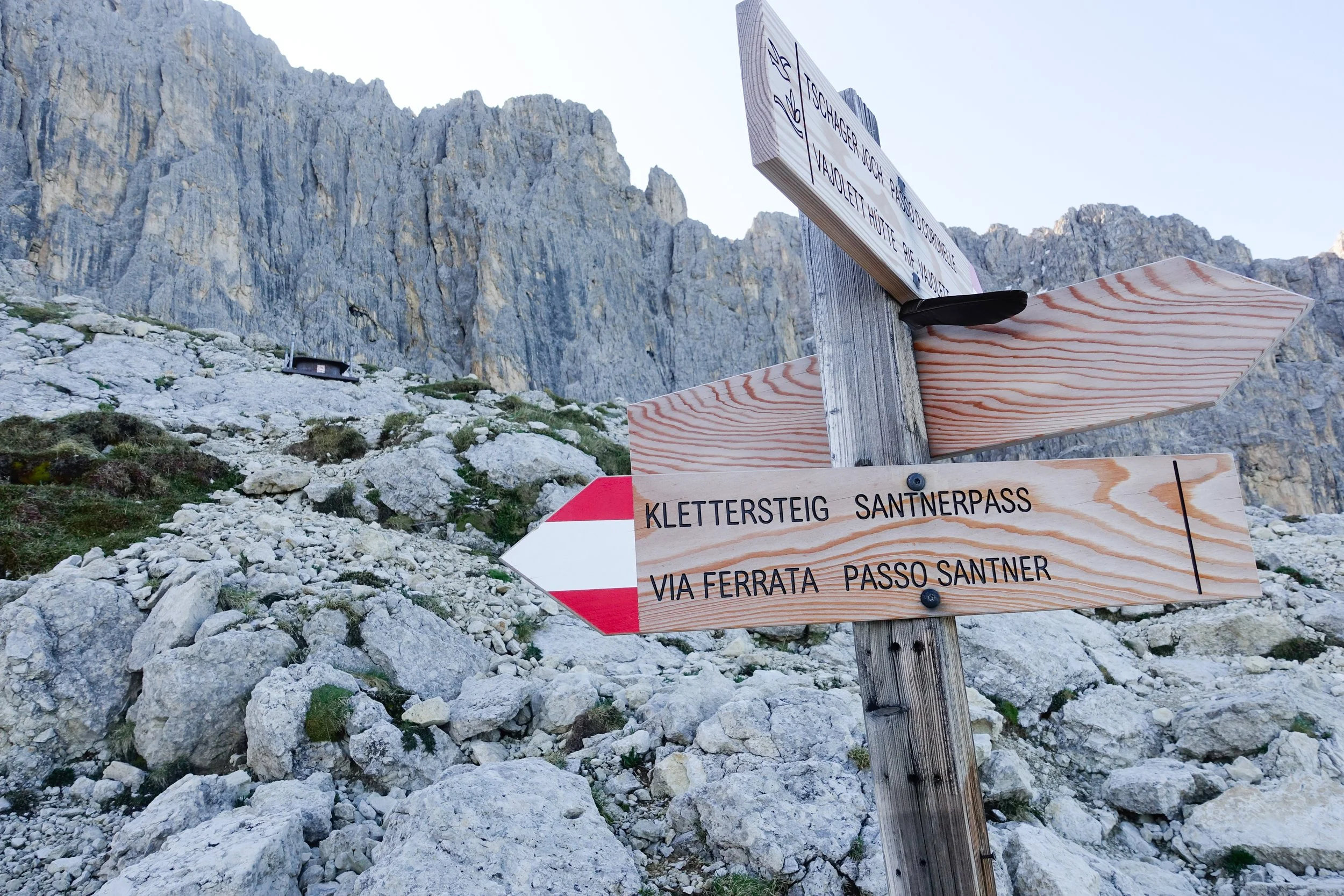
The Santner Pass via ferrata follows a historic passage through the heart of the Rosengarten mountains. The pass is named after Johann Santner, an Austrian watchmaker, mountaineer and mountain guide who moved to Bolzano in 1875. Fascinated by the dramatic peaks of the Rosengarten and the nearby Schlern, Santner explored the area with imagination and determination. In 1878 he climbed the narrow couloir leading to this pass, opening the first known route through this striking gap in the mountains long before the via ferrata existed.
Santner probably never imagined that many years later thousands of climbers would follow the same passage through this couloir, this time equipped with modern via ferrata sets!
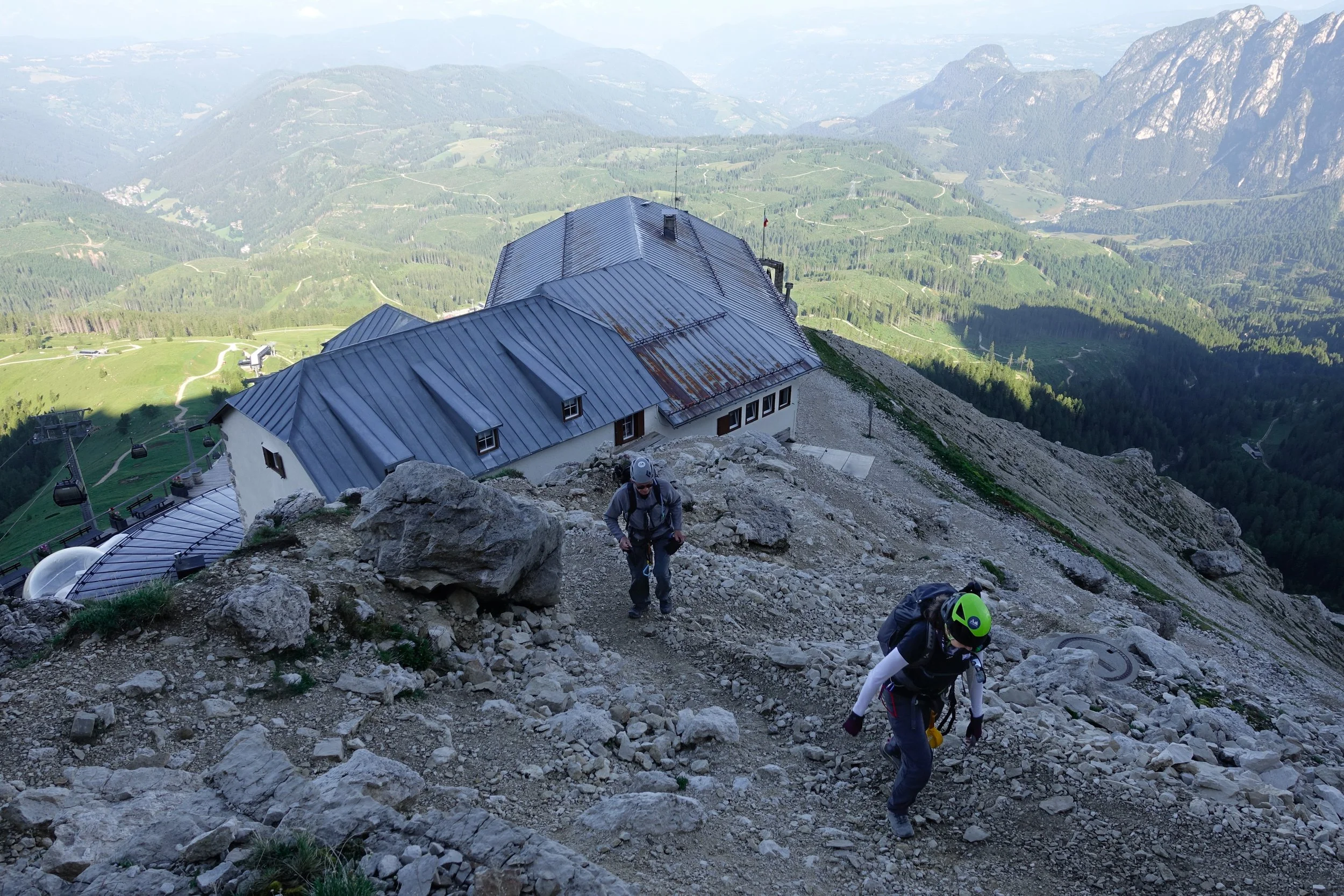
From Bolzano it takes only about 25 minutes to reach Nova Levante (Welschnofen). From here the König Laurin cable car, named after the legendary dwarf king of the Rosengarten, quickly brings you high into the mountains. The lift first reaches Malga Frommer and then continues with a second section to Rifugio Fronza alle Coronelle, a welcoming private mountain hut run by the same family for generations.
Right behind the hut the first equipped section of the Santner via ferrata begins. After an initial ferrata section of about 20 minutes the route briefly follows a path traversing north beneath the dramatic rock walls of the Catinaccio before reconnecting with the ferrata, marked with red S signs.
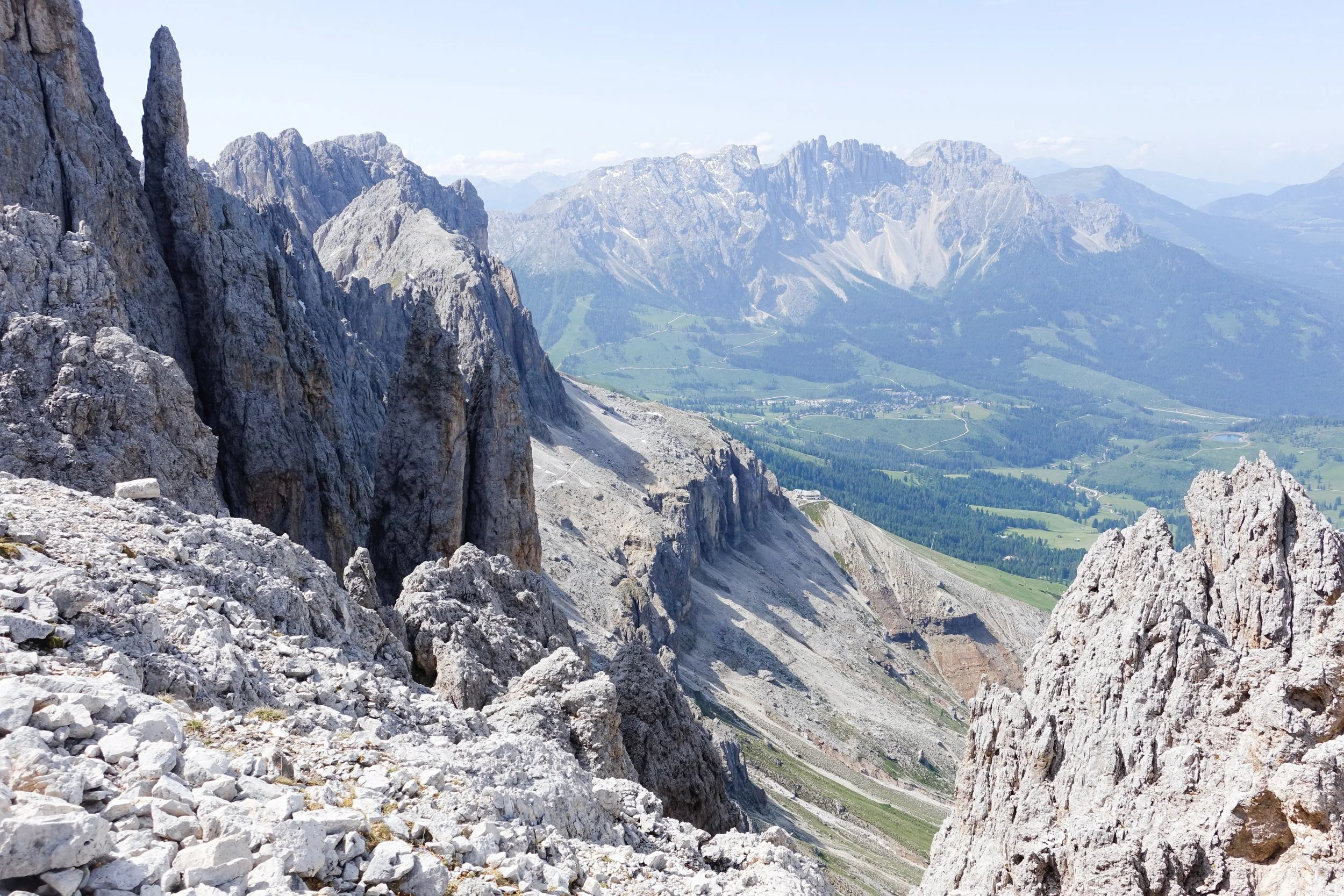
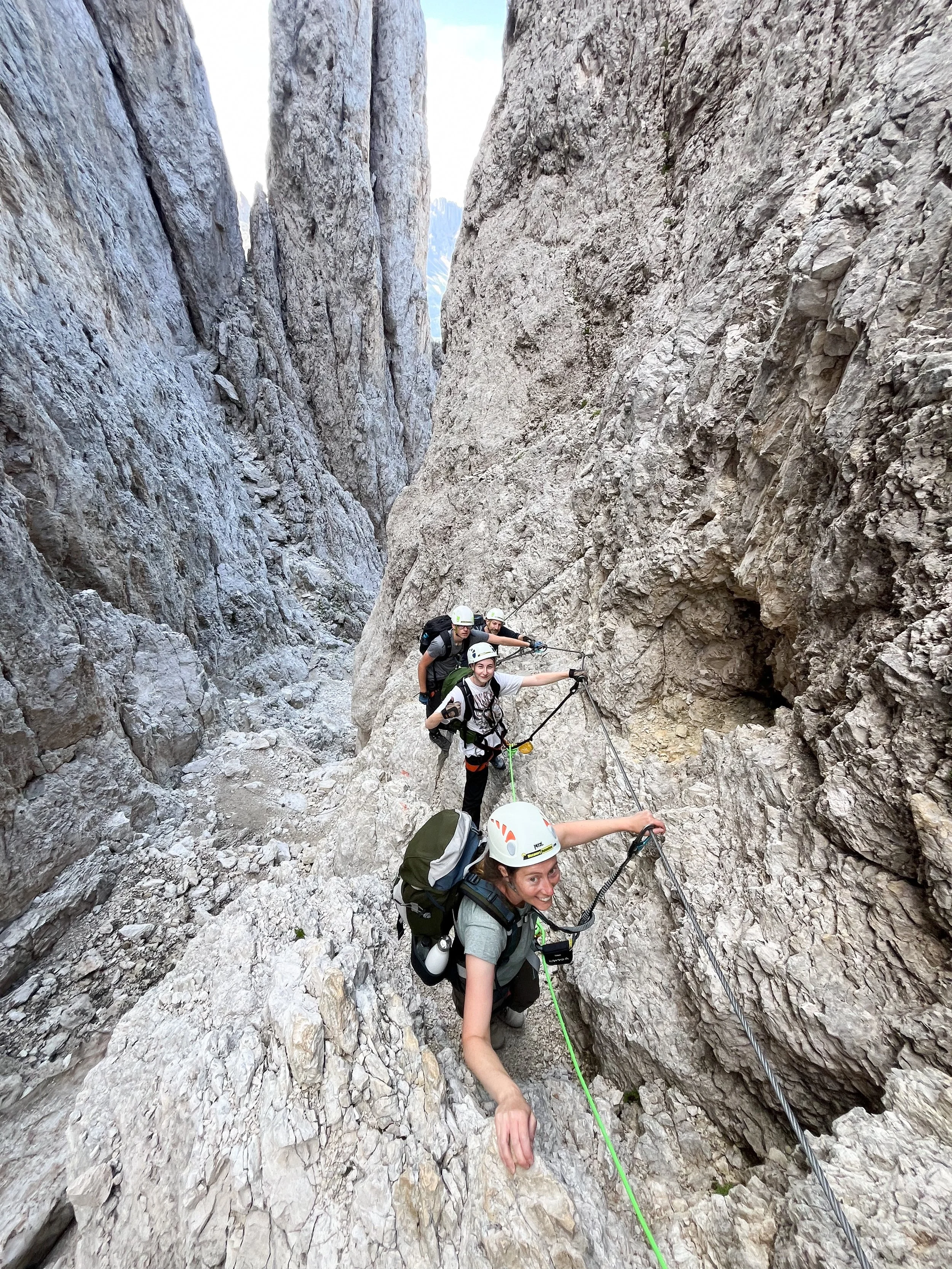
From here the route climbs steeply through an impressive and wild environment. The path alternates between short scrambling sections and diagonal ferrata segments across the sharp rock towers of the Catinaccio. Eventually the route reaches a couloir that must be crossed carefully. Early in the season this channel can still hold snow, so conditions should always be checked with local Mountain Guides or nearby huts before starting the climb.
After crossing the couloir the most demanding part of the ferrata appears. About ten meters of vertical climbing lead to the final section of the route. Shortly after the ferrata emerges dramatically at Passo Santner, where the striking Rifugio Santner stands.
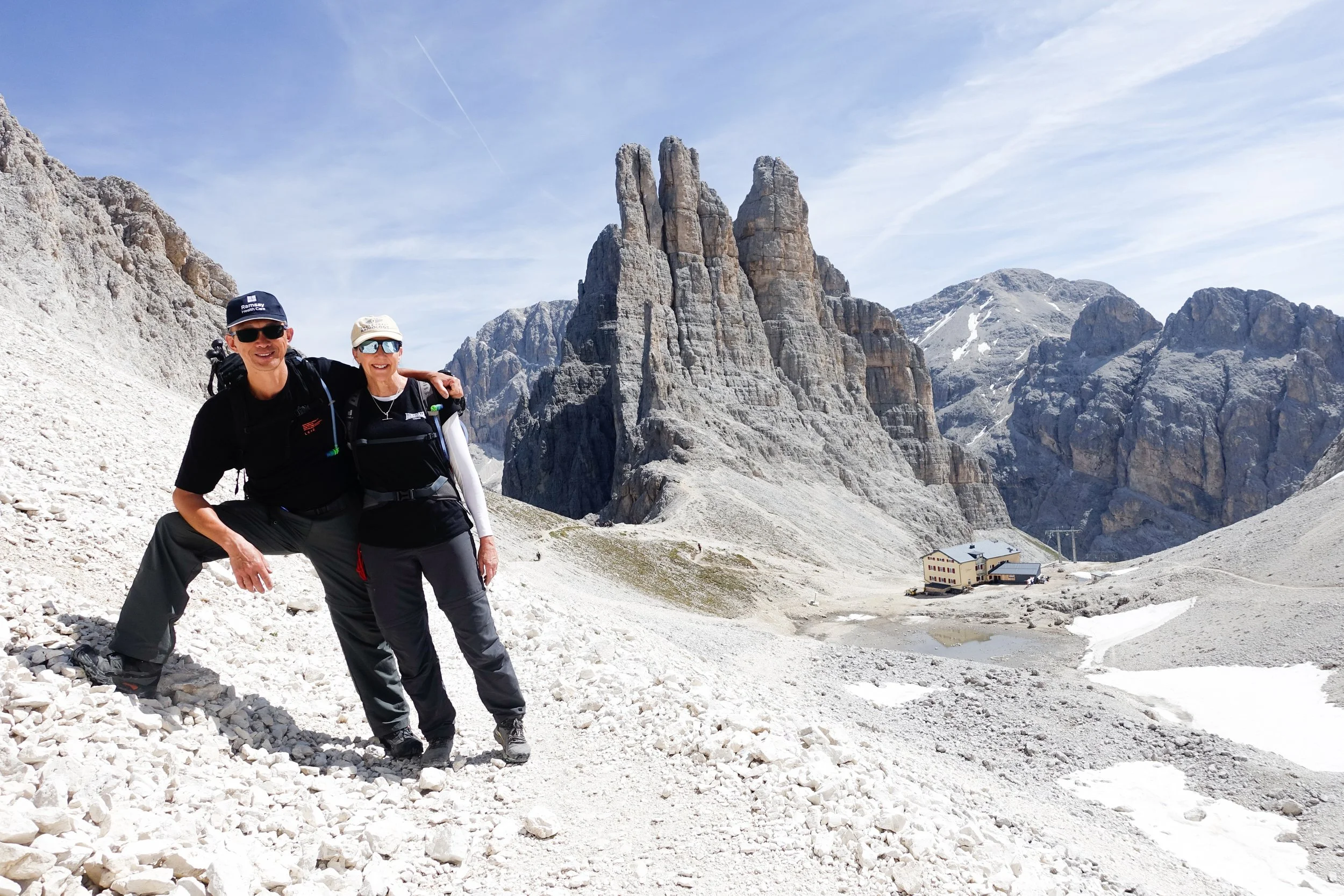
From the pass the panorama opens spectacularly toward Val d’Ega, with views stretching all the way toward Bolzano. In about fifteen minutes you reach the famous Gartl basin beneath the iconic Vajolet Towers, where Rifugio Re Alberto is the perfect place to stop for lunch.
Although the Santner via ferrata is technically accessible for beginners with proper guidance from a mountain guide, it is still a long mountain day. For those who prefer a more relaxed pace a wonderful option is to spend the night in one of the huts of the Rosengarten and complete the tour the following day. Staying overnight in the heart of the Dolomites adds a special atmosphere to the experience and allows you to fully enjoy the dramatic scenery of the Vajolet valley.
The descent should not be underestimated. Unless you stay overnight the route continues down a steep equipped trail toward Rifugio Vajolet, which takes about one hour.
From there the recommended descent continues through the magnificent Vajolet valley toward Gardeccia, passing beneath the impressive east wall of the Catinaccio, a 750 meter vertical rock face where the famous climbing route Diretta Steger runs. Following the scenic Path of Legends, a cable car from Vigo di Fassa brings you down to the valley floor.
A short walk leads to the bus stop where regular connections return to Nova Levante. It is always a good idea to check the Südtirolmobil website for updated schedules.
Stronger hikers can also complete a full loop by climbing back toward Passo delle Coronelle from Rifugio Vajolet, although snow conditions should always be checked beforehand.
Altogether this itinerary crosses the very heart of the Rosengarten and offers a full mountain day of climbing, historic huts and unforgettable Dolomite scenery, all within easy reach of Bolzano.
The Santner via ferrata can also be combined with other via ferratas in the area to create a beautiful hut to hut traverse across the Rosengarten mountains. This itinerary forms the core of our Rosengarten Via Ferrata Safari, a multi day adventure that links several spectacular via ferrata routes while staying in traditional Dolomite mountain huts, one of the most authentic ways to experience the true spirit of the Dolomites.
3) Piccolo Cir Via Ferrata – A Perfect First Ferrata in the Dolomites with quick approach
📍 Location: Val Gardena – Cir Group
📏 Driving time from Bolzano: about 50 minutes to Selva di Val Gardena
⏱ Typical duration: half day / full day
📊 Level: Beginner, with a short hiking approach and return
🌞 Best season: Summer
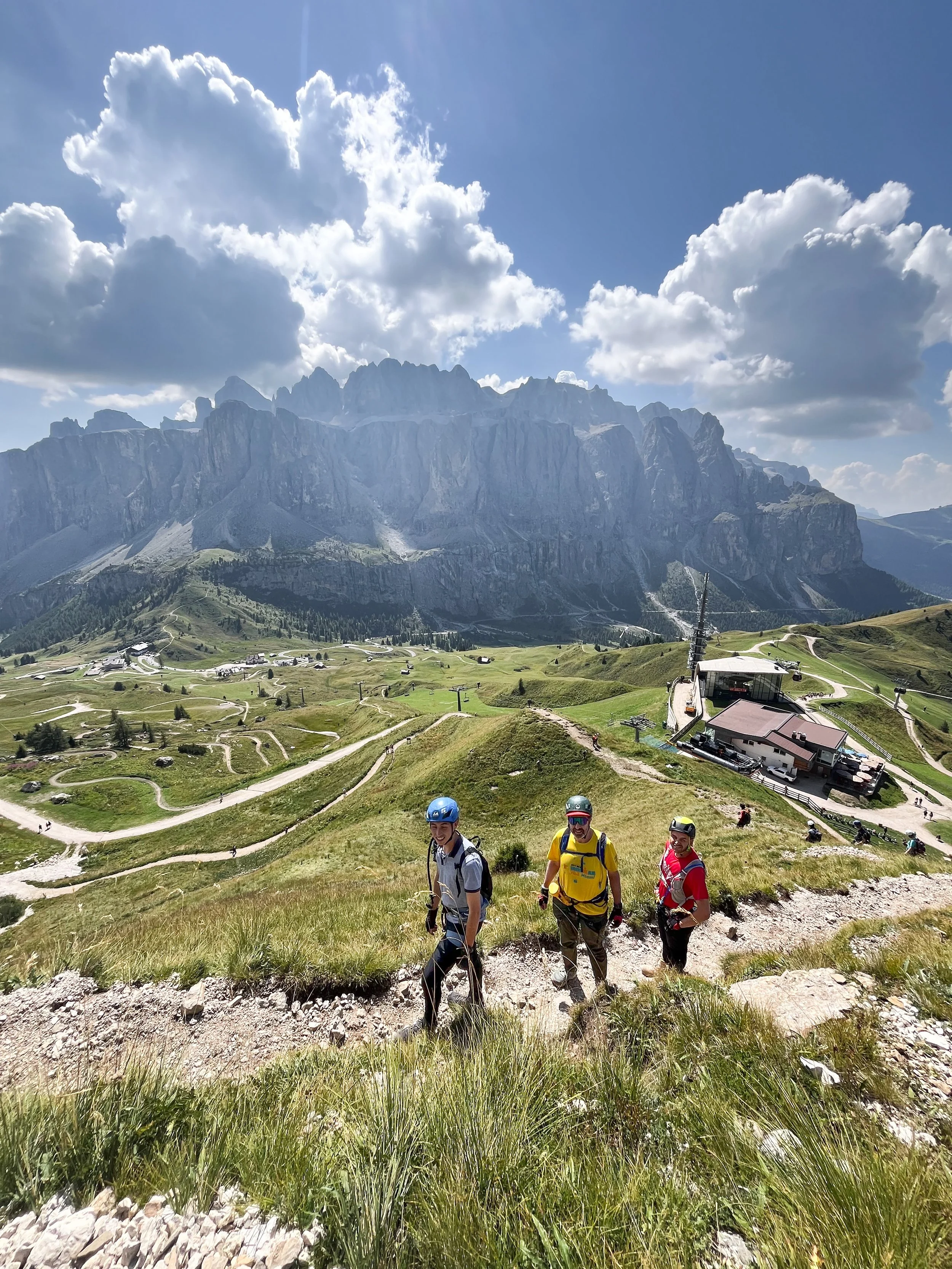
About 50 minutes from Bolzano lies the beautiful village of Selva di Val Gardena. From here the Dantercepies cable car brings you high into the mountains and just a short walk from the start of one of the most enjoyable via ferratas for beginners in the Dolomites.
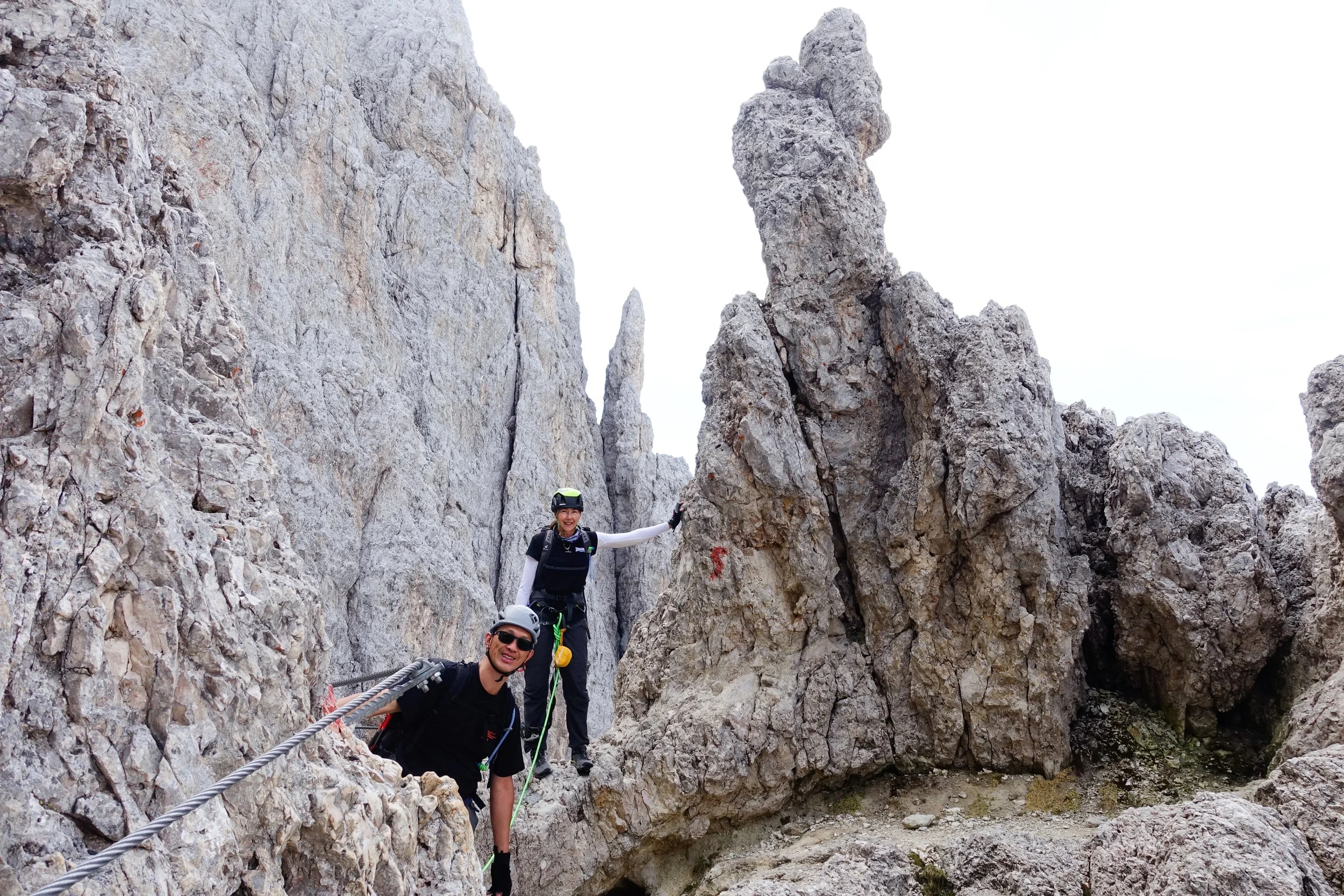
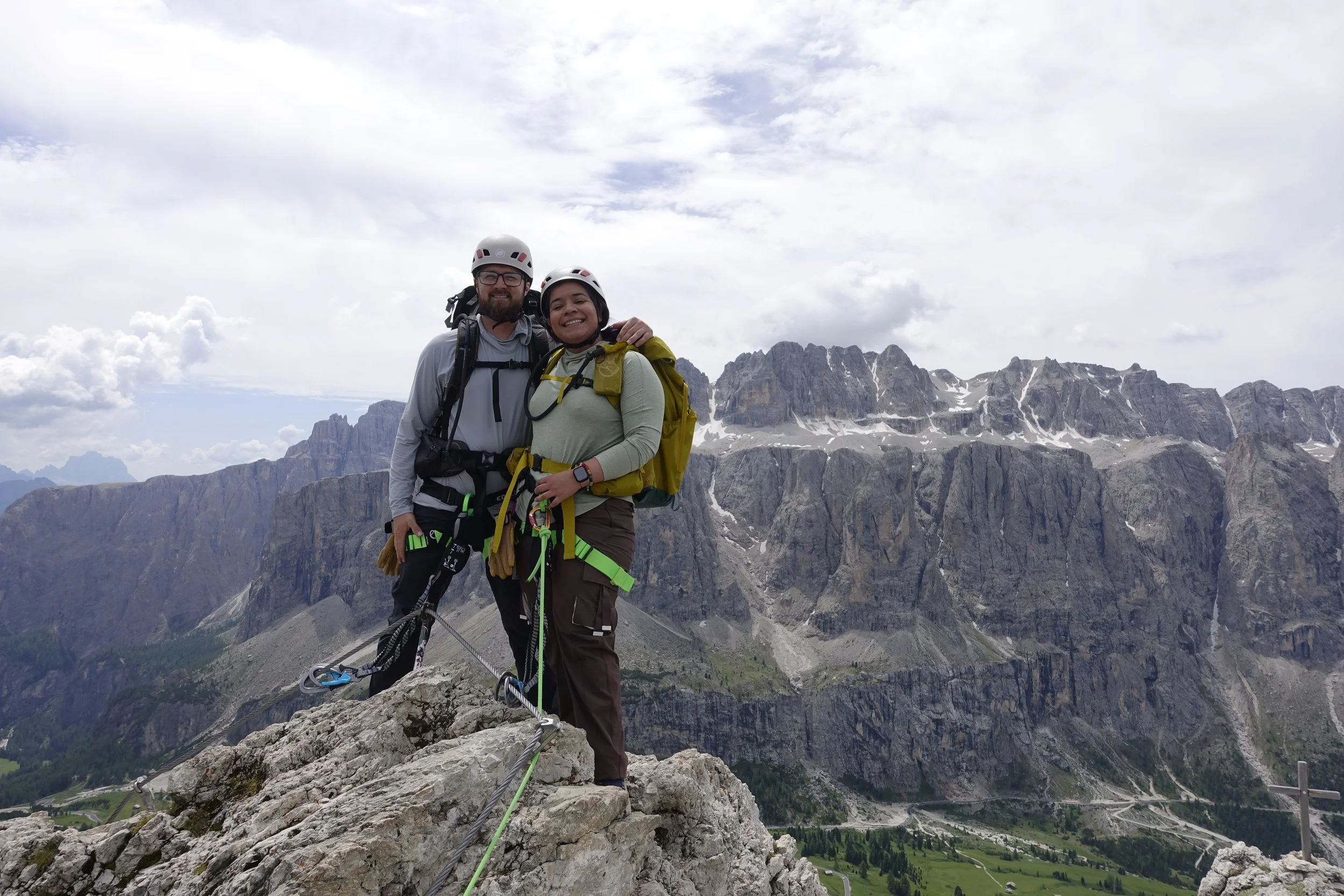
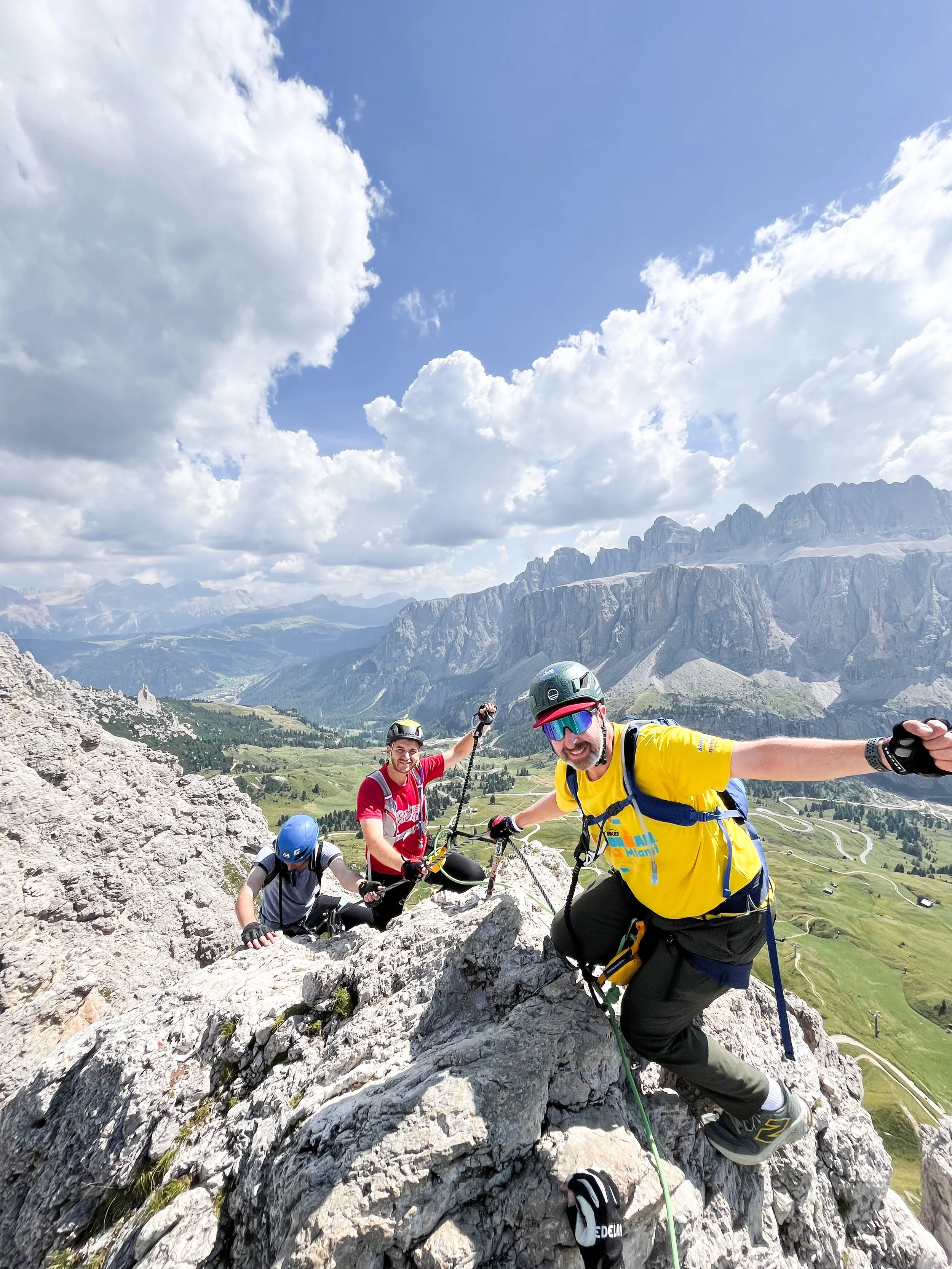
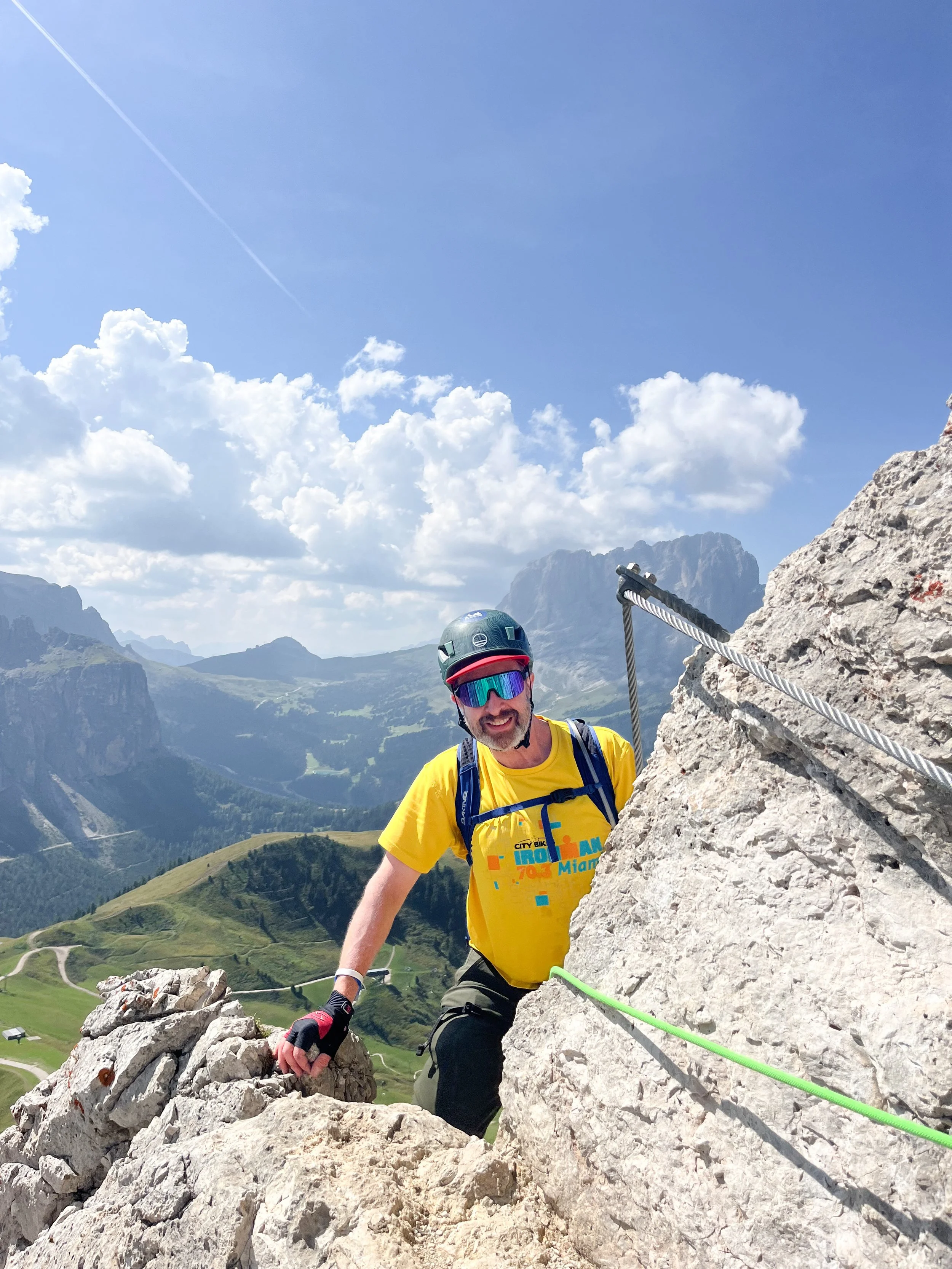
The Piccolo Cir via ferrata is perfect for those looking for a first experience in a spectacular alpine environment. The route climbs a sharp rocky peak in the Cir group, offering incredible 360 degree views over some of the most iconic Dolomite mountains including the Odle, Sassolungo, and the Sella group.
One of the reasons this ferrata is so popular is that the overall commitment is relatively small. Both the approach and the descent are short and accessible, making the climb possible even for those with limited hiking experience.
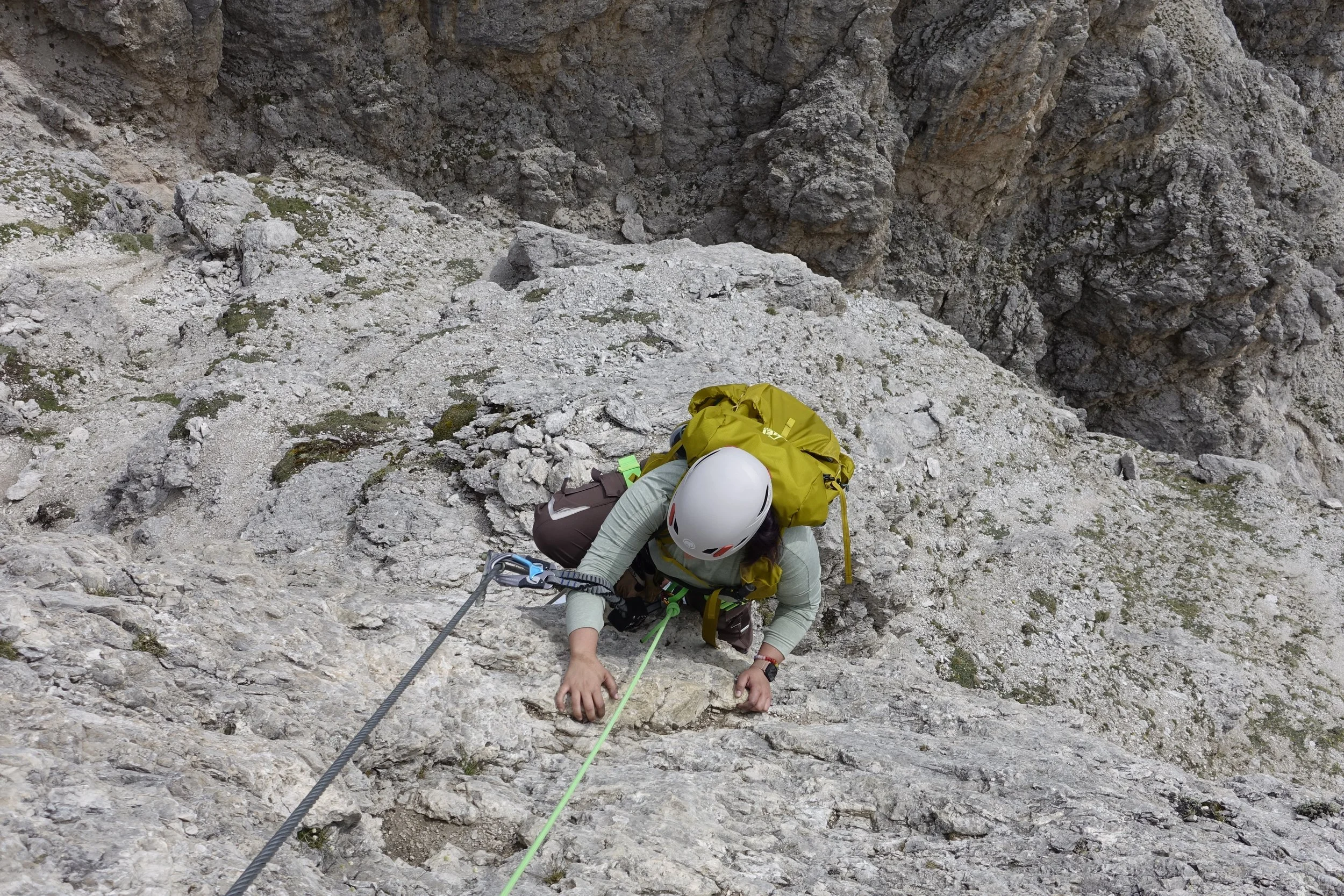
Although it is suitable as a first via ferrata, the route is far from boring. The climbing is fun and engaging and includes several sections that require a bit of effort and concentration, giving a real sense of achievement when you reach the summit of Piccolo Cir. The sharp peak and the dramatic Dolomite scenery also make this route perfect for spectacular photos.
This ferrata is also an excellent option on days with uncertain weather, when it is useful to choose a route that can be completed in just a few hours and that stays relatively close to mountain huts and lift stations.
The Grande Cir can easily be combined with Piccolo Cir either before or after the climb. While technically easier, the Grande Cir follows an exposed equipped path that leads to a higher summit with equally impressive views over the surrounding Dolomite peaks.
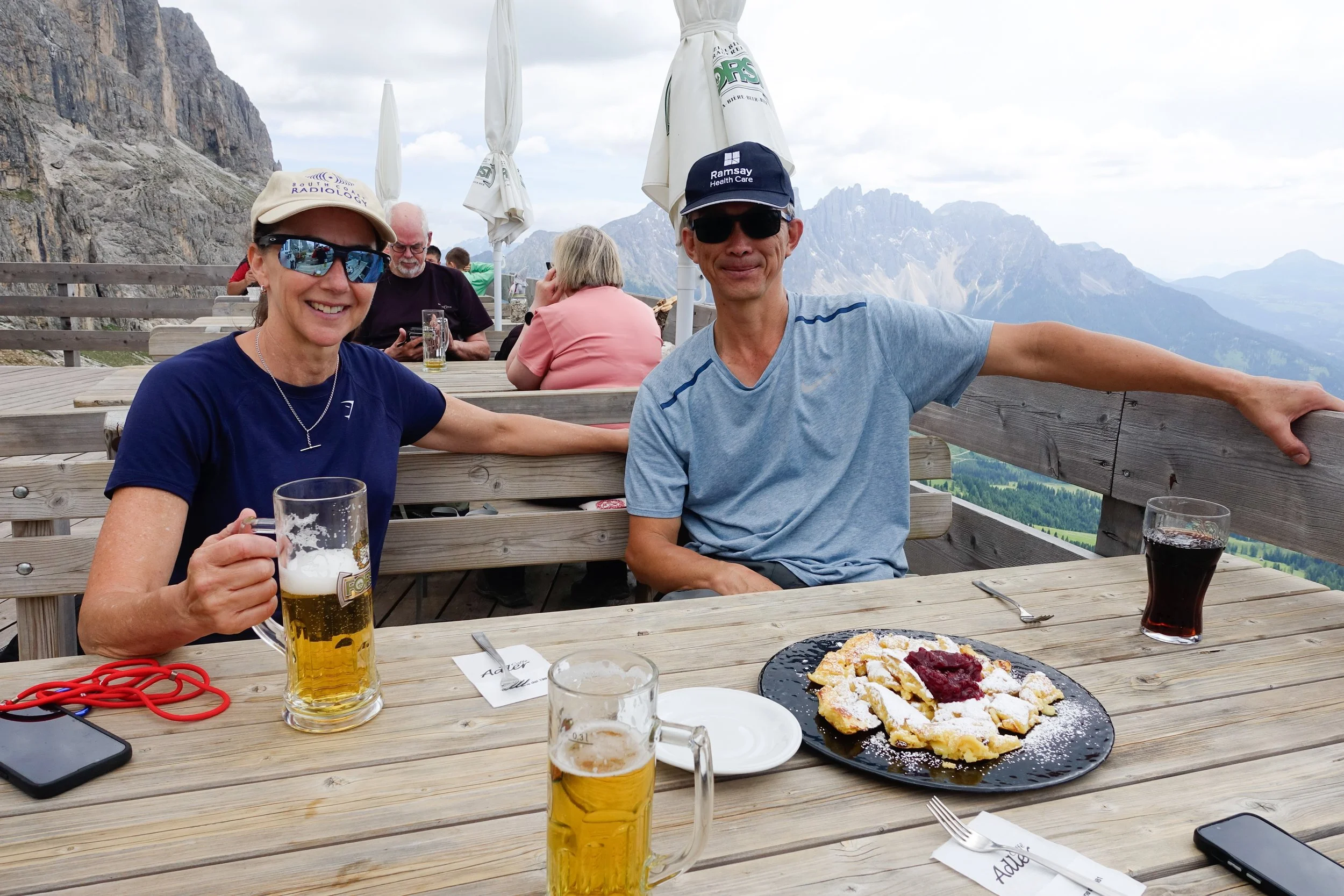
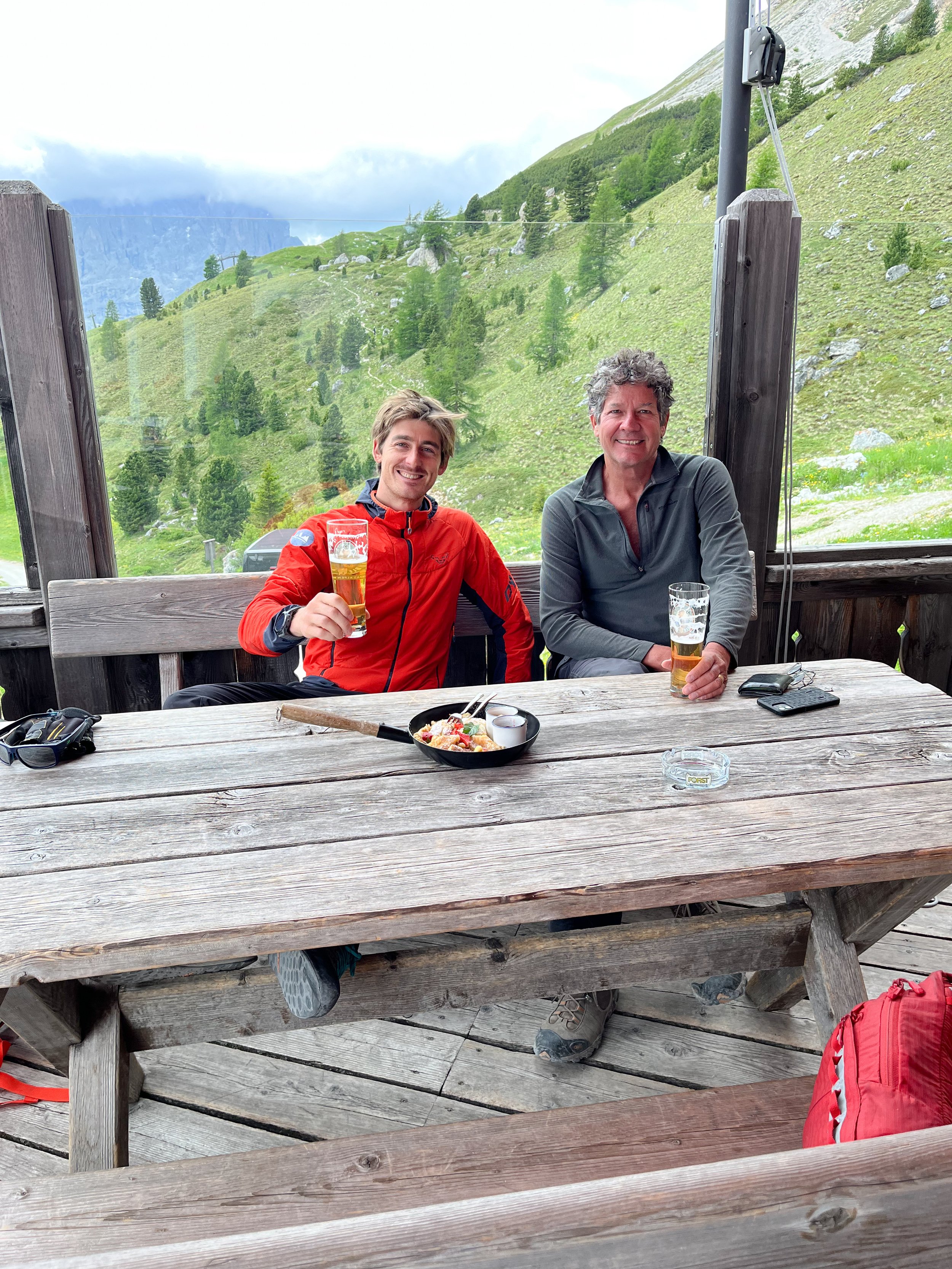
After the descent we highly recommend stopping at Rifugio Jimmy or Baita Panorama, a perfect place to enjoy some traditional mountain food. It is the ideal spot to try a plate of canederli or a delicious kaiserschmarren if you have never tasted this classic alpine dessert!
These ferratas can also form part of a longer hut to hut via ferrata adventure in the surrounding mountains. Together with routes such as Forcella Sassolungo, Schuster, Tridentina and Col Rodella, they can be included in a multi day adventure, like the Sassolungo Via Ferrata Safari, a perfect option for beginners looking for a memorable Dolomite adventure while staying in traditional mountain huts.
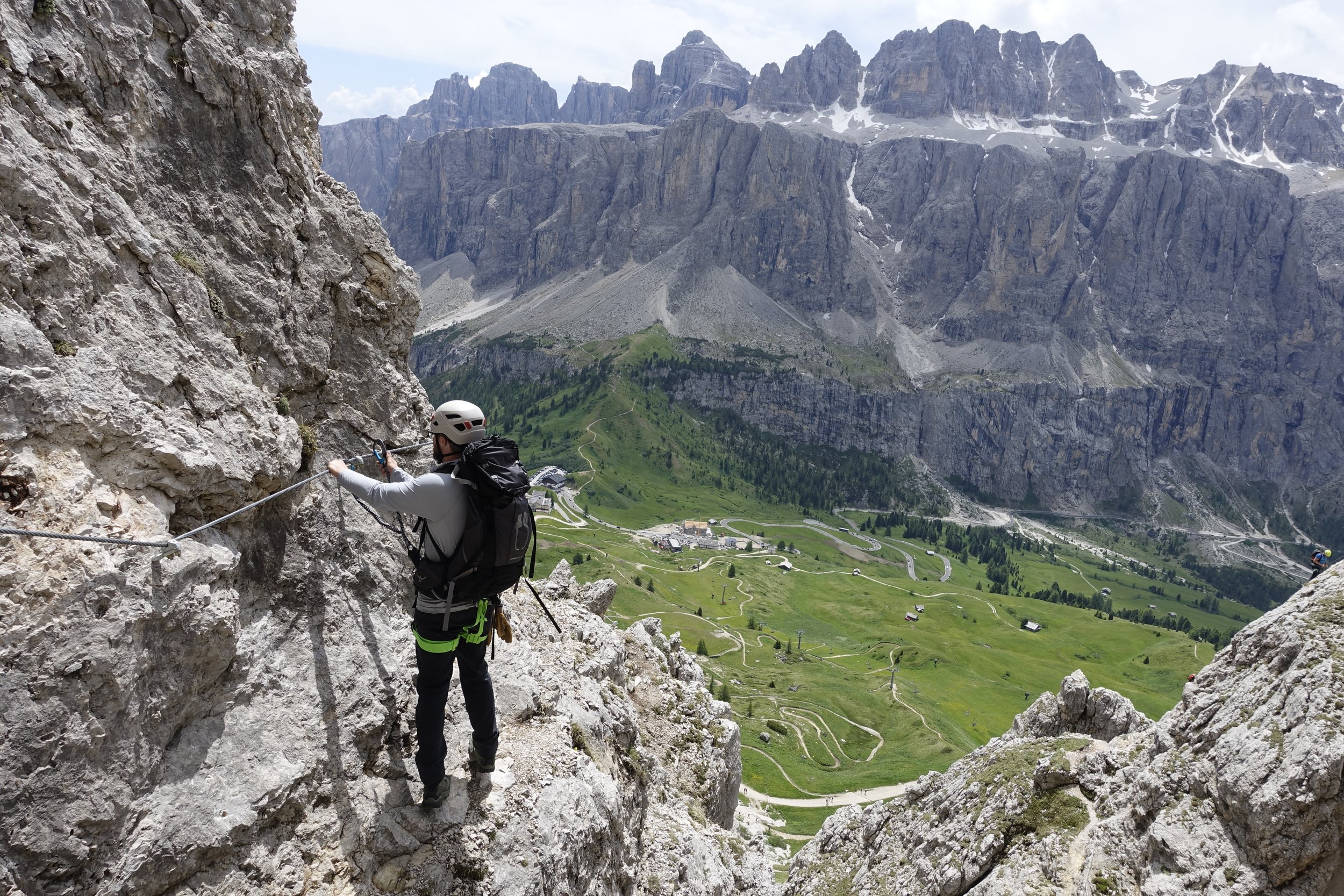
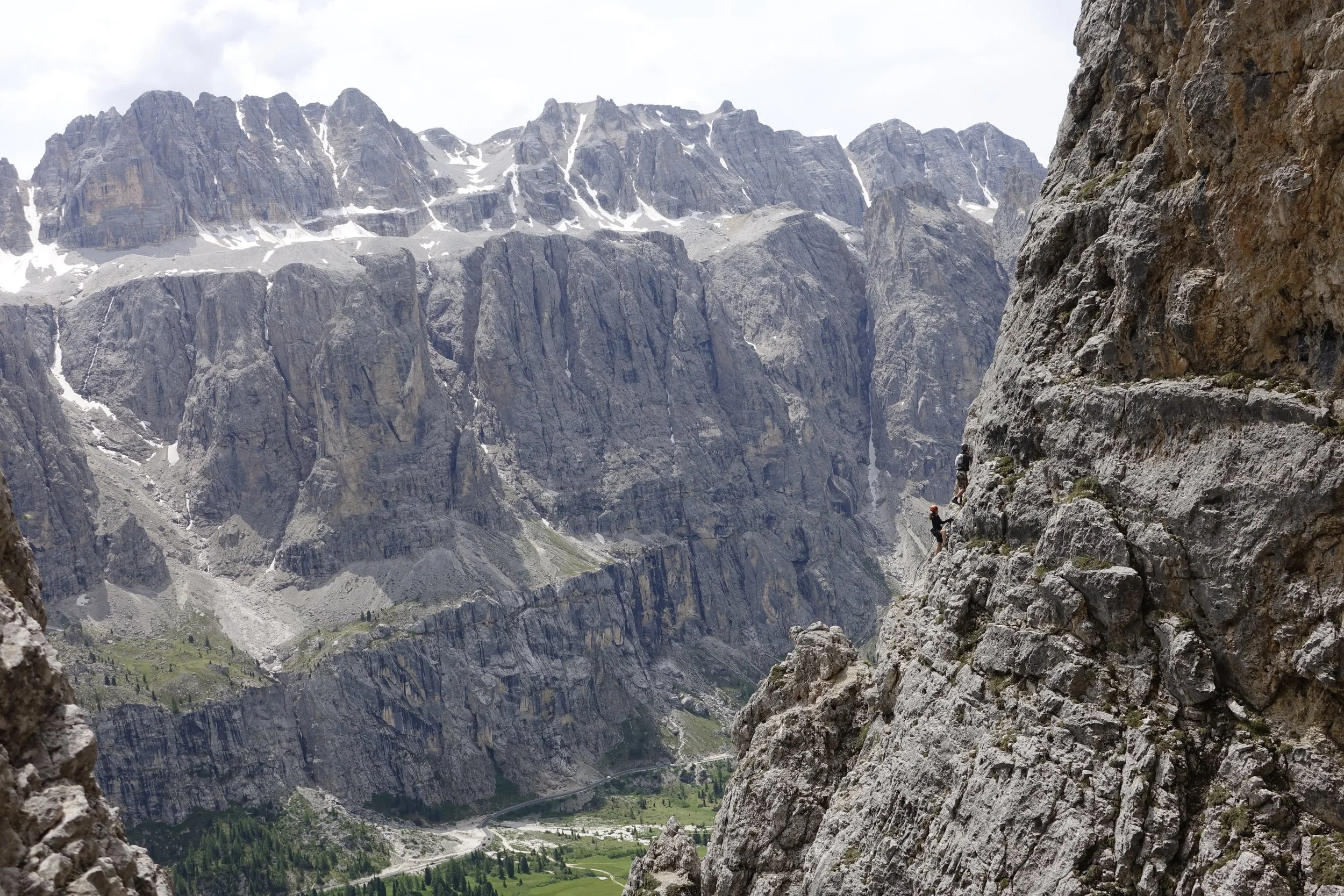
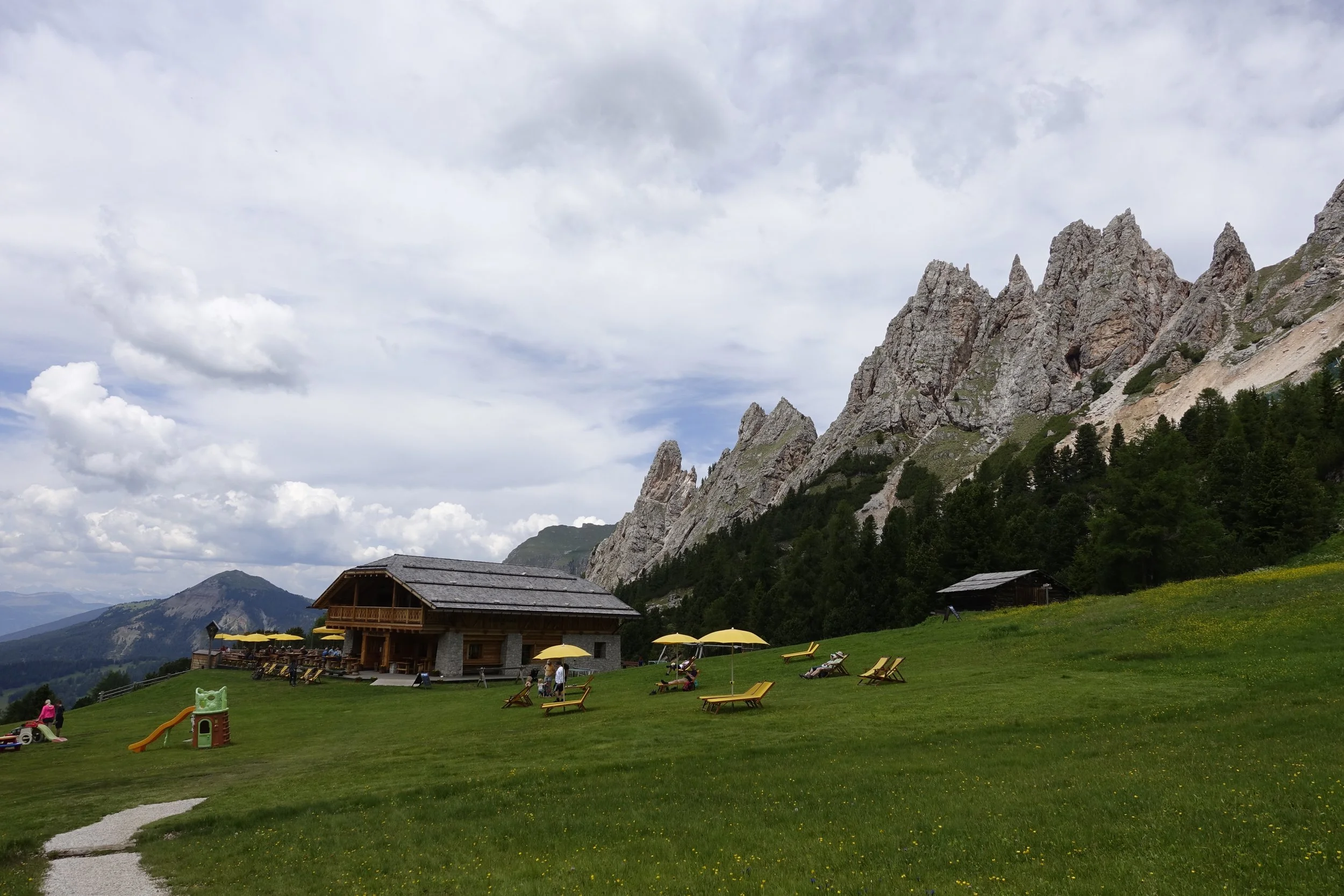
4) Burrone Giovanelli Via Ferrata
📍 Location: Mezzocorona – Piana Rotaliana
📏 Driving time from Bolzano: about 35 minutes
⏱ Typical duration: about 6 hours
📊 Level: Beginner with good aerobic fitness
📈 Elevation gain: about 700 m / 2300 ft
🌞 Best season: Spring, Autumn and mild winter days
The Burrone Giovanelli via ferrata is one of the oldest equipped routes in the region. It was originally built in 1906 and later named after Giovanelli, a doctor from Mezzocorona who strongly supported the creation of the route in order to make this spectacular canyon accessible.
Only about 35 minutes from Bolzano lies one of the most surprising via ferrata experiences in the area. The route begins near the vineyards of Mezzolombardo, where the approach walk starts gently among rows of vines that produce the famous wines of the Piana Rotaliana.
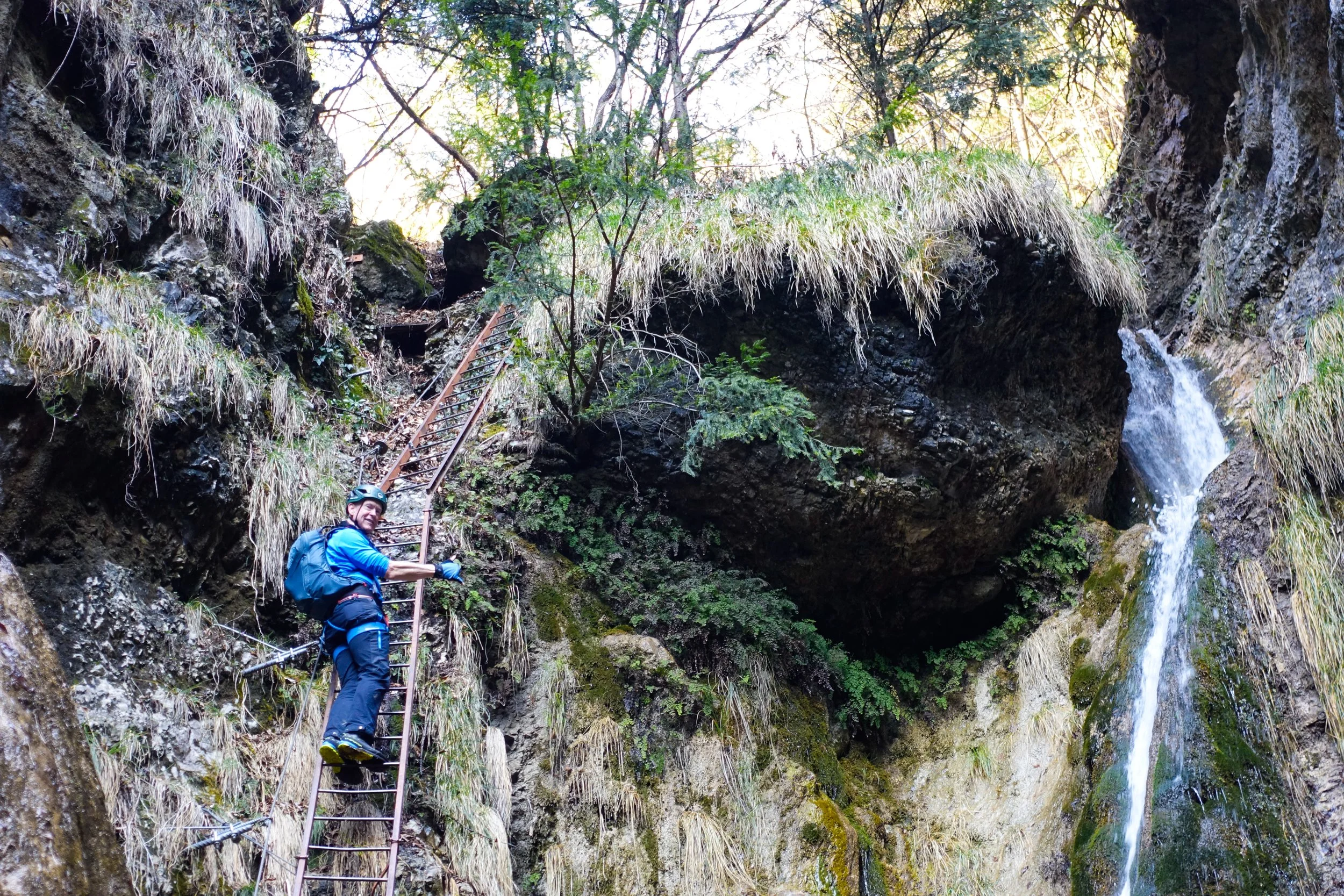
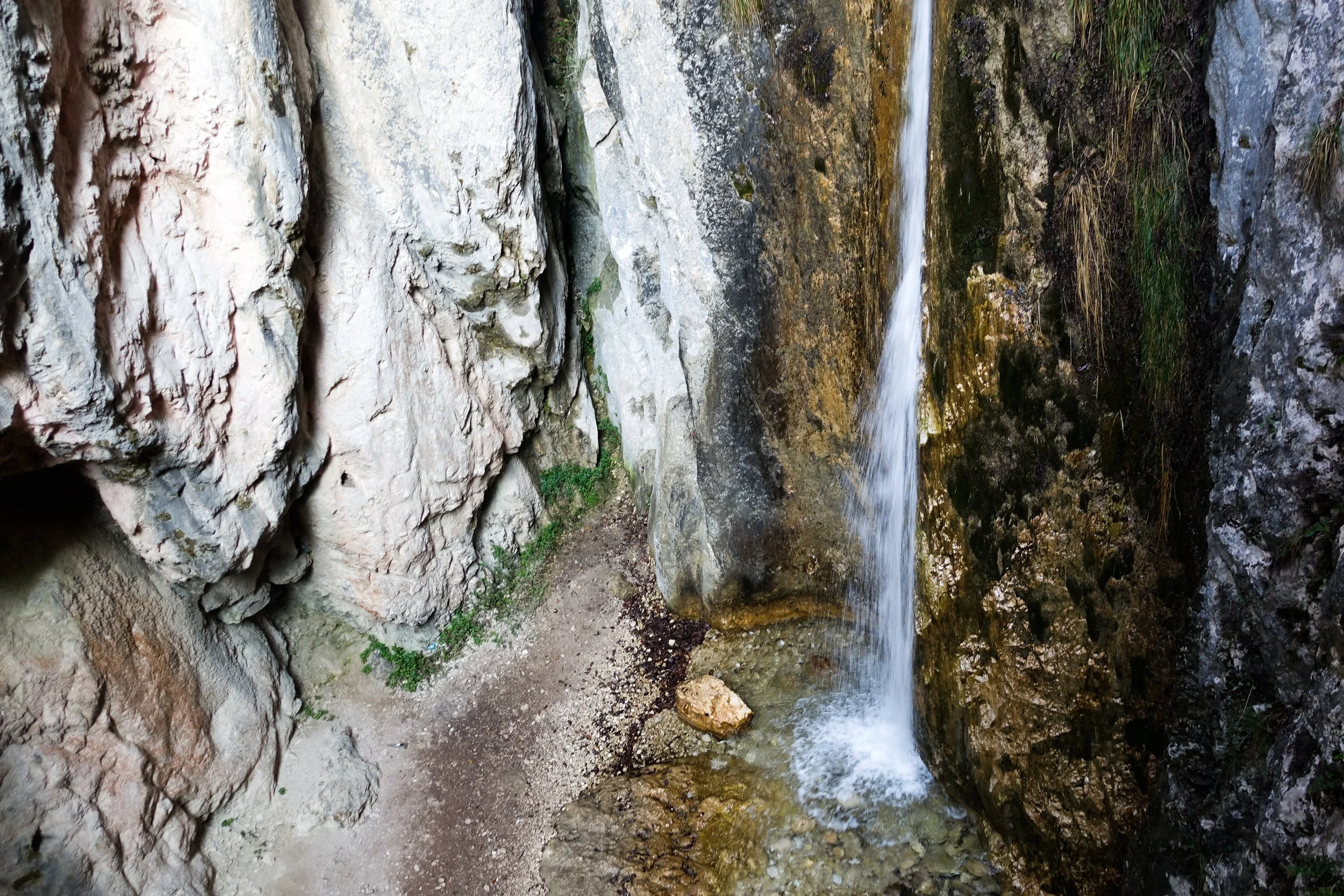
At first it is hard to imagine what lies ahead. After a short walk the path suddenly enters a dramatic narrow canyon, where the atmosphere changes completely. High rock walls rise above you and the via ferrata follows a series of ladders and equipped sections that climb through the heart of the gorge.
The environment here is truly unique compared to the high Dolomite ferratas. Instead of open alpine terrain you move through a deep rocky canyon, surrounded by water, vegetation and towering walls. It feels wild and unexpected, especially considering how close you still are to the valley floor.
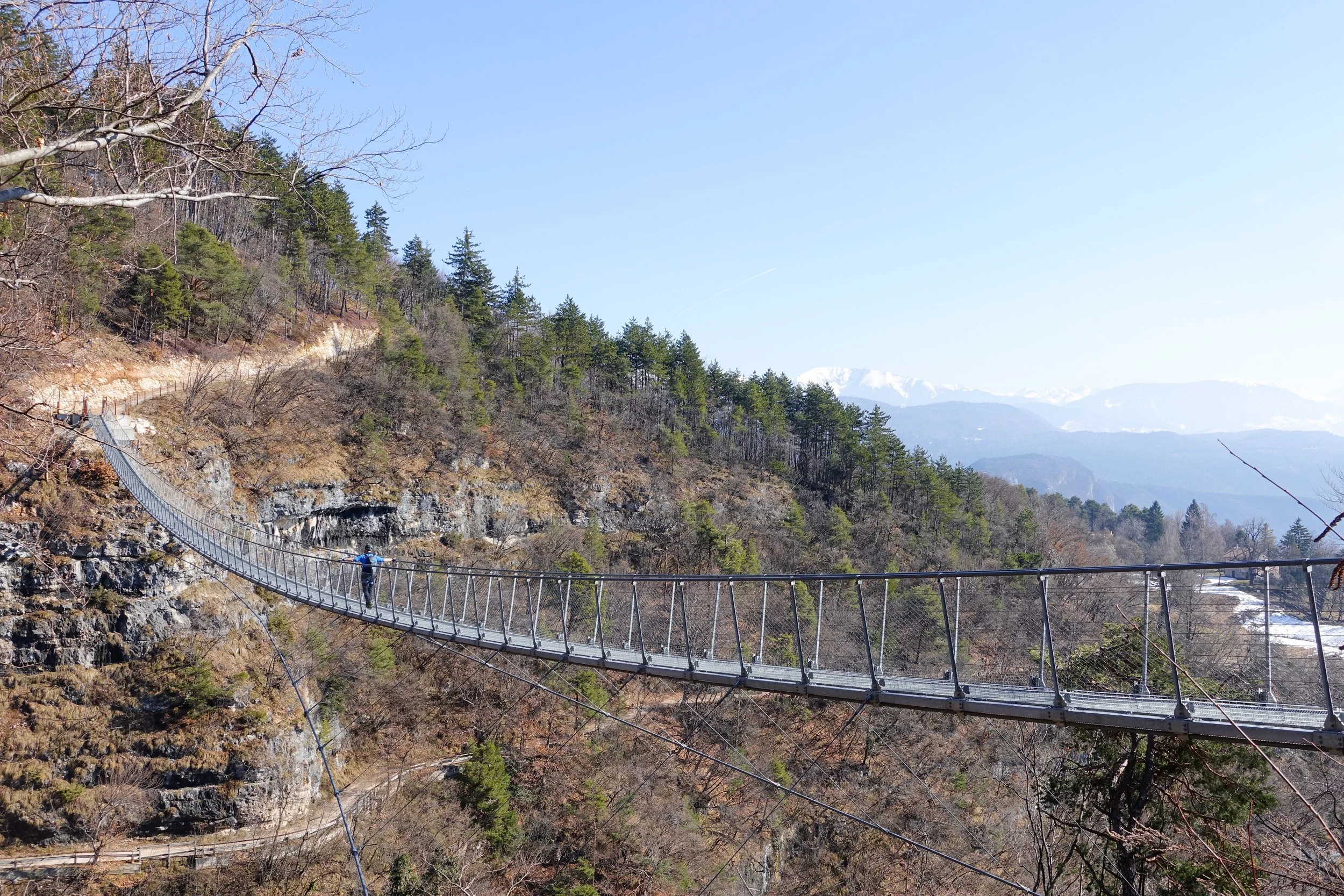
As the route gains elevation the canyon gradually opens and the landscape changes again. The ferrata eventually emerges into a quiet mountain forest, where the path continues toward Monte di Mezzocorona. Along the way you cross a spectacular suspended bridge that offers beautiful views over the valley below.
At the top of the climb you reach the plateau of Monte di Mezzocorona, a panoramic balcony overlooking the Piana Rotaliana. If the alpine hut restaurant is open, it is a perfect place to stop for lunch and enjoy local specialties such as the traditional tortel di patate.
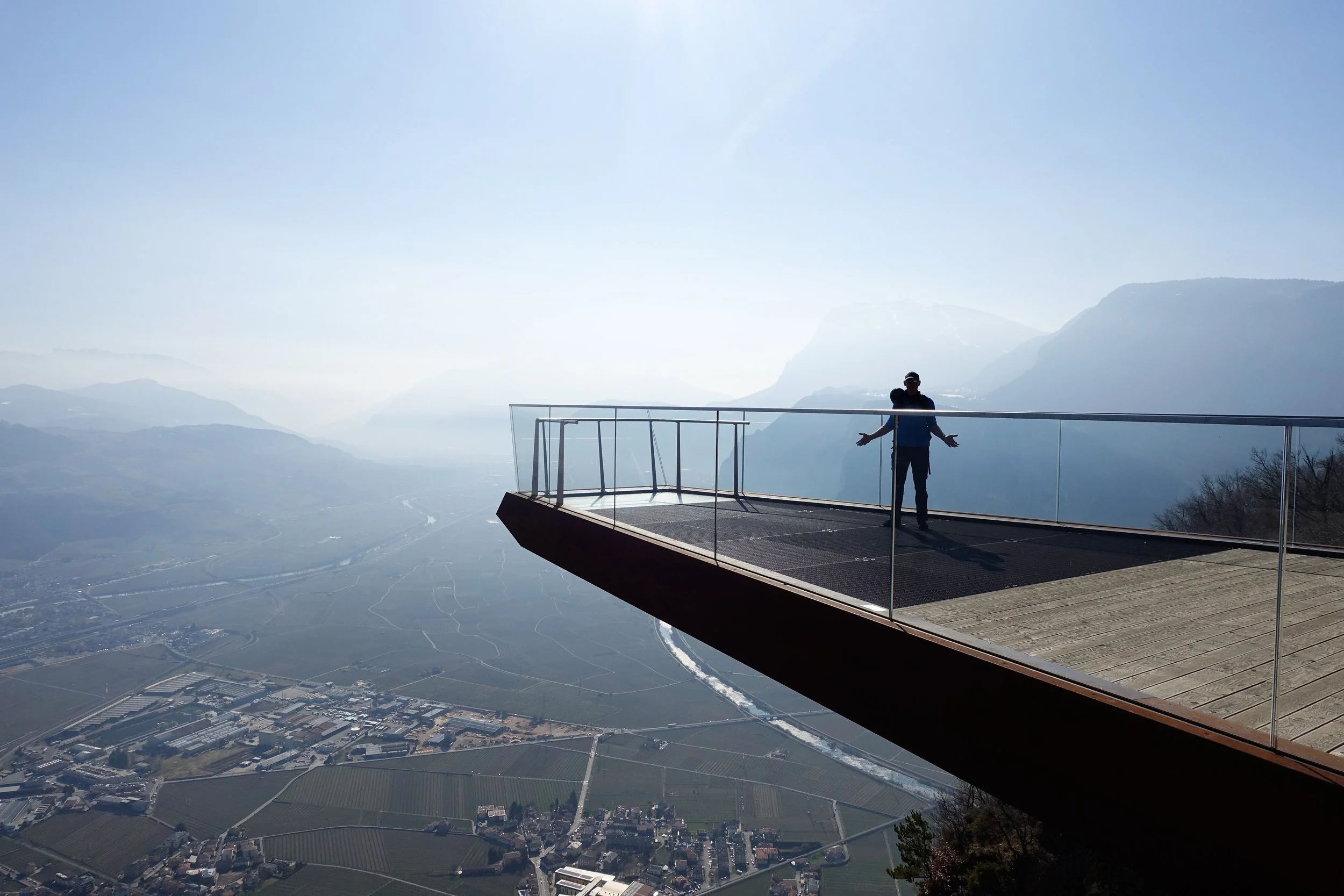
Before descending it is worth visiting the famous panoramic viewing platform, which extends dramatically above the valley and offers a remarkable view over the vineyards and villages below.
The descent is easy and enjoyable thanks to the Mezzocorona cable car, which brings you back to the valley in just a few minutes. From there a short transfer returns you to the starting point near the vineyards.
Even though the technical difficulty is moderate, the route involves about 700 meters (2300 ft) of elevation gain, so a basic level of fitness and endurance is recommended. The Burrone Giovanelli is therefore a perfect introduction to via ferrata, offering a rewarding day in a very unusual canyon environment.
This route, together with other via ferratas that are ideal for spring, autumn and even mild winter days, can also be explored over several days as part of our Bolzano Hotel Based Via Ferrata Safari, a flexible program that allows you to discover some of the best ferratas around Bolzano while staying comfortably in town.
If you are curious to see what an adventure like this looks like, you can also read the story of a recent 6 Day Via Ferrata Adventure Around Bolzano on our Journal
5) Stuller Wasserfall Via Ferrata
📍 Location: Val Passiria – Stuls / Stulles
📏 Driving time from Bolzano: about 1 hour
⏱ Typical duration: about 5 to 6 hours
📊 Level: Intermediate / advanced
🌞 Best season: Spring, Summer, Autumn and mild winter days
About one hour from Bolzano lies a valley that feels completely different from the Dolomites around the city. Val Passiria is a place of deep traditions, wild landscapes and strong local identity.
This is the valley of Andreas Hofer, the most famous historical figure of the region. Born in San Leonardo in Passiria, Hofer was a farmer and innkeeper who became the leader of the Tyrolean uprising against Napoleon in 1809. Known locally as General Barbòne, he led the Tyrolean fighters in several battles including the famous clashes on the Bergisel plateau. Today his birthplace, the historic Sandwirt farm, hosts a museum telling the story of his life and his execution in Mantua.
But Val Passiria is not only history. It is also a remarkable natural oasis characterized by strong contrasts. In the lower valley the climate is almost Mediterranean, with vineyards and orchards growing along the sunny slopes. Higher up the landscape quickly becomes wilder, with rugged mountains rising above 3000 meters and traditional alpine farms scattered across the hillsides.
It is still a valley shaped by farming life. It is not unusual to see milk from the mountain huts transported down toward the valley using small cable systems, a reminder of how closely the local communities remain connected to the mountains.
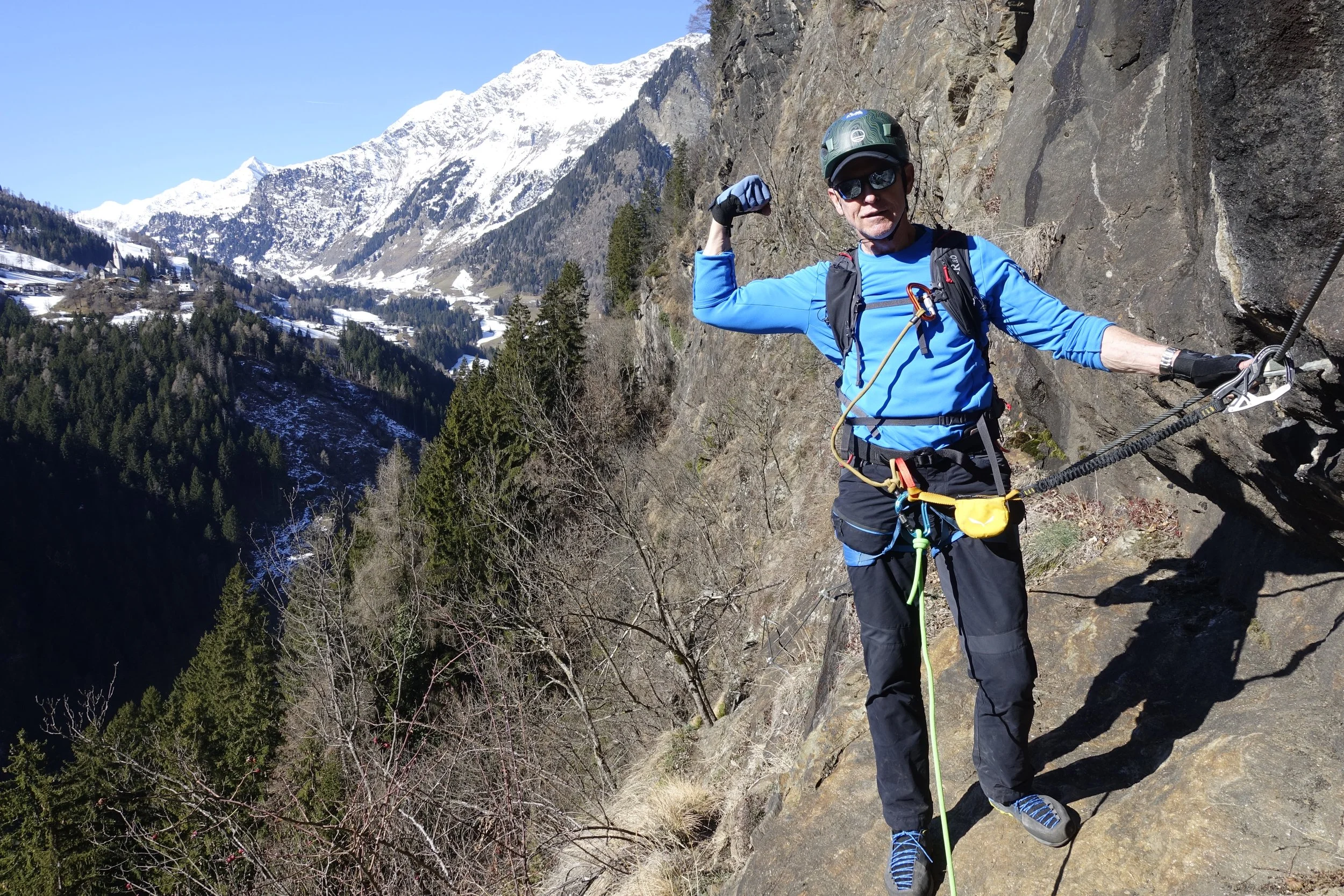
But let's talk about the via ferratas now!!! …In this beautiful valley lies the spectacular Stuller Wasserfall via ferrata, one of the most scenic ferrata routes in South Tyrol.
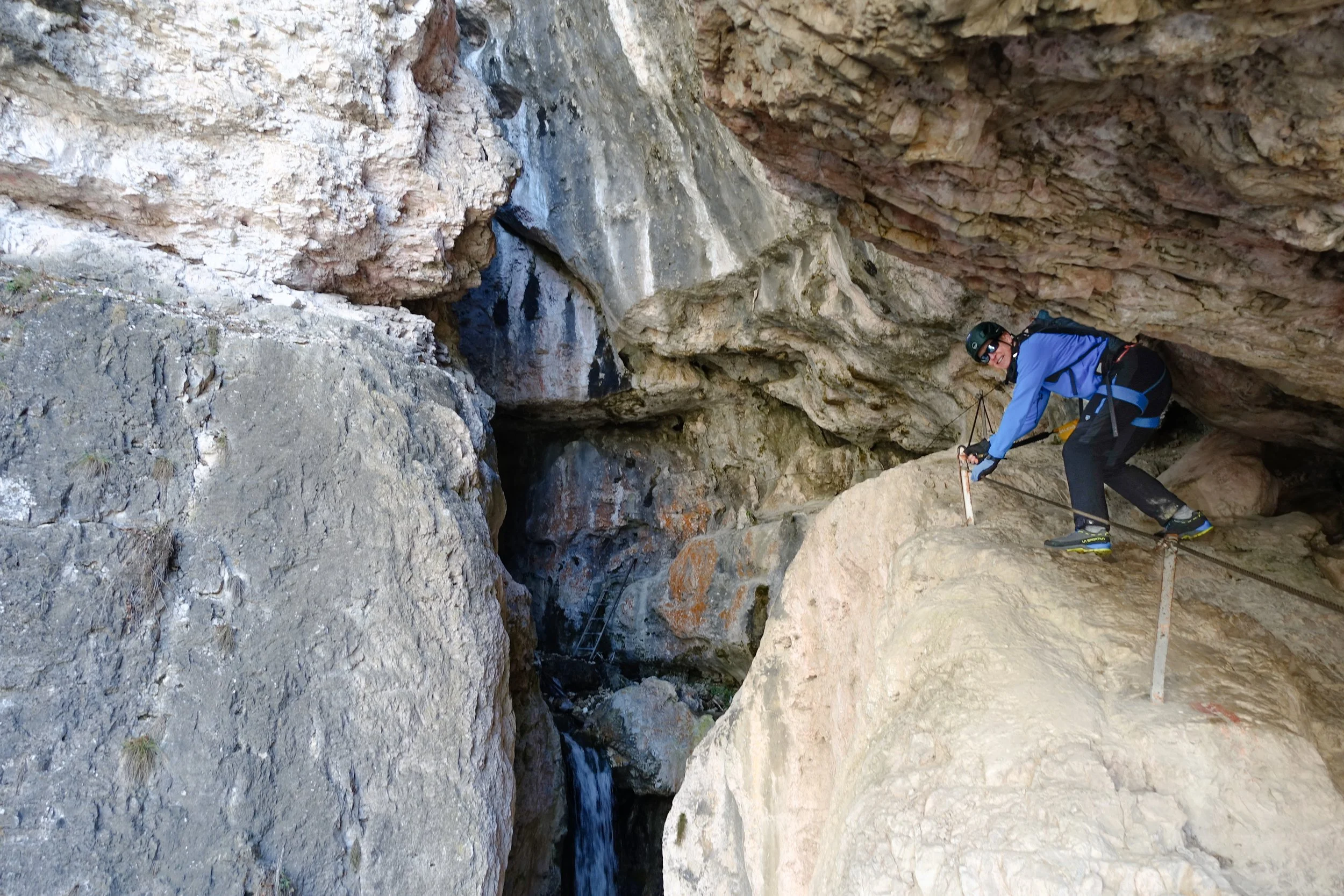
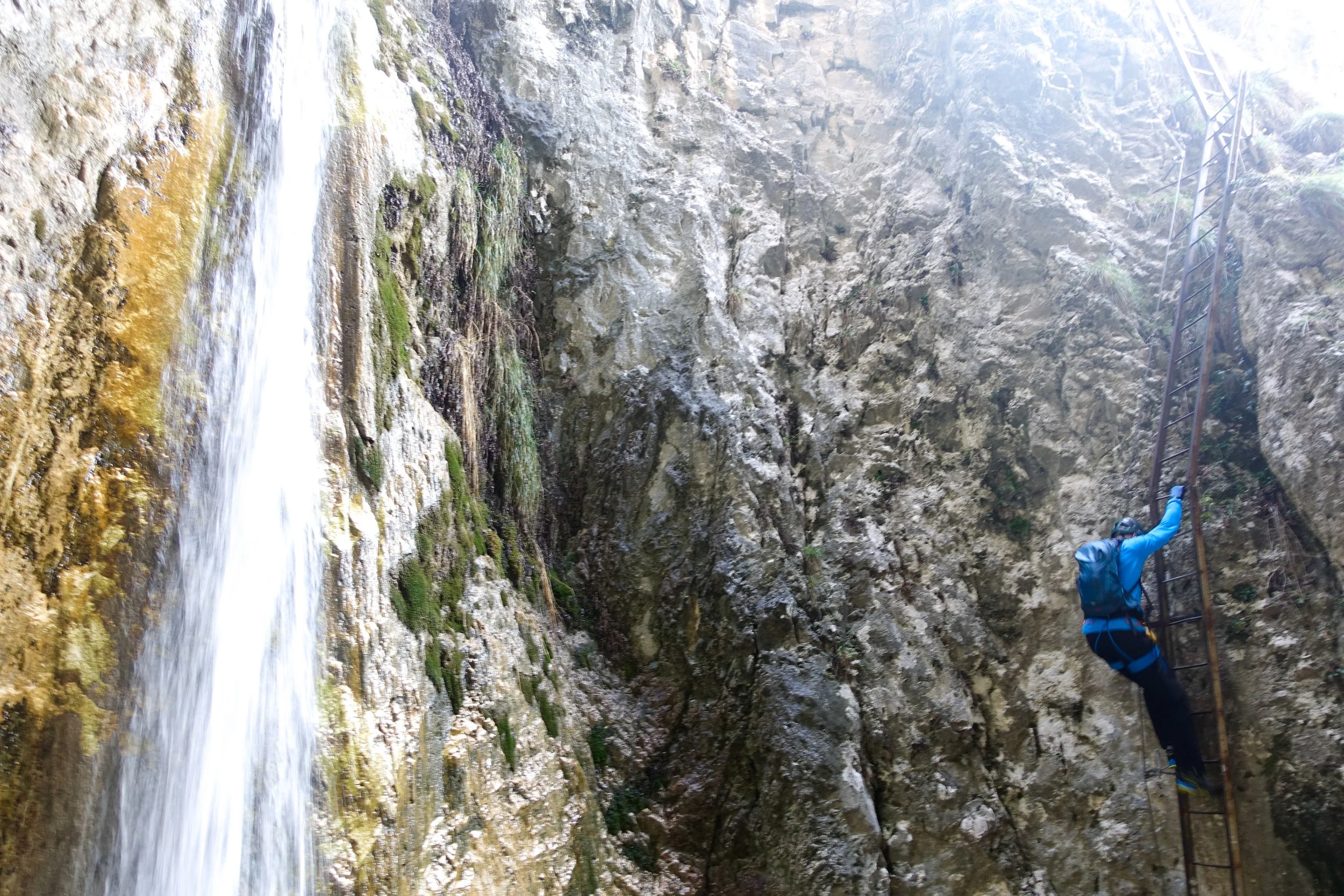
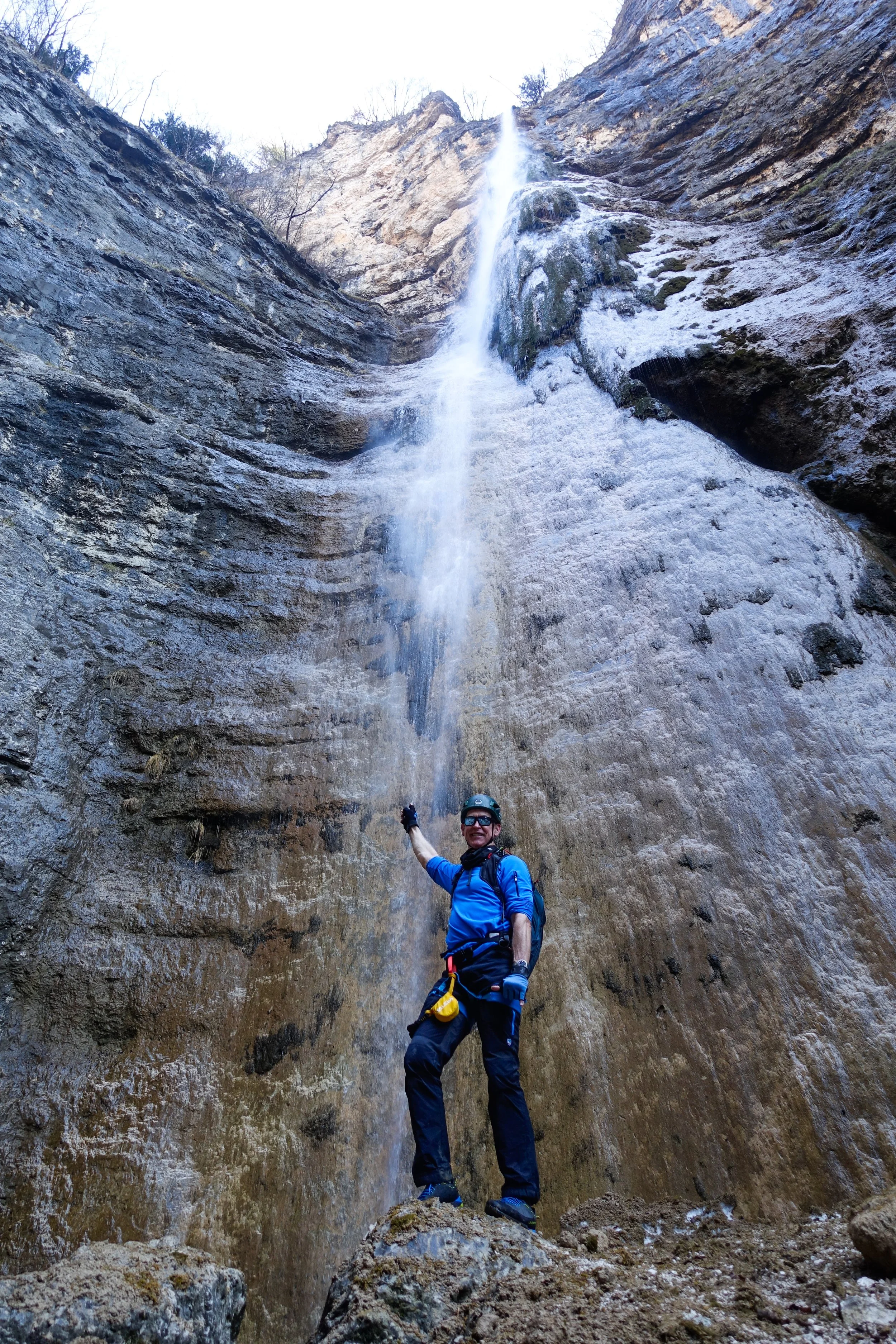
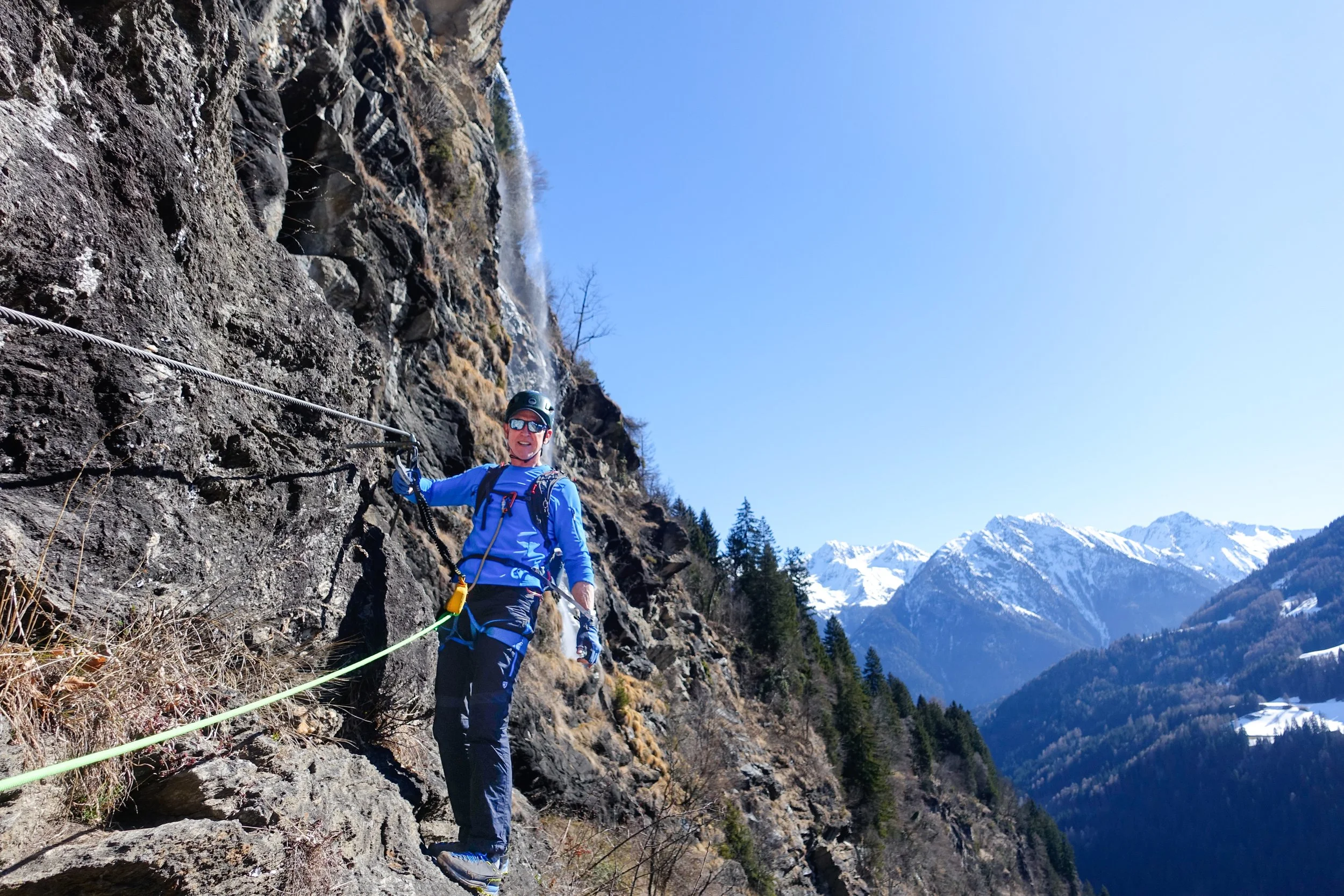
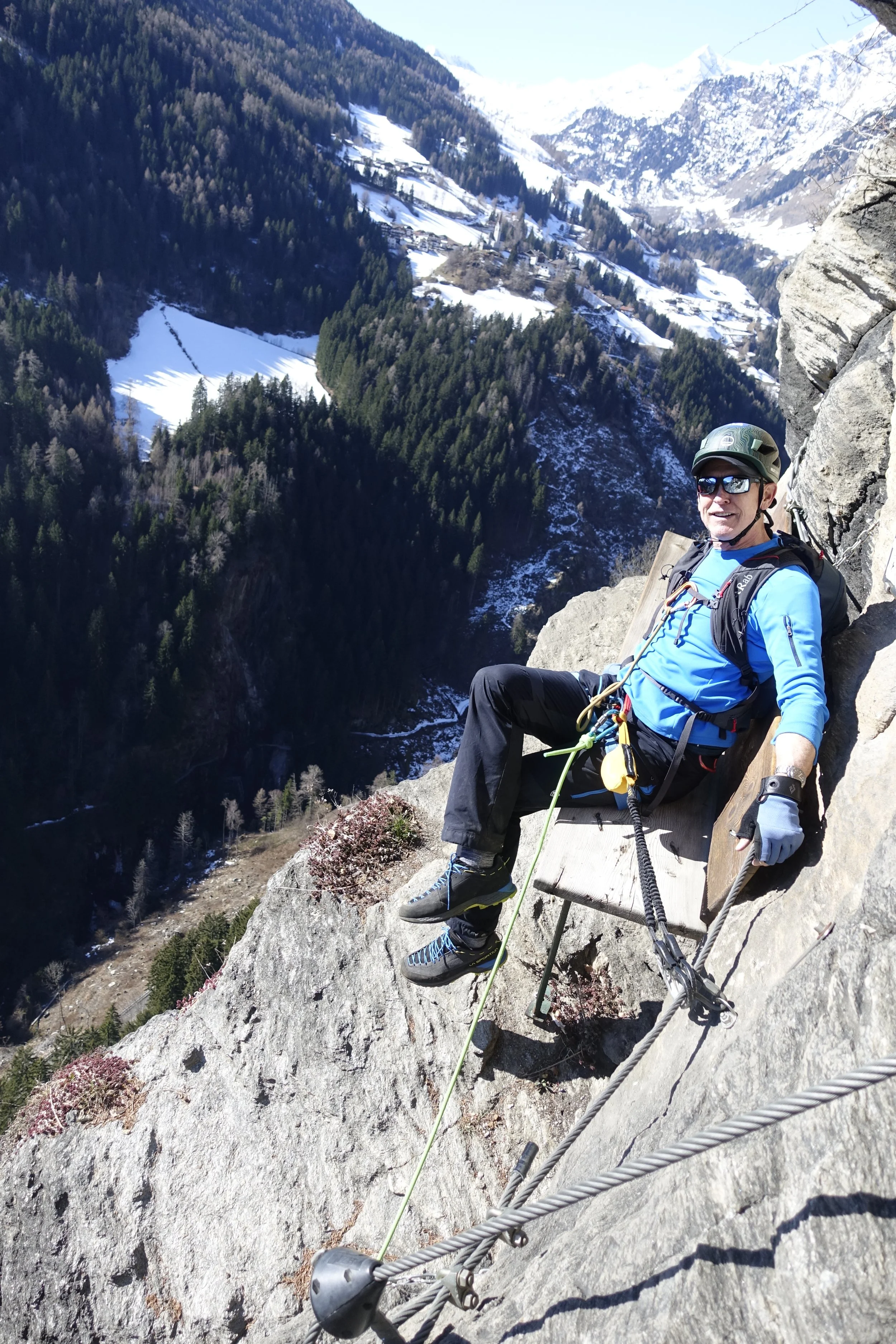
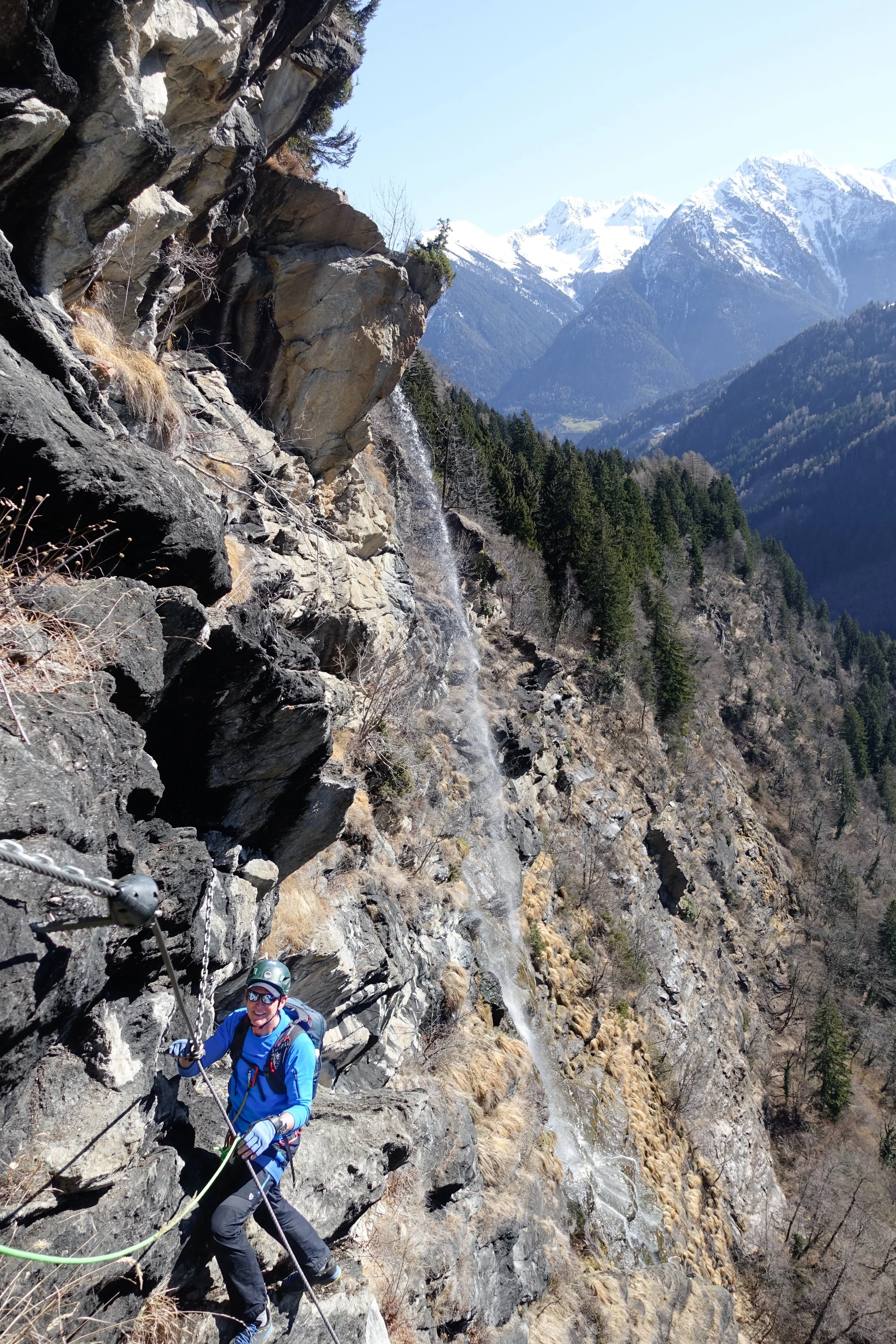
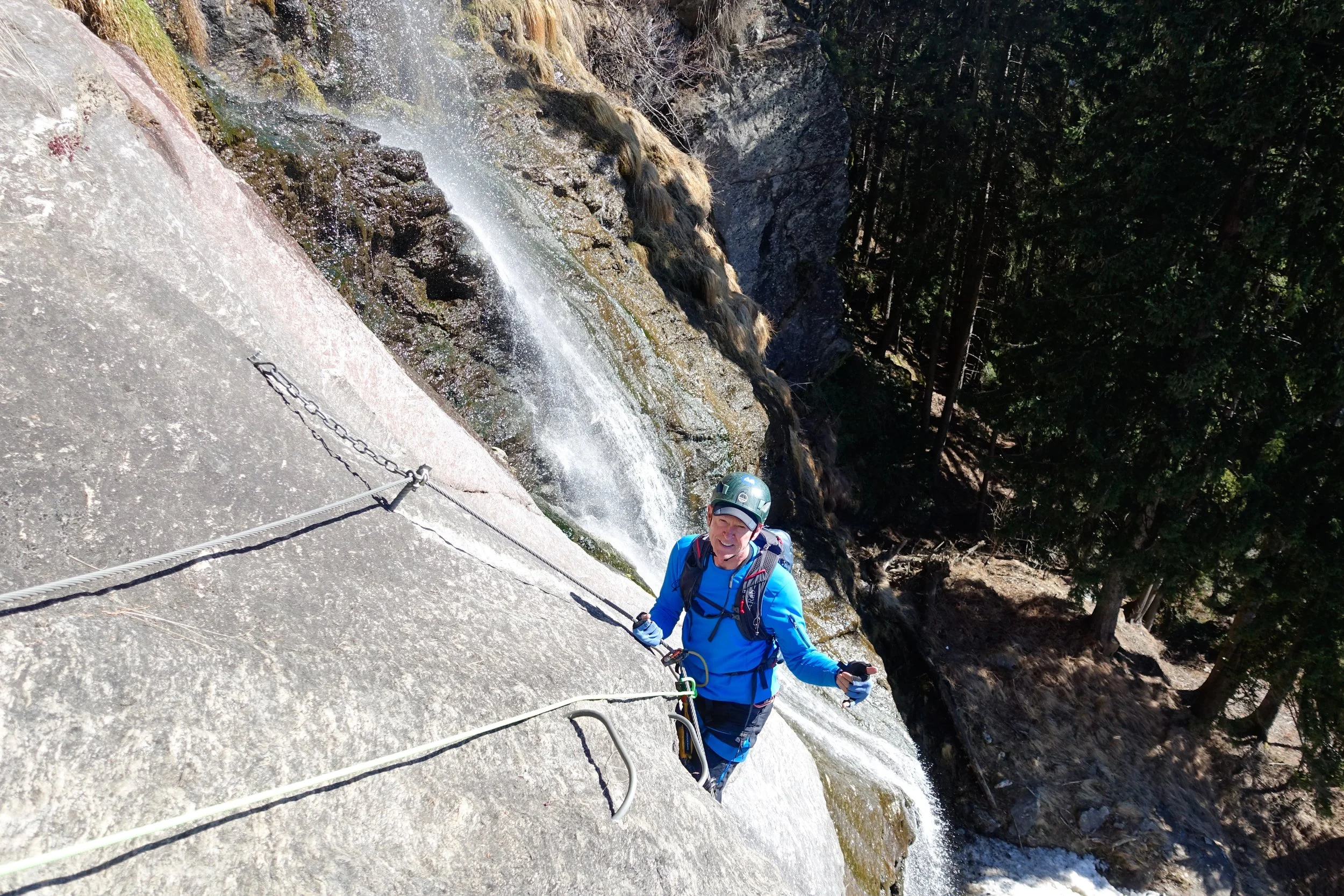
The climb follows the rock walls beside the powerful Stuller waterfall, whose water plunges down an impressive 342 meter cascade, making it one of the highest waterfalls in the region. The constant sound of rushing water accompanies the entire ascent and creates a dramatic atmosphere throughout the climb.
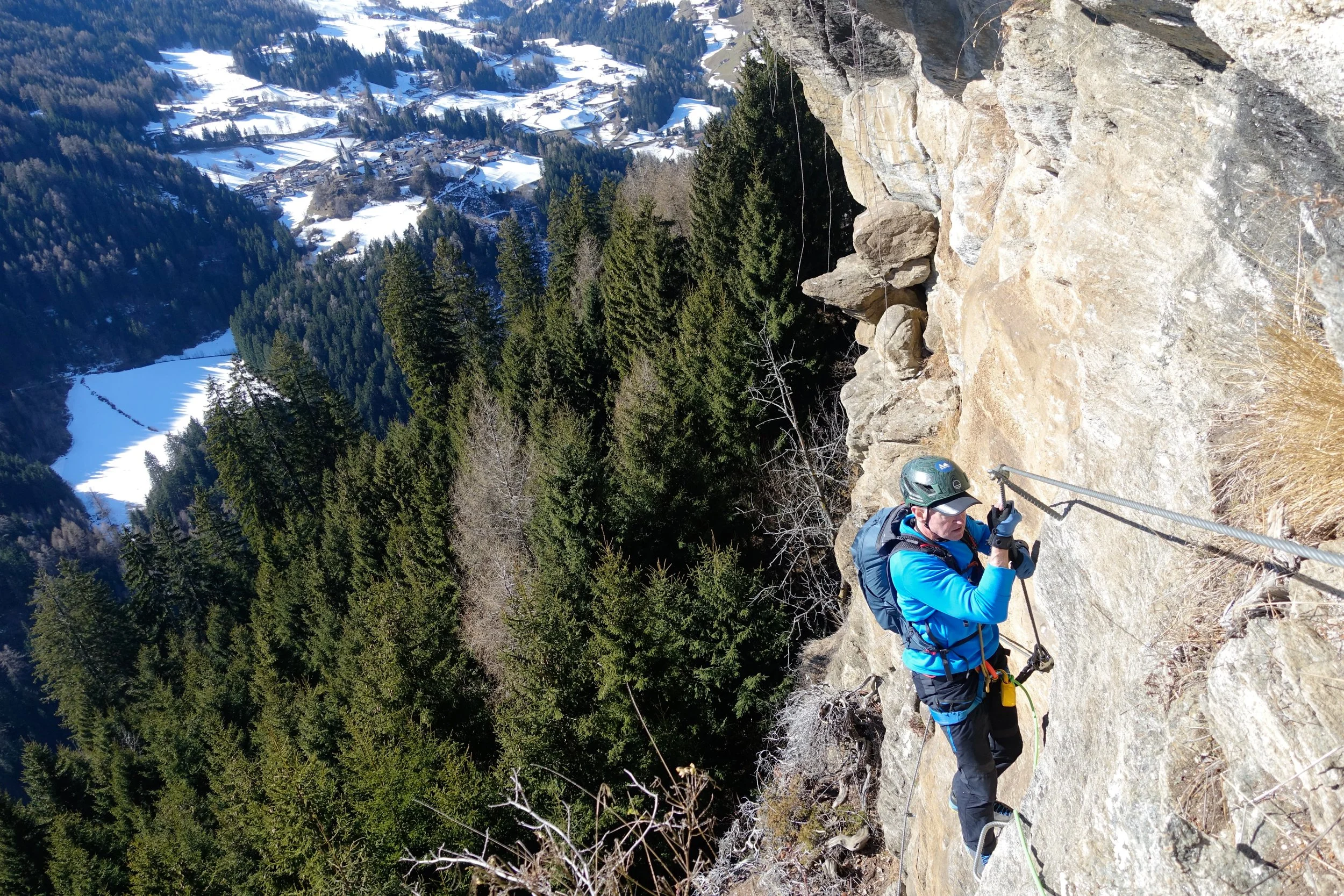
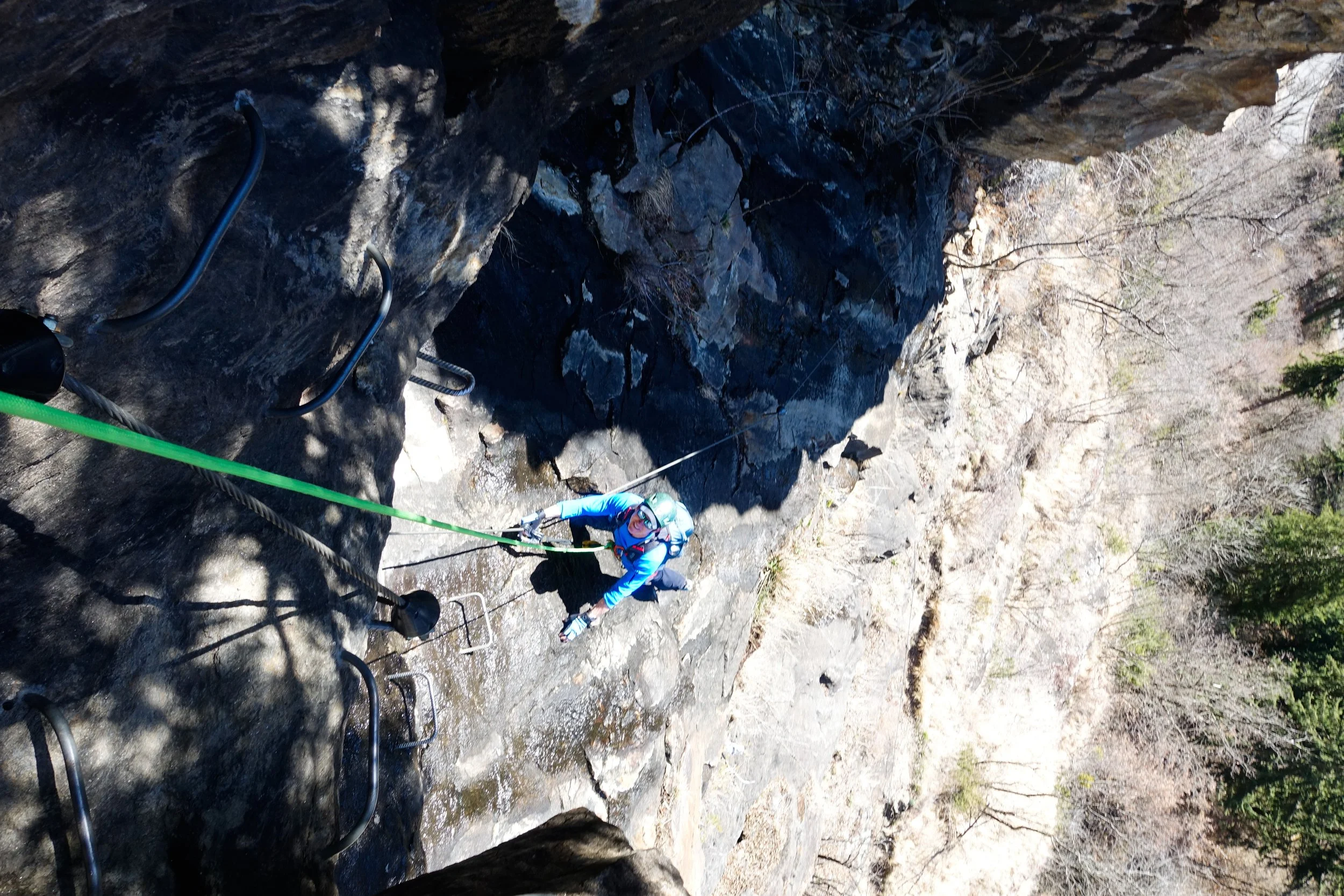
The ferrata climbs steeply on solid rock with several exposed passages, always close to the roaring waterfall. In some sections there are more difficult variants for stronger climbers looking for a more athletic challenge.
One of the most memorable aspects of this route is the sensation of climbing inside a landscape dominated by water, vertical rock and the sound of the waterfall. The spray from the cascade, the echo of the gorge and the views opening toward the valley create an unforgettable experience that feels very different from the classic Dolomite ferratas.
Thanks to its relatively low elevation, the Stuller Wasserfall via ferrata can also be a good option during mild winter days, provided that there has been no recent snowfall and conditions are dry.
Like many of the ferratas around Bolzano and the Merano region, this route can also be included in a multi day adventure during the shoulder seasons. Ferratas like this are often explored as part of our Bolzano Hotel Based Via Ferrata Safari, a flexible program that allows you to climb several spectacular routes around Bolzano while returning each evening to the comfort of a hotel.
Discover Via Ferrata Around Bolzano with a Local Mountain Guide
From the dramatic towers of the Rosengarten, to the sharp summits of the Cir group, to hidden canyons like Burrone Giovanelli or the powerful cascade of Stuller Wasserfall, the mountains around Bolzano offer an incredible variety of via ferrata experiences.
Other great beginner to intermediate via ferratas include the Col Rodella Via Ferrata and the Forcella Sassolungo Via Ferrata near Passo Sella. If you're looking for routes that are ideal in spring or autumn, the Rio Secco Via Ferrata and the Val del Rì Via Ferrata are excellent alternatives. Both can also be comfortably climbed during the summer, as they run through cool, shaded canyons. However, keep in mind that both routes follow active stream beds, so always consider water levels and recent rainfall before setting out.
Mountain conditions can change quickly. Weather, temperature, snow and rock conditions always play an important role when planning a day in the mountains, and choosing the right route at the right moment often makes the difference between a stressful day and a truly memorable adventure.
Climbing with an experienced Mountain Guide adds much more than safety. A guide knows the mountains, the timing of the routes and the many possibilities that the region offers. Just as importantly, it is a great opportunity to learn and improve. From using the equipment correctly, to small tricks that help you save energy on the ferrata, to understanding how to use your feet efficiently on the rock, these are skills that quickly make you feel more comfortable on the mountain.
Programs such as the Via Ferrata Safari for Beginners, the Bolzano Hotel Based Winter Via Ferrata Safari, or the Rosengarten Hut to Hut Via Ferrata Safari allow you to explore several of these routes over multiple days while discovering the landscapes, culture and mountain huts that make the Dolomites and the surroungding such a special place!
